
























Austin Texas shooting leaves three dead as investigators probe possible terrorism link

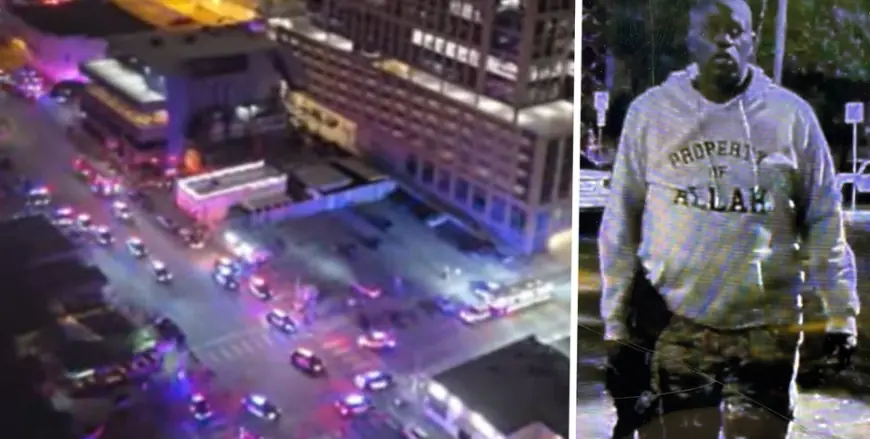
A predawn mass shooting on Austin’s West Sixth Street left three people dead — including the gunman — and sent fourteen others to hospitals early Sunday, March 1, after a burst of gunfire outside a crowded bar area turned one of the city’s busiest nightlife blocks into a triage scene. Police say officers confronted the shooter within minutes and killed him in an exchange of gunfire, a rapid response authorities credit with preventing an even higher toll.
The violence began just before 3:00 a.m. ET (just before 2:00 a.m. local time) near Buford’s Backyard Beer Garden, a popular stop along the corridor where late-night crowds spill from patios into the street. Emergency calls reported a “male shooting,” and the first officers arriving encountered chaos: injured people on sidewalks, others running for cover, and scattered reports of additional shots.
By daylight, the scale was clearer. Seventeen people required medical attention at the scene. Fourteen were transported to hospitals. Three victims were pronounced dead, including the suspect. Officials said at least three of the hospitalized victims were in critical condition, while others suffered injuries ranging from gunshot wounds to trauma sustained during the stampede to escape.
What happened on Sixth Street and how police stopped the shooter
Investigators say the attack unfolded in two phases: first from a vehicle and then on foot. Witness accounts and preliminary police findings describe shots fired toward patrons on a patio before the gunman exited and continued firing at pedestrians. Authorities believe the shooter used multiple weapons, describing a handgun and a long gun consistent with a rifle.
Austin’s entertainment districts are heavily policed on weekends, and that saturation likely shortened the time between the first shots and the confrontation. Officers moved toward the gunfire immediately, according to officials briefed on the response, and the encounter ended with the suspect fatally shot. The incident is being reviewed as an officer-involved shooting, a standard procedure in any fatal police use of force, while detectives simultaneously work the mass-casualty crime scene.
The speed mattered. Mass shootings in nightlife settings can become catastrophic when a shooter has uninterrupted minutes to reload, reposition, and hunt targets. Here, the most consequential “decision point” appears to have been the first patrol units committing to close distance rather than holding a perimeter, even as bystanders flooded the street.
Who was the suspect, and what investigators are examining now
Authorities identified the gunman as Ndiaga Diagne, 53, described as a naturalized U.S. citizen originally from Senegal. Investigators are reviewing his recent movements, communications, and any prior contacts with law enforcement or medical systems. Officials familiar with the inquiry have said the suspect had a history of mental health issues, a detail that can complicate motive assessments because it raises the possibility of both ideological signaling and personal crisis.
One reason the case has immediately drawn federal attention is what was found on the suspect and at the scene. Investigators are examining clothing and insignia that appeared to reference Islam and Iran, including a garment bearing the phrase “Property of Allah” and an emblem resembling an Iranian flag motif. Those items are not, by themselves, proof of terrorism. Investigators will be looking for intent: writings, digital searches, manifestos, target selection, online contacts, and whether the suspect attempted to claim affiliation with a cause.
The timing is also part of the investigative lens. The shooting comes amid heightened geopolitical tensions involving Iran, and officials are scrutinizing whether the suspect’s messaging was meant to link local violence to international events, or whether it was performative symbolism without operational direction from any group.
That distinction matters for public safety. If investigators conclude the suspect acted alone with no network, the immediate risk is copycats and the familiar problem of weapons access in a crowded district. If they find credible ties to a broader plot or facilitation, the risk profile shifts toward coordinated threats, soft-target selection, and retaliatory violence.
FBI “potential nexus” inquiry and what “terrorism” means in practice
Federal authorities are now involved alongside local police, with investigators treating the shooting as having a potential nexus to terrorism while they gather evidence to confirm or rule out that frame. In practical terms, that means a wider investigative toolkit: expanded digital forensics, deeper financial tracing, and more intensive review of communications, travel, and associates.
It also means caution in public statements. Officials will not want to label the case terrorism prematurely, because doing so can inflame fear, distort community relations, and potentially grant the perpetrator the notoriety he may have sought. At the same time, ignoring apparent ideological signaling can be equally damaging if it leads to missed warnings about future threats.
The most likely near-term path is incremental disclosure: a clearer timeline, weapon details, and a preliminary motive assessment once investigators have secured search warrants and reviewed early digital evidence. The biggest open question is whether the suspect targeted Sixth Street for symbolic reasons, personal grievance, or opportunity — or some combination of all three.
What comes next for Austin, victims’ families, and public safety policy
Austin’s immediate priorities are medical and logistical: stabilizing critically injured victims, reuniting families, and ensuring witnesses can give coherent statements after a night of shock and confusion. Local victim services have urged anyone searching for loved ones to use official channels rather than relying on social media posts that can be inaccurate in the fog of a mass-casualty event.
Beyond the first wave of emergency response, several longer-term effects are likely to unfold.
First, Sixth Street security will tighten fast. Expect a heavier uniformed presence, faster crowd-control interventions, and renewed debate about vehicle access and late-night patrol patterns. The key friction point will be how to increase safety without turning a major entertainment district into a checkpoint zone that changes the character of the area.
Second, the case will intensify arguments about how the country handles high-risk individuals and firearms. If investigators substantiate a documented mental health history, questions will follow about what systems saw warning signs, what legal thresholds prevented intervention, and whether weapons were legally obtained. If weapons were acquired through legal channels, pressure will rise for policy changes. If acquired illegally, pressure will shift toward enforcement and trafficking.
Third, if federal investigators confirm an ideological motive, the political temperature will rise. That can bring real resources — additional threat monitoring, protective measures at public venues — but it can also bring backlash and misdirected suspicion toward communities that had nothing to do with the crime. Local leaders will be balancing reassurance with restraint, trying to keep the city from spiraling into fear-driven generalizations.
For now, the core facts are grim but clear: a crowded nightlife block became the site of a mass shooting just before 3:00 a.m. ET, three people are dead including the attacker, fourteen others were wounded, and investigators are racing to determine whether this was a lone act of violence draped in political symbolism or something more structured. The answers will shape not only prosecutions and policy, but how safe Austin feels the next time Sixth Street fills up after midnight.