






















Iran’s Leadership Shift: Who Leads After Supreme Leader’s Passing?

The assassination of Ayatollah Ali Khamenei has left a significant power void within Iran. This event marks a pivotal moment in the Islamic Republic’s history, as Khamenei was the only leader to succeed Ayatollah Ruhollah Khomeini since the regime’s establishment nearly 50 years ago. Khamenei’s passing has prompted the formation of a transitional leadership council tasked with guiding the nation until a new supreme leader is appointed.
Formation of the Interim Leadership Council
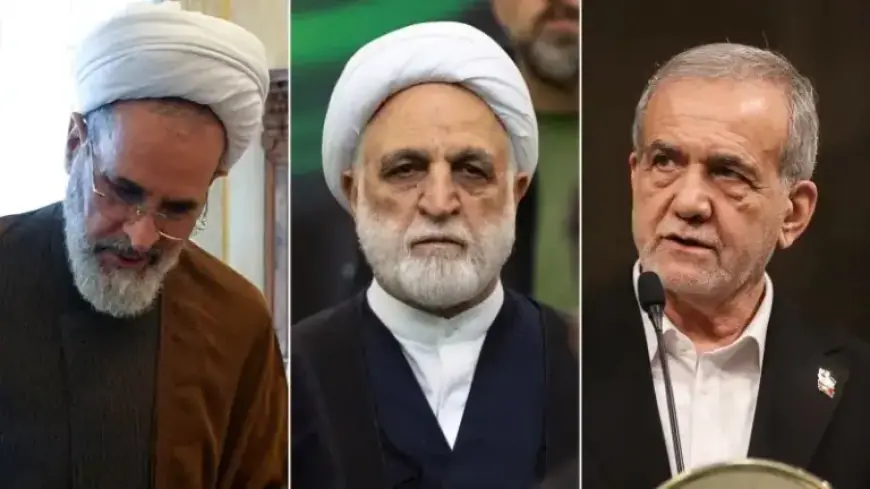
Iran’s constitution allows a three-person council to assume authority following the death of the supreme leader. The interim council consists of:
- Masoud Pezeshkian – President, representing moderate views.
- Gholamhossein Mohseni Ejei – Head of the judiciary, known for hard-line stances.
- Alireza Arafi – A senior cleric with substantial influence.
In a statement, Mohammad Bagher Ghalibaf, speaker of Iran’s parliament, reassured the public that the regime was prepared for this eventuality and expressed confidence in the council’s ability to consolidate power effectively.
Impact of Military Strikes
The situation is further complicated by ongoing US-Israeli military operations, during which several top military officials have reportedly been killed. Among them:
- Maj. Gen. Abdolrahim Mousavi – Chief of Staff of the Armed Forces.
- Maj. Gen. Mohammad Pakpour – Commander of the Islamic Revolutionary Guard Corps (IRGC).
- Ali Shamkhani – Secretary of Iran’s Defense Council.
This military destabilization has hindered the swift selection of Khamenei’s successor, creating uncertainty within the leadership. In 1989, Khamenei was named his predecessor’s successor within a day of Khomeini’s death, highlighting the contrasting circumstances today.
Who Will Succeed Khamenei?
The member body responsible for electing a new supreme leader is the Assembly of Experts, comprising 88 senior clerics. While this body is elected by public vote every eight years, candidates must be vetted by the Guardian Council, a group of 12 jurists that oversees parliamentary activities.
Sanam Vakil, director of the Middle East and North Africa program at Chatham House, expressed skepticism about the Assembly convening soon due to the ongoing military strikes. “They cannot risk further death and damage to the institution,” Vakil stated.
Potential Candidates
Mojtaba Khamenei, the deceased leader’s son, is a prominent figure linked to the IRGC but may face opposition against a hereditary succession. Other potential successors include:
- Alireza Arafi – Deputy chairman of the Assembly of Experts and a key figure in the clerical establishment.
- Mohammad Mehdi Mirbagheri – Represents the conservative wing within the Assembly.
- Hassan Khomeini – Grandson of Khomeini, noted for his moderate views.
Analysts believe there could be a push for a collective leadership rather than appointing a single successor, reflecting internal tensions between hard-liners and reformists.
The Role of the IRGC
With many senior leaders incapacitated, the IRGC is expected to play a crucial role in maintaining state stability. This branch of Iran’s military has historically defended the regime and now wields considerable influence over both military and economic spheres.
Although some IRGC leaders have been lost in recent attacks, the group remains operational with an estimated force ranging from 150,000 to 190,000 troops. Its capacity to enforce domestic order is supported by the Basij, a paramilitary force intertwined within Iranian society.
Conclusion
The Iranian regime’s future hangs in the balance as it navigates this tumultuous period. The dynamics of succession, military conflict, and internal divisions will shape Iran’s direction in the coming months. As the nation seeks to stabilize, the actions of the interim leadership council and the IRGC will be critical in determining the path forward.