

























Iran Dubai Attack: Missile and Drone Strikes Hit Airport, Hotel Districts, and Port Areas as Gulf Tensions Spill Into Civilian Life

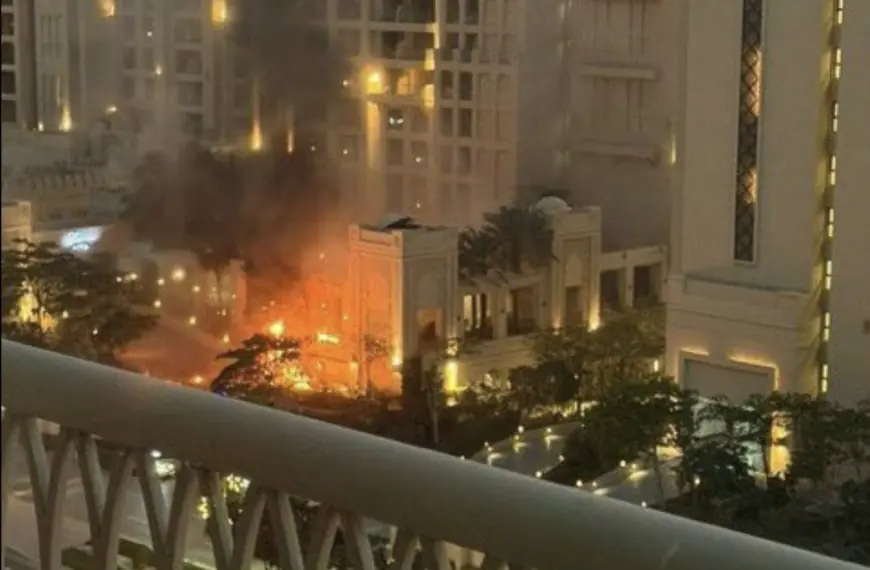
A barrage of Iranian missiles and drones struck or showered debris across Dubai overnight into Sunday, March 1, 2026 ET, damaging parts of the city’s aviation and tourism infrastructure and puncturing a long-standing assumption that the emirate’s commercial heart would remain insulated from regional conflict.
Officials in Dubai said a concourse at Dubai International Airport suffered minor damage and that four people were injured. Separate incidents across the city included a small exterior fire at the Burj Al Arab linked to intercepted aerial threats and debris, a fire reported near a hotel area on the Palm Jumeirah, and damage at a berth in the Jebel Ali port area attributed to falling debris. The attack also fed immediate anxiety about safety, supply stability, and the reliability of travel corridors that underpin Dubai’s economy.
What happened in Dubai, and what was hit
The Dubai incidents were part of a wider wave of Iranian retaliation that also affected other Gulf locations and major flight routes. In Dubai, the most immediate disruption centered on aviation and visible landmarks:
-
Dubai International Airport reported minor infrastructure damage and four injuries.
-
Intercepts over the city led to falling debris in multiple areas, including a small fire on the exterior of a major beachfront hotel landmark.
-
Additional debris and impacts were reported near high-traffic tourist zones and in port-adjacent infrastructure, including a damaged berth in the Jebel Ali area.
While the overall physical damage in Dubai was described as limited in some official updates, the psychological impact was outsized: residents and visitors reported shock, a rush to stock up on essentials, and quieter streets as people reassessed personal risk.
Why Iran targeted the Gulf now
This escalation did not emerge from a single isolated decision. It reflects a broader conflict trajectory in which Iran has sought to impose costs beyond its immediate adversaries by pushing pressure into the wider regional network that supports military basing, logistics, energy flows, and air travel.
Iran’s likely incentives include:
-
Signaling that retaliation will not be confined to traditional front lines.
-
Deterring further strikes by raising the perceived cost to allied states and international commerce.
-
Testing air-defense and interception capacity across multiple jurisdictions at once, forcing rivals to spread resources.
At the same time, the operational reality of missile and drone warfare means that even attacks framed as targeting military-linked infrastructure can produce civilian spillover. Intercepts create debris fields. Misses and misfires can hit unintended structures. In high-density urban areas, that spillover becomes the story.
Stakeholders: who bears the risk, who gains leverage
Dubai’s role as a tourism, trade, and transit hub creates a large stakeholder map in any regional security shock.
The most exposed:
-
Residents and visitors, especially those near airports, ports, and high-profile landmarks.
-
Airlines, airports, and logistics firms relying on predictable airspace and schedules.
-
Hospitality and retail sectors that depend on perceptions of safety and continuity.
-
Insurers and reinsurers who price risk across aviation, property, and cargo.
The most leveraged:
-
Governments and security services managing public communication, air defense, and continuity planning.
-
Financial regulators balancing market stability with transparency.
-
Regional military actors and allies who may respond with escalatory or de-escalatory moves.
A key point: Dubai’s strength is its promise of predictability. The moment that promise feels fragile, the economic consequences can arrive faster than the physical ones.
What we still don’t know
Several critical facts remain unclear or still developing:
-
The full inventory of what was intercepted versus what struck targets on the ground.
-
Whether the Dubai incidents were the result of direct hits, intercepted debris, or a mixture of both.
-
The extent of damage to port operations and whether cargo flows will face delays.
-
Whether further waves are expected or whether this was a contained salvo tied to a specific retaliatory window.
This uncertainty matters because business decisions will hinge on it: flight planning, shipping schedules, staffing levels, and event calendars all change based on whether stakeholders believe the risk is persistent or passing.
Second-order effects already emerging: markets, travel, and public behavior
The immediate ripple effects are not limited to a single night of disruption. They include:
-
Flight cancellations and reroutes, as airlines react to airspace risk and insurance constraints.
-
Consumer behavior shifts, including short-term panic buying and reduced discretionary movement.
-
Market volatility, including emergency measures aimed at avoiding disorderly price swings.
In a notable signal of financial stress management, the UAE moved to halt major stock market trading for two days on Monday, March 2, 2026 ET and Tuesday, March 3, 2026 ET, giving authorities and market participants time to assess damage and reduce the chance of cascading selloffs.
What happens next: realistic scenarios and triggers to watch
-
A temporary shock, followed by rapid normalization
Trigger: no additional waves within 48 to 72 hours, and commercial flights resume stable routing. -
A sustained period of intermittent strikes and intercepts
Trigger: repeated incidents across multiple Gulf locations, forcing longer-term changes to travel and shipping. -
Expanded defensive posture and tighter airspace controls
Trigger: authorities implement broader closures or restrictions, leading to prolonged airline disruptions and higher costs. -
Accelerated diplomatic pressure and backchannel de-escalation
Trigger: clear economic blowback and public anxiety push regional actors toward containment. -
Retaliation cycles that widen the target set
Trigger: additional strikes by any party that broaden the conflict beyond military-linked sites, increasing civilian exposure.
Why it matters
Dubai is not just another city in this crisis. It is a symbol of regional stability and a node in the global movement of people and goods. When missiles and drones reach that node, the story shifts from regional confrontation to global economic risk, with consequences that can be felt in travel costs, supply chains, insurance pricing, and investor confidence.
For now, the Dubai attack marks a new threshold: the Gulf’s commercial hubs are no longer assumed to be off-limits, and the next moves by regional actors will determine whether this becomes a brief rupture or a long-lasting reset of what “normal” means in the region.