

























Uae hubs close as flights are cancelled and UK prepares evacuation of more than 76,000 nationals

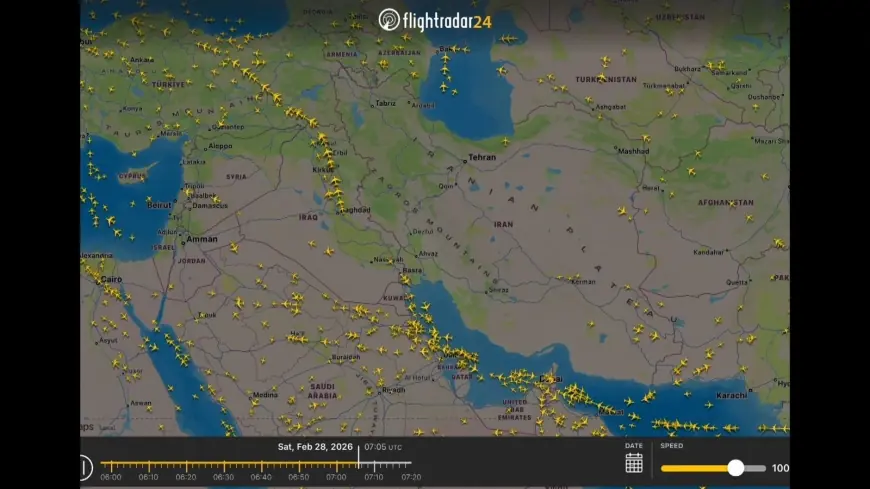
Airspace across the Middle East has been shut and major hubs in the uae, Qatar and Israel halted operations after US and Israeli strikes on Iran, leaving hundreds of thousands of travellers stranded or diverted. The closures have prompted travel warnings and emergency planning: the UK is preparing to evacuate more than 76, 000 British nationals registered in the affected region.
Uae airspace and airport closures
The United Arab Emirates announced a temporary and partial closure of its airspace that left no flights over the uae, triggering the shutdown of airports in Dubai and Abu Dhabi and contributing to the closure of a key Qatari hub. Emirates suspended all operations in and out of Dubai, leaving passengers stranded, and has halted services until 15: 00 local time on Monday (13: 00 GMT). Etihad suspended flights out of Abu Dhabi until 02: 00 local time. FlightRadar24 recorded the absence of flights over the country while a new notice to airmen extended the closure of Iranian airspace until at least 08: 30 UK time on Tuesday.
Emirates and Etihad suspend services
Emirates, Etihad and Qatar Airways — the three carriers that funnel transit traffic through the region — all suspended flights as hubs closed. Analytics firm Cirium estimates those three airlines typically move about 90, 000 passengers a day through the affected hubs. Major global carriers also cancelled services: British Airways halted flights to Tel Aviv and Bahrain until Wednesday and warned routes between Heathrow and Abu Dhabi, Amman, Bahrain, Doha, Dubai or Tel Aviv could be affected for several days. Virgin Atlantic suspended services between London and Riyadh and Dubai, and warned that flights to India, Saudi Arabia and the Maldives could take longer after being rerouted around the closed airspace.
Airport damage at Dubai International and Zayed international airport
Major international airports themselves came under attack in Iran’s retaliatory strikes. Dubai International and the Burj Al Arab hotel sustained damage and four people were injured at the Dubai site. Abu Dhabi Airports posted that an incident at Zayed international airport resulted in one death and seven injuries; that post was later deleted. Overall tallies across Dubai and Abu Dhabi since the strikes began include one person killed and 11 others injured, with four of those injuries among Dubai International staff.
UK government plans evacuation of more than 76, 000 Britons
The British government is planning what officials describe as one of the largest evacuations in recent history as more than 76, 000 UK nationals have registered their presence in the affected areas. More than two-thirds of those registered are believed to be in the uae, and most are holidaymakers or other travellers rather than residents. Government guidance directs British nationals to follow local instructions, especially to shelter where advised, while ministers are examining multiple options for evacuation routes if required; timings remain unclear because much of the region’s airspace is closed.
Regional airspace closures, cancellations and travel warnings
Countries across the region closed their skies: Israel, Qatar, Syria, Iran, Iraq, Kuwait and Bahrain all shut airspace, producing widespread cancellations and diversions. More than 3, 400 flights were cancelled across seven main Middle Eastern airports on Sunday. Heathrow urged long‑haul travellers to check with airlines as reroutes forced longer flight paths. The Foreign Office warned British citizens against all but essential travel to Bahrain, Kuwait, Qatar and the UAE while advising against all travel to Iran, Israel and Palestine; additional guidance recommends avoiding parts of Pakistan, staying at home if in Saudi Arabia and taking precautions in Jordan, Oman, Syria, Lebanon, Yemen and Iraq.
The immediate cause-and-effect chain is clear: US and Israeli strikes on Iran were followed by Iranian attacks on Gulf targets, prompting national airspace closures that forced carriers to cancel or reroute flights and left key transit hubs effectively offline. What makes this notable is the scale of disruption centred on a handful of transit airports that normally connect Europe, Africa and the west to Asia — a network that moves tens of thousands of passengers each day and, when it stops, strands travellers globally. The timing matters because closures and military actions have extended through the weekend into the working week, complicating evacuation planning and commercial schedules.
An individual example underlines the human impact: Richard and Hannah, passengers from London en route to Oman, were diverted and remained stuck in Bahrain after a drone strike on the airport prevented them reaching their destination; they described an “uneasy 24 hours” and are now seeking return routes home.
Airlines and governments are continuing to adjust operations as the situation evolves, while travel warnings and airport damage assessments are being updated amid the ongoing security crisis.