




















Mumford and Sons Return to SNL With Hozier, Sierra Ferrell, and Aaron Dessner in a Guest-Heavy Set That Reframed Their New Era

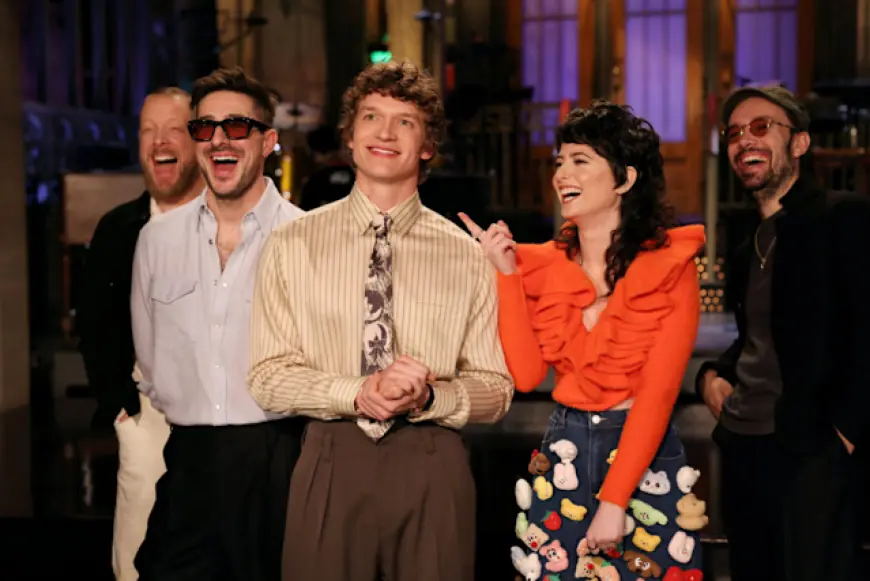
Mumford and Sons’ latest Saturday Night Live appearance, broadcast late February 28, 2026 ET, landed as more than a routine promo stop. It played like a deliberate statement about where the band is now: collaborative, roots-forward, and comfortable sharing the spotlight. The performance also answered the question viewers immediately asked the next morning: who sang and played with Mumford and Sons on SNL?
The guest list was unusually stacked for a two-song set, pulling in Hozier, Sierra Ferrell, and Aaron Dessner, with Chris Stapleton also appearing during the second performance.
Who performed with Mumford and Sons on SNL and what they did onstage
Across the night’s two performances, Mumford and Sons were joined by:
Hozier
He appeared as a featured vocalist during the first performance, sharing lead vocal moments with Marcus Mumford and adding the kind of grainy intensity that suits the band’s recent material.
Aaron Dessner
Dessner joined as an onstage collaborator during the first performance as well, reinforcing the sense that this era of Mumford and Sons is built around expanded musicianship and cross-scene alliances rather than a closed, fixed lineup.
Sierra Ferrell
Ferrell joined during the second performance, bringing a distinctive vocal tone that leans classic-country and old-time without feeling like cosplay. The contrast with the band’s arena-honed delivery made the song feel more like a session than a TV spot.
Chris Stapleton
Stapleton appeared during the second performance, turning it into a full-collision moment between contemporary folk rock and modern country-soul power vocals.
If you’re looking for the simplest answer to who sang with Mumford and Sons on SNL: Hozier and Sierra Ferrell were the featured singers alongside Marcus Mumford, with Stapleton also sharing vocal space in the second number, and Dessner contributing as a key onstage collaborator in the first.
Why this SNL set mattered for Marcus Mumford and the band’s repositioning
SNL bookings can be “play the single, wave, leave.” This one felt designed. Marcus Mumford has long been the band’s emotional center, but the guest-forward staging subtly shifted the framing from frontman-led to collective-led. That matters because the band’s post-peak chapter has required a careful balance: honoring the early sound that built their audience while avoiding the trap of nostalgia-as-strategy.
Bringing out respected collaborators on a high-visibility platform sends a message that the band’s current identity is curated through community. It also helps them avoid a common comeback problem: appearing isolated or self-referential. On this night, Mumford and Sons looked plugged in.
Behind the headline: the incentives driving a collaboration-heavy TV moment
This wasn’t random fan service. There are clear incentives on all sides.
For Mumford and Sons
A guest-heavy set reduces the risk of a flat, overly polished TV performance and boosts replay value. It also reframes the band’s new album cycle as a broader musical event instead of a single-act return.
For Hozier
A shared stage with an arena-level act expands reach without forcing a solo headline moment on a sketch-comedy broadcast. It’s also a credible alignment: similar emotional register, different textures.
For Sierra Ferrell
This is the classic visibility trade: bring a distinctive voice into a mainstream slot, convert curiosity into streams and ticket demand, and cement “artist’s artist” credibility with a much larger audience.
For Aaron Dessner
Dessner’s brand is musical architecture. These appearances reinforce his role as a connector and builder, someone who can step in and elevate the shape of a live arrangement without turning it into a side project.
For Chris Stapleton
Stapleton’s presence signals that genre borders are marketing lines, not creative walls. It also positions Mumford and Sons’ current work closer to American roots and country-soul authenticity, an angle that travels well on radio and playlists.
What we still don’t know about the collaborations and what to watch next
Even with the onstage confirmations, key details are still unclear.
Will these pairings carry into tour setlists, or were they strictly a one-night TV flex?
That answer matters because it determines whether this was a campaign move or the blueprint for the band’s live future.
Are these collaborators appearing on recorded versions, or only in live arrangements?
If the recordings feature them, expect a second wave of attention as casual viewers connect the TV moment to streaming.
Will SNL-style guest stacking become a pattern for the band this cycle?
If yes, it suggests Mumford and Sons are leaning into a rotating-cast model: fewer fixed expectations, more event-style performances.
What happens next: realistic scenarios with clear triggers
A short list of plausible next steps, based on how these moments typically evolve:
One-off spotlight that boosts streams, then resets
Trigger: no further joint appearances announced in the next two weeks.
A tour guest trend emerges
Trigger: early tour dates include sit-ins or surprise walk-ons tied to these same collaborators.
A live recording or special release gets teased
Trigger: official channels begin sharing extended rehearsal footage or alternate takes from the performance.
A broader roots crossover narrative solidifies
Trigger: additional pairings appear with artists from adjacent scenes, signaling an intentional lane choice rather than a one-time stunt.
Why it matters
For viewers, it was a rare kind of TV performance that felt alive, not just televised. For the music industry, it’s a reminder that the fastest way to make a legacy act feel current is not chasing trends, but building moments of genuine musical interplay. Mumford and Sons didn’t just return to SNL. They used it to show that their next chapter is designed to be shared.