






















Mikal Bridges Struggles Prompt Questions After Knicks' Costly Trade

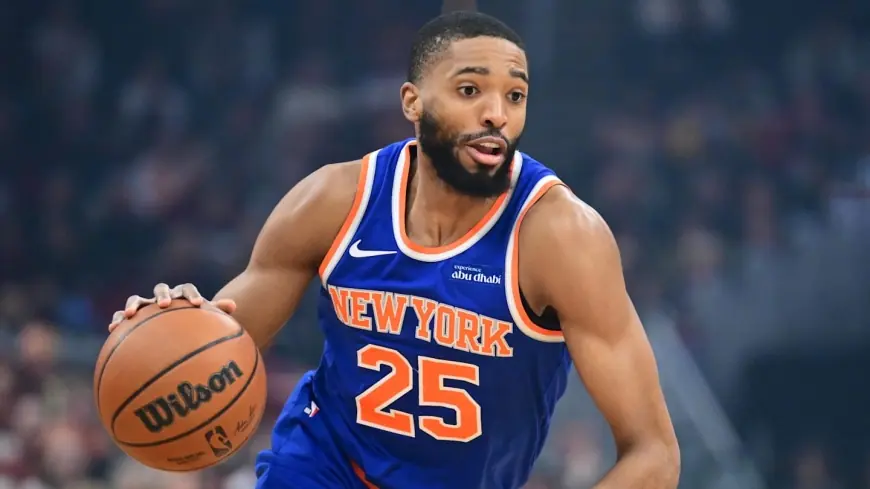
Mikal Bridges has become a focal point of frustration for the Knicks after a run of ineffective performances culminated in a late-game benching, raising fresh concerns about a trade that cost the team multiple first-round selections. The sequence of poor shooting and limited offensive impact has critics asking whether the assets surrendered are being matched by on-court production.
Mikal Bridges' February Slide and Key Games
February 2026 has been particularly damaging to Bridges' standing. He was benched for the final 9. 5 minutes of New York's loss to the Detroit Pistons on Feb. 19 after producing eight points in 25 minutes and going 0-for-3 from beyond the arc. Earlier in the month he logged 49 minutes in a double-overtime game against the Nuggets and managed just five points, and on Feb. 1 he missed all six of his 3-point attempts in a matchup with the Lakers. Those outings form a pattern that moved beyond an isolated slump into a sustained scoring drought in high-leverage moments.
Coaching decisions and scoring totals are measurable: 0-for-3 and 0-for-6 from three in two of the cited games, a five-point night over an extended 49-minute workload, and a benching that removed him from crunch-time minutes. The consequence has been reduced trust in late-game lineups and sharper public scrutiny of his role when the Knicks need a spark.
Trades, Picks and Stephen A. Smith's Critique
The criticism is amplified by what the Knicks gave up to acquire Bridges. The trade cost included Bojan Bogdanovic plus four unprotected first-round picks in 2025, 2027, 2029 and 2031 and a protected first-round pick routed through Milwaukee. Media commentators have highlighted those lost draft assets while noting Bridges is not an All-Star, drawing comparisons to other blockbuster moves that returned higher-profile players. One prominent commentator argued that the franchise surrendered future flexibility and that internal relationships — specifically noting a connection involving Jalen Brunson — played a role in the decision-making.
The cause-and-effect link here is straightforward: surrendering multiple first-round picks raised expectations for immediate, high-level production; persistent shooting struggles and diminished late-game presence have so far failed to meet that threshold, turning a trade once framed as an upgrade into a point of contention about long-term cost versus short-term benefit. What makes this notable is the scale of the draft capital exchanged, which increases the stakes for each inefficient outing.
Mike Brown's Rotations and Landry Shamet's Late-Game Trust
Head coach Mike Brown's choice to insert Landry Shamet instead of trusting Bridges in the closing stretch against Detroit was cited as an intentional tactical decision rather than a disciplinary move. That substitution signals a shift in rotation trust: when a coach opts for a different wing in the final 9. 5 minutes of a close contest, it reflects immediate performance concerns and has ripple effects for role clarity.
The timing matters because the benching occurred in a game that mattered to the team's standing and came after multiple underwhelming performances. Each such decision reinforces doubts about Bridges' ability to deliver in critical moments, and it also affects lineup construction for upcoming games. For a team that traded away future draft capital to obtain him, those in-game choices underscore the tension between roster investment and on-court outcomes.
For the Knicks, the current dynamic presents a concrete challenge: reconcile a string of low-efficiency outings and diminishing late-game minutes from a key acquisition with the long-term impact of the draft capital no longer available. Until Bridges reverses the recent trends in shooting and late-game effectiveness, the trade will remain a focal point in debates over the franchise's direction and asset management.