






















Maria Bartiromo Exchange With Ro Khanna Rewinds the Debate Over ICE Tactics, Proportional Force and Congressional Protest

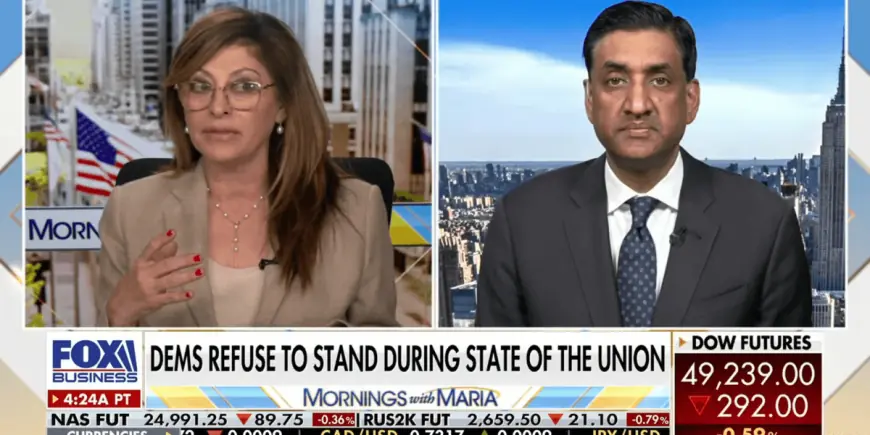
The moment matters because it turned a symbolic protest during the State of the Union into a constitutional and tactical argument on live television. In that exchange, maria bartiromo defended federal immigration agents’ responses to confrontations during enforcement operations, and Representative Ro Khanna pushed back by invoking proportionality and the Second Amendment—reframing why many lawmakers refused to stand.
Contextual rewind: how a seated protest became a force-and-constitution flashpoint
Most Democrats remained seated when asked to stand during the State of the Union in response to a prompt about prioritizing citizens. That collective choice was not treated as a simple partisan rebuke; it was explained by some members as a response to enforcement tactics that have led to deaths of American citizens. The on-air exchange relocated that debate from congressional floor behavior to the mechanics of law enforcement: what counts as a justified use of lethal force when agents encounter civilians during operations.
Here’s the part that matters: the conversation exposed two fault lines simultaneously — one over the political meaning of staying seated, and another over whether armed civilians who interrupt enforcement operations should be met with lethal response. What’s easy to miss is how the constitutional angle (invoking the Second Amendment) was used to challenge whether showing a weapon automatically justifies shooting, rather than to defend or criticize the political choice to remain seated.
Maria Bartiromo’s on-air defense, Khanna’s pushback, and the narrower facts in play
During the interview, maria bartiromo argued that a federal agent facing someone who appears armed during an interruption to an operation will respond with lethal force, and she described that response as part of agents’ training. Representative Ro Khanna countered that showing a gun does not, on its own, make a citizen legally subject to being shot, and he highlighted proportionality in the use of force as central to the debate. The exchange referenced a recent case in which federal immigration officers shot an American citizen who had been filming and interrupting agents; that case was explicitly raised in the course of the discussion.
The tone on air shifted from partisan theater to a narrower law-enforcement question: whether the presence of a firearm during an interruption of an enforcement action automatically elevates the threat to a level that justifies lethal force. Khanna emphasized civil liberties and constitutional limits on deadly force; the host emphasized the perceived dangers agents face during operations.
- State of the Union reaction: many Democrats remained seated when asked to stand for a statement about protecting citizens.
- Live exchange: the host argued agents would shoot if they perceived a threat from someone armed; the congressman insisted proportionality matters and that showing a gun alone does not justify killing.
- Case referenced: a recent shooting of an American citizen who had been filming or interrupting an enforcement operation was central to the pushback.
The real question now is how this framing will affect public conversations about enforcement tactics: will attention shift from symbolic protest to oversight and rules governing use of force? If oversight is pursued, the next signals will be whether lawmakers press for reviews of enforcement training or demand clearer standards for proportional response.
Q: Why did Democrats stay seated?
Because many lawmakers framed the gesture as a response to how enforcement operations have been carried out, including concerns after deadly encounters involving federal immigration agents.
Q: Does showing a gun automatically justify lethal force?
The exchange highlighted disagreement: one side argued agents facing an armed interruption will respond with lethal force; the other insisted that constitutional protections and proportionality mean a visible weapon alone is not a license to shoot.
Q: What could confirm a shift from symbolism to policy?
Formal calls for reviews of enforcement training, hearings on use-of-force standards, or legislative proposals tied to oversight would signal a move toward substantive policy debate.
It’s easy to overlook, but the bigger signal here is that an on-air tussle over a single incident forced competing framings—public safety and civil liberties—into the same sentence. That compression makes it more likely debates about oversight and proportional force will outlast the immediate partisan theater.