






















Abhishek Sharma’s Drops Deepen India’s Fielding Crisis as Team Becomes Worst Catching Unit in T20 World Cup 2026

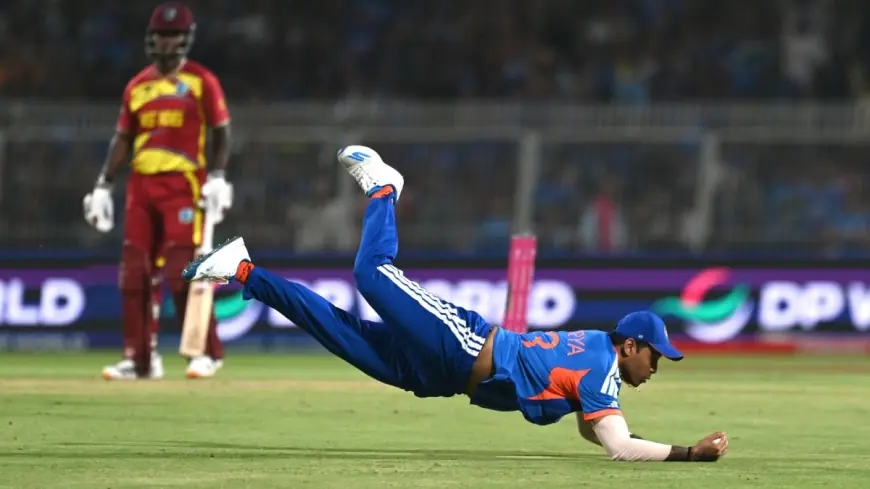
abhishek sharma was at the center of India’s fielding struggles in Kolkata as multiple dropped chances helped West Indies post 195 in a Super 8, virtual quarterfinal match of the T20 World Cup 2026. The misses compounded a wider problem: India now sit with 13 dropped catches in the tournament and a catching efficiency of 72 percent, the lowest among teams that have reached the Super 8 stage.
Abhishek Sharma: key misses that swung momentum
The match saw several costly lapses in the Indian outfield, with Abhishek Sharma singled out for multiple errors. He failed to hold a straightforward chance of one batter and was also involved in a late miss when another West Indies hitter was on strike. Earlier in the innings he dropped a regulation catch of a promoted batter on the fifth delivery of the fifth over, bowled by Jasprit Bumrah; that batter was on 15 at the time. The India captain reacted strongly to the early let-off, expressing visible frustration but instructing the opener to return the ball.
Those missed opportunities helped the visiting side convert cameos throughout the lineup into a competitive total on a dry but good batting pitch at Eden Gardens. No West Indies batter passed 40, yet contributions up and down the order pushed the score to 195.
Fielding breakdown, other mishaps and match context
India’s catching woes were not limited to one player. A difficult chance was misjudged by another fielder, who was positioned a few yards in and had to retreat under a late slog, allowing the ball to clear the boundary for six. The accumulation of errors produced the tournament-high tally of 13 dropped catches for India in the T20 World Cup 2026 Super 8 phase and left their catching efficiency at a worrying 72 percent.
The match carried knockout implications: both sides entered the Super 8 on two points each, making this a do-or-die contest with the winner advancing to the semi-finals. The India captain had elected to bowl first, citing dew and the advantages of chasing as factors in the toss decision. There remains a clear path for a chase if conditions change — heavy dew could tilt things in India’s favor — but as things stood the defending champions faced a stern test.
Teams and tactical notes
The playing XIs for the contest were set in full before the start. India’s lineup included a mix of openers, middle-order options and frontline bowlers. The West Indies side featured a reshuffled order with a promoted batter early on who capitalized on the dropped chance to build an innings.
- India XI (selected for the match): Abhishek Sharma; Sanju Samson (wk); Ishan Kishan; Suryakumar Yadav (capt); Tilak Varma; Hardik Pandya; Shivam Dube; Axar Patel; Arshdeep Singh; Varun Chakravarthy; Jasprit Bumrah.
- West Indies XI (selected for the match): Roston Chase; Shai Hope (capt & wk); Shimron Hetmyer; Rovman Powell; Sherfane Rutherford; Jason Holder; Romario Shepherd; Matthew Forde; Gudakesh Motie; Akeal Hosein; Shamar Joseph.
Implications and what to watch next
With the margin for error gone in a knockout scenario, India’s catching record is the immediate concern. The team’s 13 dropped catches and sub-75 percent catching efficiency in the Super 8 phase are statistical red flags for a side that needs clean fielding to complement its batting and bowling strengths. If dew arrives as predicted, chasing may become easier and reduce the immediate penalty of fielding lapses; if conditions remain unchanged, those missed chances could decide the outcome.
Coaches and players will need to address routine catching and positioning before the next phase if India hope to defend their title. For now, the match in Kolkata will be remembered as one where fielding, and a string of dropped catches featuring abhishek sharma, played an outsized role in shaping a crucial Super 8 encounter.