






















Khamenei Killed in US‑Israeli Strike as Ayatollah Khomeini’s Legacy Shapes Succession Battle

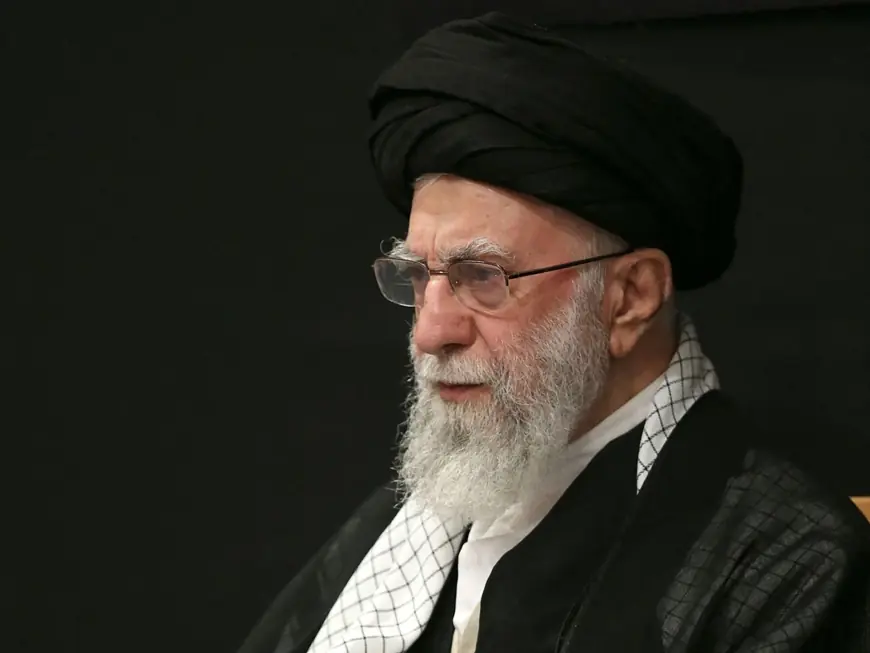
Iran’s supreme leader, Ayatollah Ali Khamenei, has been killed in a joint US‑Israeli air strike that hit his compound on Saturday, February 28, Iranian state media announced in the early hours of Sunday. The development matters now because his death ends a rule that began in 1989 and immediately raises the prospect of a hardline takeover while regional tensions and domestic unrest remain acute.
Khamenei’s Death and the US‑Israeli Strike
US President Donald Trump said the strike had killed Khamenei and that he and other Iranian officials "couldn’t escape US intelligence and the advanced tracking systems. " Benjamin Netanyahu said there were many signs that Khamenei "is no longer with us" before Iranian state media confirmed the leader’s death. Satellite imagery showed Khamenei’s secure compound was heavily damaged in the initial barrage. The semi‑official Tasnim News Agency announced that Khamenei "was martyred in the joint attack launched by America and the Zionist regime on the morning of Saturday, February 28, " and it said his daughter, son‑in‑law and grandson were also killed.
Tasnim, Iranian State Media and Official Claims
Iranian state outlets provided the first formal confirmation shortly after statements from US and Israeli officials. Donald Trump’s public claim preceded the Iranian announcement, and Benjamin Netanyahu made statements pointing to Khamenei’s likely death without an explicit confirmation at that moment. The sequence of public assertions and the Iranian announcement marked a rapid shift from uncertainty to official acknowledgement.
Ayatollah Khomeini and Khamenei’s Early Ties
Khamenei took the helm in 1989 following the death of Ayatollah Ruhollah Khomeini, whose revolutionary authority had reshaped Iran a decade earlier. The younger cleric had run secret missions for Khomeini while the senior ayatollah was in exile, and Khamenei’s early activism in Qom and elsewhere tied him to the revolution’s founding generation. The legacy of ayatollah khomeini will be central to debates over legitimacy and succession within Iran’s clerical institutions.
Military Campaigns, Regional Violence and Preceding Strikes
The strike that killed Khamenei came after a period of escalating military confrontations. An Israeli air offensive against Iran in June last year exposed weaknesses in Iran’s air defences and the Islamist militia network Khamenei had cultivated; that exchange included an Iranian barrage of missiles and drones that inflicted some damage but did not halt Israeli strikes. The brief conflict ended after Donald Trump dispatched US bombers to strike Iranian nuclear sites, a move described in context as a grave setback to a programme the supreme leader had long prized. Days before Khamenei’s October 2024 public appearance, Israel had killed Hassan Nasrallah, the veteran secretary‑general of Hezbollah, with large bombs on the group’s Beirut headquarters; that assassination was described as a personal blow to Khamenei, who had known Nasrallah for decades.
Domestic Pressures: Protests, Crackdowns and Political Legacy
Khamenei’s rule had been repeatedly tested at home. He presided over a presidency during a bloody war with Iraq in the 1980s and then became supreme leader in 1989. His approach—shaping the Islamic Revolutionary Guard Corps into a central security, political and economic institution, promoting a "resistance economy" and maintaining deep scepticism about engagement with the West—grew from that wartime experience, observers said. His government met the 2009 post‑election protests with a brutal crackdown and faced major unrest over women’s rights in 2022. In January, protests sparked by economic hardship morphed into nationwide upheaval with many calling for the overthrow of the Islamic republic; the authorities’ response produced one of the most violent confrontations since the 1979 revolution.
What makes this notable is the way sustained external pressure and recurring domestic crises narrowed Khamenei’s options over decades, concentrating power in institutions such as the IRGC while deepening public grievances. Critics argued his focus on defence blocked reforms, and some assessments of his rule are incomplete in the provided context; one sentence in the available material is cut off and is unclear in the provided context.
Personal Origins, Intellectual Influences and Succession Outlook
Khamenei was born the son of a minor cleric in the eastern shrine city of Mashhad and studied in Qom. He absorbed Shia traditions and the radical thinking of Ayatollah Ruhollah Khomeini and, by the late 1960s, was carrying out covert work for the exiled Khomeini while organising Islamist networks. He read widely, with noted interest in western authors such as Leo Tolstoy, Victor Hugo and John Steinbeck, and encountered thinkers seeking to combine Marxism and Islamism; that detail in the source material is cut short and is unclear in the provided context. Observers now say Khamenei is likely to be replaced by hardline figures, a shift that will shape Iran’s political trajectory and its relations across the region.