

























Blood Moon 2026: Total Lunar Eclipse Is Two Days Away — Full Guide for March 3

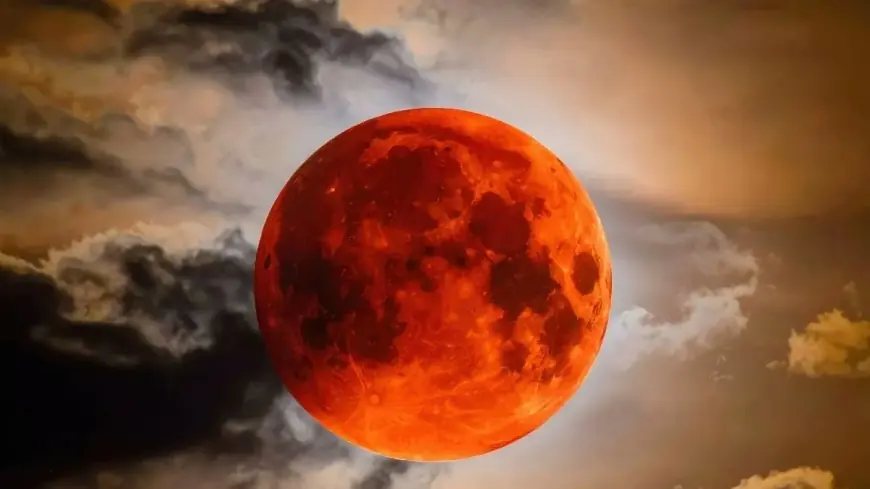
The next full moon is bringing far more than moonlight. A total lunar eclipse on March 3, 2026 will be visible from North America, Australia, New Zealand, and East Asia — and it will be the last total lunar eclipse anywhere on Earth until New Year's Eve 2028. This is the Blood Moon you do not want to miss.
What Is a Blood Moon and Why Does It Turn Red
A lunar eclipse happens when Earth passes directly between the Sun and the Moon, casting a giant shadow on the lunar surface. When the Moon enters Earth's umbra — the darkest part of the shadow — it takes on a reddish-orange hue because sunlight filtering through Earth's atmosphere bends and scatters, letting red wavelengths reach the lunar surface.
It is as if all of the world's sunrises and sunsets are projected simultaneously onto the Moon's surface — painting it with deep red and orange hues during totality. This is why the event is called the Blood Worm Moon — it occurs during the March 2026 full Moon, also known as the Worm Moon.
Total Lunar Eclipse 2026: Exact Times by Time Zone
NASA's official timeline for the blood moon total lunar eclipse on March 3, 2026:
| Eclipse Phase | EST (East Coast) | What Happens |
|---|---|---|
| Penumbral begins | 3:44 a.m. ET | Moon enters Earth's outer shadow, dims slightly |
| Partial eclipse begins | 4:50 a.m. ET | Earth's umbra starts covering the Moon |
| Totality begins | 6:04 a.m. ET | Moon fully red — Blood Moon begins |
| Maximum eclipse | 6:33 a.m. ET | Deepest, darkest red coloration |
| Totality ends | 7:03 a.m. ET | Red fades, partial phase resumes |
| Eclipse ends | ~9:23 a.m. ET | Moon exits Earth's shadow entirely |
Totality — when the entire lunar surface appears reddish-orange — will last 58 minutes. The Moon turns fully red during totality from 11:04 to 12:03 UTC on March 3, with maximum totality at 11:33 UTC.
Where to See the Blood Moon Lunar Eclipse 2026
The best views of the March 2026 total lunar eclipse will be from western North America, Australia, New Zealand, East Asia, and the Pacific. Northwest Mexico, the southwest United States, and inland Australia statistically offer the best odds of clear skies.
Viewers on the East Coast will see the eclipse before sunrise. Because the Moon will be setting in the west during totality for Eastern U.S. observers, the best viewing requires a clear western horizon shortly before and during the early stages of totality. West Coast and mountain time zone observers are best positioned for the full experience, with the Moon high in the sky throughout totality.
The blood moon total lunar eclipse is not visible from most of Europe or Africa. European observers can catch NASA and Space.com live streams of the event online.
How to Watch the Blood Moon — No Equipment Required
You can observe a lunar eclipse without any special equipment. All you need is a line of sight to the Moon. No telescope, no binoculars, no special glasses — unlike a solar eclipse, a lunar eclipse is completely safe to watch with the naked eye for as long as you like.
On March 3, some skywatchers may also witness a rare atmospheric effect called a selenelion — when the rising sun and the eclipsed moon briefly share the sky at the same moment, an event that seems geometrically impossible but occurs due to atmospheric refraction bending both light sources above the horizon simultaneously.
When Is the Next Full Moon and Next Lunar Eclipse After March 2026
This final total lunar eclipse spans 58 minutes of totality, making it the last of its kind for nearly three years. The next lunar eclipse after this will be a partial lunar eclipse on August 28, 2026, followed by the next total lunar eclipse on New Year's Eve 2028 into January 1, 2029. The April 2026 full moon — the Pink Moon — arrives April 1, 2026 ET, with no eclipse attached. Set your alarm for March 3. This blood moon will not come around again for a long time.