

























Planetary Alignment 2026: How and when to see 6 planets aligned in a planetary parade

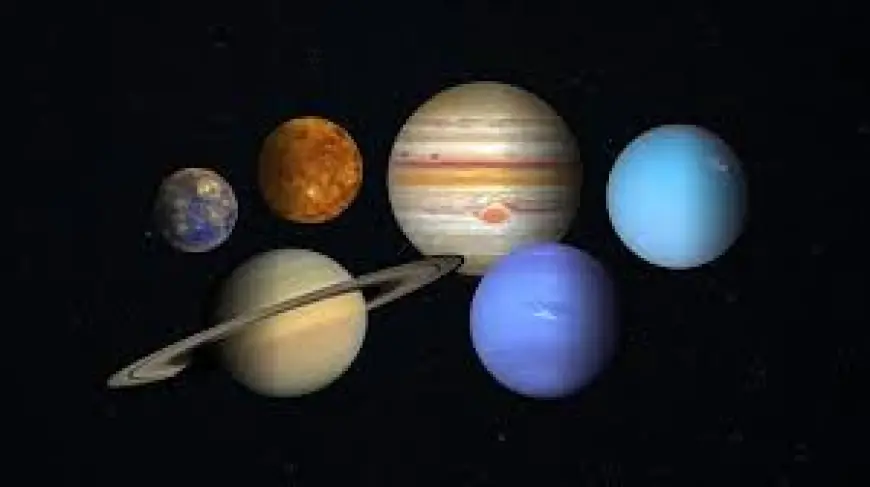
The planetary alignment 2026 is set to produce a rare six-planet parade across the night sky for several days around February 28, offering a visible line of Jupiter, Saturn, Venus, Mercury, Neptune and Uranus. The spectacle matters because seeing six planets at once is uncommon, and it will be accompanied by new sonifications created from Chandra X-ray Observatory data for three of the planets.
Planetary Alignment 2026: what will be visible and when
For the next few days around February 28, Jupiter, Saturn, Venus, Mercury, Neptune and Uranus will all be visible at the same time in the night sky. Neptune and Uranus will require binoculars or a telescope to spot. Mercury will become harder to see by midweek, while Jupiter and Venus will remain easily visible for months.
How the six-planet parade will look in the northern hemisphere
The planets will appear in a curved line across the sky. In the northern hemisphere, Jupiter will sit high in the south-east, with Mercury, Saturn, Neptune and Venus clustered close to the western horizon. Venus will be the brightest of the group, Mercury much fainter to its right, and Saturn and Neptune a little above. Uranus will be faint, positioned below the group of stars known as the Seven Sisters.
When and where to watch — timing in ET, UK and elsewhere
Those hoping to catch the parade should head outside in the early evening. Aim for around 6: 00 p. m. ET in the United States and about 5: 45 p. m. in the UK, finding a spot with a clear view to the west — preferably up a hill or another unobstructed location. In Australia, the suggested time to head outside is after 6: 45 p. m. local time, but Mercury’s proximity to the horizon at sunset will make it unlikely to be visible there and Venus will set by 7: 15 p. m., so viewing times are tighter.
Southern hemisphere view and notable cautions
The event will also be visible in the southern hemisphere and will follow a similar pattern, though the parade will appear reversed compared with the northern hemisphere. In Australia, Jupiter will appear in the north and Uranus in the north-west just above the Seven Sisters. Observers are advised that binoculars will help with the faint planets, but never look at the sun through binoculars or a telescope because it could cause permanent eye damage.
Why this grouping is rare and what else to expect
Seeing four or five planets together is relatively common, but six in one view is much rarer. All seven visible planets were seen together last year, and the next full line-up of that scale will not occur again until 2040. The close apparent grouping now arises because the planets’ orbits place them in roughly the same area of the sky from Earth’s perspective; each planet circles the sun at a different speed and only occasionally do their paths align to cluster several together.
Companion sounds and the moon’s role in the show
New sonifications have been released based on Chandra X-ray Observatory data that translate observations of Jupiter, Saturn and Uranus into sound, adding an aural element to the event. The moon will also be present in the sky tonight and over the next couple of days, contributing to what will be a rich visible display of the solar system.
Observers should plan for a short window on specific nights, bring binoculars or a small telescope for faint targets, and choose a clear western horizon for the best chance to see this rare planetary parade.