























Bbc News: Khamenei killed as US and Israeli strikes plunge region into uncertainty

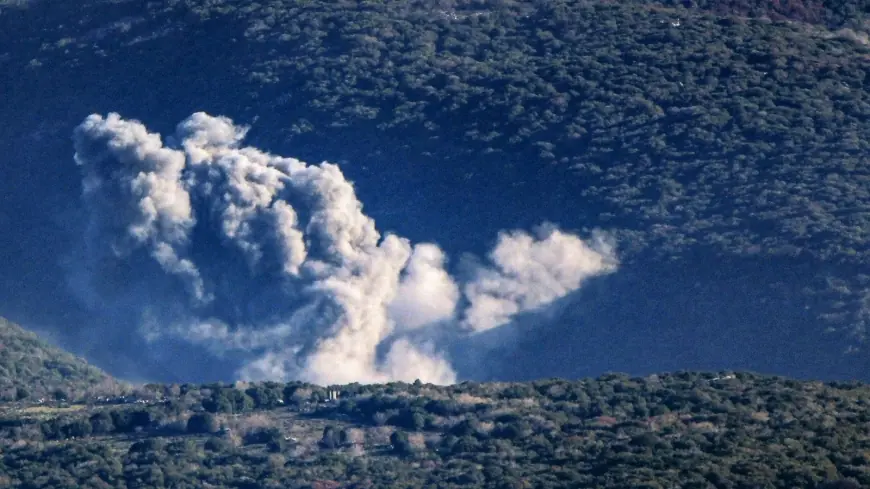
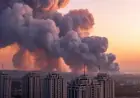
Ayatollah Ali Khamenei has been killed on the first day of massive US and Israeli air strikes, US President Donald Trump announced, a development later confirmed on Iranian state television; news coverage shows the death removes a central figure who has shaped Iran for decades and immediately raises questions about succession and regional escalation.
How the strikes unfolded and the immediate confirmation
The attacks began as a joint US and Israeli operation. US President Donald Trump announced Khamenei's death, and Iranian state television later confirmed it. A US official told colleagues that the United States believed Khamenei and five to 10 top Iranian leaders had been killed in an Israeli strike on a compound in Tehran. Trump later posted that Khamenei had been killed on his social media account.
News: intelligence, a ‘window of opportunity’ and targeting of gatherings
Israeli intelligence had been tracking the movements of Iran's supreme leader and determined there was a window of opportunity to launch strikes as senior clerics and commanders convened. The US joined the Israeli assault after intelligence suggested Iran's top clerics and commanders could be hit at once. A person briefed on Israeli military preparations said there were several gatherings that morning and that they targeted all of them.
Decision-making in Washington: briefings and stated rationale
In the days before the strikes, Trump was briefed on military options by General Dan Caine, the chairman of the joint chiefs of staff, and US navy Admiral Brad Cooper, the commander of US Central Command. Senior US Trump weighed multiple factors; one official said the main rationale was Iran's arsenal of conventional missiles, which the official described as posing an "intolerable threat" to the US. The official added, "They refused, at every instance, and consistently have refused to address ballistic missiles, " with the remainder of that comment unclear in the provided context.
Diplomatic talks collapsed after envoys pressed Iran on nuclear sites
The strikes followed a week of rapid developments and hinged in part on whether Trump's envoys, Steve Witkoff and Jared Kushner, concluded Iran was stalling when they met at the residence of Oman's ambassador in Geneva. In talks that lasted all day Thursday, Witkoff and Kushner pushed Iran to agree to destroy its three main nuclear enrichment sites at Fordow, Isfahan and Natanz, and to deliver its remaining stockpile to the United States. They also insisted any deal must be permanent, without the sunset provisions that phased out restrictions in the 2015 accord that Trump withdrew from during his first term. Witkoff and Kushner ended the day disappointed.
Khamenei’s life, role and the vacuum his death creates
Ali Khamenei, aged 86, had ruled for the past three decades. He was born in Mashhad in north-eastern Iran in 1939, the second of eight children in a religious family; his father was a mid-ranking cleric from the Shia branch of Islam, the country's dominant sect. Khamenei later described his childhood as "poor but pious, " saying he frequently ate nothing but "bread and raisins. " His education was dominated by study of the Quran and he qualified as a cleric by the age of 11. He joined critics of the Shah and, for years, lived underground or was imprisoned; he was arrested six times by the Shah's secret police, suffering torture and internal exile. After the 1979 Islamic revolution, Ayatollah Ruhollah Khomeini appointed him Friday prayer leader of the capital, Tehran. The supreme leader's office had been held by only two people since the 1979 revolution; it is an all-powerful office as head of state and commander-in-chief of the armed forces, including the elite Revolutionary Guards. Khamenei could veto matters of public policy and hand pick candidates for public office. State television had covered his every move, his image was plastered on billboards, and his photograph was ubiquitous in shops. Many young Iranians had never experienced life without him in charge.
Regional fallout, warnings and political ruptures
The offensive has been described as tipping the Middle East into a massive war that could last weeks. There are already reports of attacks on countries and installations across the Persian Gulf, a seaway through which a fifth of the world's oil passes, meaning a sustained conflict is likely to have major repercussions for the global economy. Iran had warned it would take the gloves off if attacked and its leadership saw an assault as a fight for survival. Oman’s foreign minister, Badr Albusaidi—who had helped broker talks—wrote that he was "dismayed, " saying active and serious negotiations had been undermined and that neither US interests nor global peace were well served. The American-Israeli offensive also posed a dilemma for Britain: Prime Minister Sir Keir Starmer has ruled out British bases being used to support the assault and expressed concern about the implications under international law, while senior officials weighed the wisdom and legality of the move against the desire to avoid damage to transatlantic relations.
What comes next is uncertain
The thinking behind decapitating the Iranian regime included a belief that, while the Revolutionary Guards might be deeply loyal to Khamenei, they would not back any of his successors to the same extent. The violent death of a leader who shaped Iran for decades heralds a new and uncertain future both inside Iran and across the wider region.