

























Planetary Alignment 2026: Six planets to parade across the sky on February 28

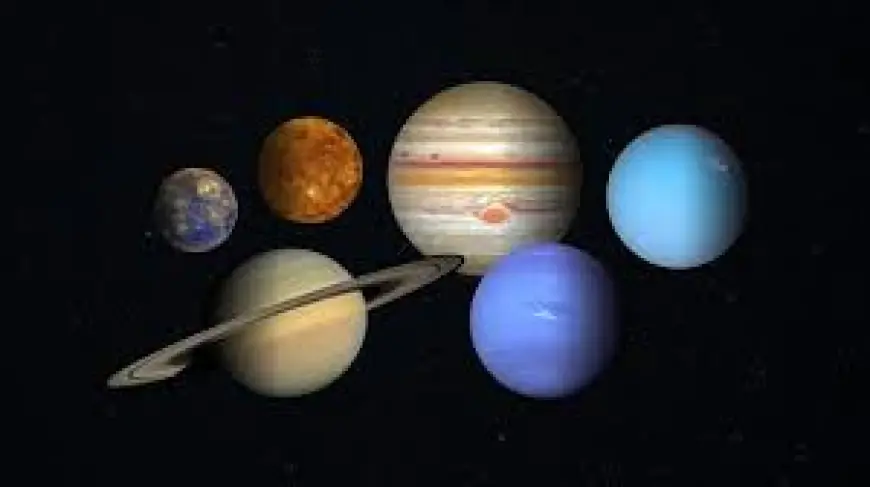
The night sky will host a rare planetary parade around 28 February, an alignment that brings Jupiter, Saturn, Venus, Mercury, Neptune and Uranus into view at once. This planetary alignment 2026 matters because it places half the visible solar system along a single curve, offering a binocular- or telescope-assisted spectacle and new scientific sonifications released by NASA.
Planetary Alignment 2026: When and where to look
The six planets will be visible together on 28 February and for a few days either side. Observers in the UK are advised to go outside in the early evening around 5. 45pm, while viewers in the United States should look from roughly 6pm. For much of the northern hemisphere the planets will appear in a curved line with Jupiter high in the south-east and a cluster of Mercury, Saturn, Neptune and Venus near the western horizon.
Venus will be the brightest of the group; Mercury will appear much fainter to Venus’s right, with Saturn and Neptune positioned a little above that pair. Uranus will be faint and sit below the constellation known as the Seven Sisters. Stargazing apps or a pair of binoculars can help pick out the dimmer worlds, and observers are reminded never to point binoculars or a telescope at the sun.
What Dr Megan Argo says about the parade
Dr Megan Argo, a reader in astrophysics at the University of Lancashire, explains the cause: the planets’ orbits have brought them into roughly the same area of the sky from Earth’s perspective, so their paths line up and place several together visually. She notes that while four or five planets together is fairly common, seeing six at once is much rarer. All seven were visible together last year, and the next full line up will not occur again until 2040.
Argo adds that Mercury will become harder to spot by midweek, while Jupiter and Venus are bright enough to remain easily visible for months. She also points out that the moon will be present in the sky tonight and over the next couple of days, which affects the overall scene.
Nasa and Chandra sonifications for Jupiter, Saturn and Uranus
To mark the event, NASA has released new sonifications—astronomical data from its Chandra X‑ray Observatory translated into sound—for Jupiter, Saturn and Uranus. Those audio translations accompany the visual alignment and highlight scientific observation efforts tied to the planets involved in the parade.
How viewing shifts in the southern hemisphere and Australia
Dr Ed Bloomer of the Royal Observatory, Greenwich notes the parade will be visible in the southern hemisphere but will appear reversed when compared with northern views. In Australia, Jupiter will be seen in the north while Uranus will sit in the north-west just above the Seven Sisters. Local sunset timing there means observers are urged to head outside after about 6. 45pm local time. Mercury’s proximity to the horizon at sunset makes it unlikely to be visible in Australia, and Venus will set by 7. 15pm, so viewers will need to act quickly to catch the brightest planet.
Practical viewing advice and a technical aside about delawareonline. com
For the best chances of seeing the curved line of planets, Argo recommends finding a clear western horizon, ideally from an elevated spot such as a hill with an unobstructed vista. Binoculars will aid in locating faint Uranus and Neptune, while a telescope will offer even more detail for those who have access to one.
Separately, a note about web access: delawareonline. com has stated that it aims to provide an optimal reading experience and has built its site to take advantage of newer browser technology. The site indicates that some browsers are not supported and asks readers to download an updated browser for the best experience.
What makes this notable is the convergence of public viewing opportunities, digital sonifications from NASA’s Chandra X‑ray Observatory, and clear timing guidance for multiple hemispheres—allowing amateur observers and scientists alike to engage with the same brief alignment.