

























Ayatollah Khomeini’s legacy in focus as claims swirl over Ali Khamenei

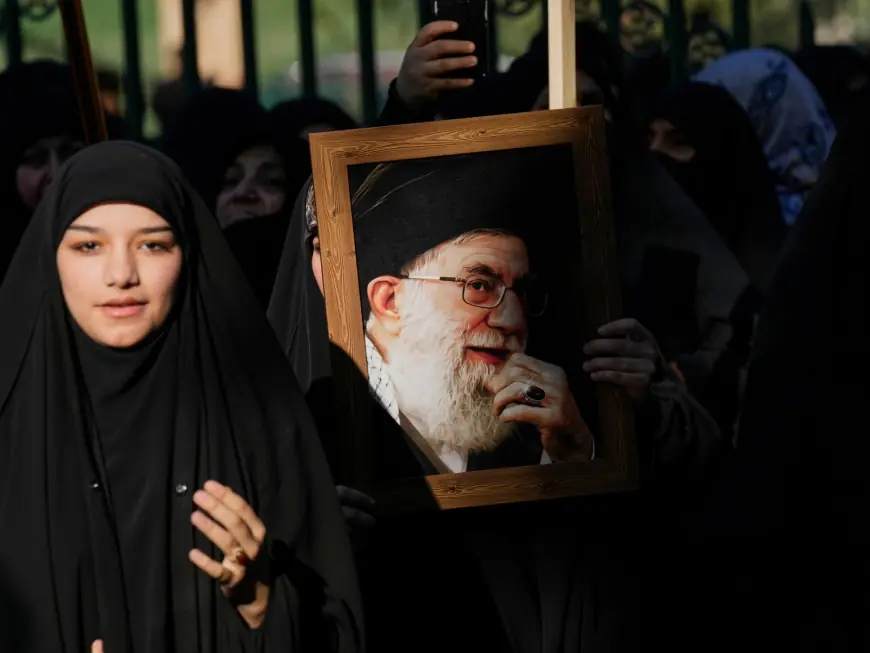
When he appeared in public for the first time in five years in October 2024, the then-84-year-old supreme leader told tens of thousands of supporters at a mosque in Tehran that Israel “won’t last long” and urged followers: “We must stand up against the enemy while strengthening our unwavering faith. ” The renewed attention comes as claims about his fate after Saturday’s strikes have put ayatollah khomeini’s successor at the center of regional uncertainty.
Claims of his death after strikes
US president Donald Trump has announced the killing of Iran’s supreme leader Ali Khamenei after joint US‑Israeli air strikes hit his compound on Saturday, and said Khamenei and other Iranian officials “couldn’t escape US intelligence and the advanced tracking systems. ” Benjamin Netanyahu said on Saturday there were many signs Khamenei “is no longer with us”, while there has been no official confirmation of his death from Iranian officials. Satellite imagery showed that his secure compound was heavily damaged in the initial barrage, and Iranian authorities have yet to provide proof that he escaped.
Ayatollah Khomeini and the roots of Khamenei’s rise
Khamenei took over as supreme leader in 1989 following the death of Ayatollah Ruhollah Khomeini. One account in the files describes him as born the son of a minor cleric of modest means in the eastern shrine city of Mashhad and taking his first steps as a radical in the early 1960s. Another account says he was born in 1939 in Mashhad as the son of a renowned Muslim leader and an ethnic Azerbaijani from neighbouring Iraq, and that the family first settled in Tabriz before moving to Mashhad. As a young religious student in Qom he soaked in Shia traditions and the radical new thinking of Ruhollah Khomeini; by the late 1960s he was running secret missions for Khomeini, who had been exiled, and organising networks of Islamist activism.
Military strategy, the IRGC and a resistance economy
Before becoming supreme leader, Khamenei led Iran as president through a bloody war with Iraq in the 1980s. He shaped the military and paramilitary apparatus that form Iran’s defence and its wider regional influence, and under his vision the Islamic Revolutionary Guard Corps evolved into a powerful security, political and economic institution. He promoted a “resistance economy” to foster self‑reliance under punishing Western sanctions, maintained scepticism of engagement with the West, and pushed back against critics who argued his defence focus blocked reforms.
Years of tests: protests, crackdowns and political fallout
His rule was seriously tested in 2009, when protesters who took to the streets over what they claimed was a rigged presidential election were met with a brutal crackdown, and again in 2022 over women’s rights. Possibly the biggest challenge came in January when protests triggered by economic hardship morphed into nationwide upheaval, with many protesters directly calling for the overthrow of the Islamic republic; the authorities’ response led to one of the most violent confrontations since the country’s 1979 revolution. Critics argued he was out of touch with a young population seeking reforms and economic improvement rather than continued isolationism and shadow wars with the US and Israel.
Personal influences and contested image
Khamenei was described as an avowed aficionado of western literature, enjoying writers such as Leo Tolstoy, Victor Hugo and John Steinbeck, and he met thinkers who sought to meld Marxism and Islamism. He also liked works describing the “westoxification” of his unclear in the provided context. Seventeen months after his October 2024 sermon, commentators said he might well have faced his final climactic confrontation after decades of bitter struggle against multiple enemies.
Vali Nasr, an Iranian affairs expert cited in the material, framed Khamenei as a wartime leader who believed Iran was vulnerable and needed security; Nasr said that Iranians “paid too high a cost for this degree of insistence on national independence – in the process, he lost the Iranian population because they no longer believed in the wisdom of this independence. ”
Days before the October 2024 appearance, Israel had killed Hassan Nasrallah, the veteran secretary general of Hezbollah, with huge bombs on the group’s headquarters in Beirut; the assassination was described as a personal blow to Khamenei, who had known Nasrallah for decades. An Israeli air offensive against Iran in June last year reportedly revealed weaknesses in Iran’s air defences and in the coalition of militias Khamenei had assembled. An Iranian barrage of missiles and drones launched at Israel inflicted some damage but fell short of stopping Israeli attacks, and the brief conflict ended after Donald Trump dispatched US bombers to strike Iranian nuclear sites, a move described as a grave setback to a programme the supreme leader had cherished.
Unclear in the provided context what the next confirmed public milestone or official update will be.