






















Rediscovered Silent Film Features Cinema’s First ‘Robot’

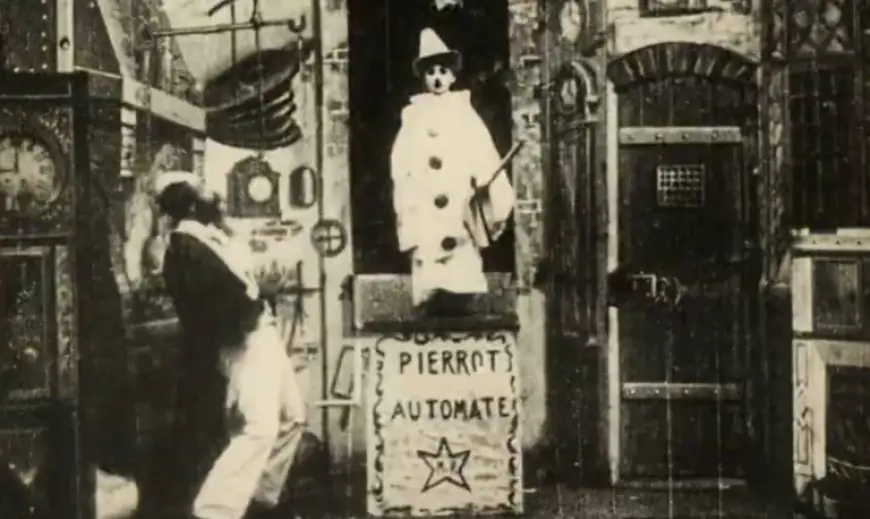
Archivists at the Library of Congress recently unveiled a remarkable discovery: “Gugusse And The Automaton,” believed to be the first depiction of a robot in cinema. This silent film, created by French filmmaker Georges Méliès around 1897, is only 45 seconds long and showcases themes that resonate in today’s science fiction. The film features a magician and an automaton, highlighting a longstanding narrative of machines turning against their creators.
Gugusse And The Automaton: A Pioneering Silent Film
The story follows a magician named Gugusse who showcases a clown-like automaton in what appears to be an early robot manufacturing setting. At first, Gugusse winds up the automaton, which eagerly moves its arms. However, the automaton quickly transforms from a playful figure to a menacing one, using its walking sticks as weapons against Gugusse. In a comedic twist, Gugusse resorts to a large hammer, ultimately causing the automaton to shrink and vanish.
A Significant Discovery
This film was thought to be lost until it was uncovered in a garage, where it had lain dormant for decades. It was part of a collection donated by the descendants of William Delisle Frisbee, a late 19th-century potato farmer known for showcasing films across Pennsylvania. The Library of Congress technicians recently confirmed the film’s identity after examining its reels. They stabilized and digitized the footage, making it available for free viewing in 4K format.
Méliès: The Father of Special Effects
Georges Méliès, often considered the father of visual effects, created around 500 films that employed innovative techniques like double exposure and forced perspective. His passion for early science fiction influenced his work, introducing themes of automation and robots long before they became commonplace in cinema. Although his automatons were not robots in the modern sense, the concepts laid the groundwork for future depictions of machine-based characters.
The Legacy of Robot Villains
- Méliès’ influence persisted into later films, with robot antagonists emerging in cinema.
- The 1919 silent film “The Master Mystery,” featuring Harry Houdini, is one notable example.
- In this film, a costume-clad actor is described as a “mechanical figure with a human brain.”
Despite its near-century of obscurity, “Gugusse And The Automaton” serves as a testament to the enduring nature of film. Nitrate Film Vault Leader George Willeman emphasized how resilient these early materials can be compared to more modern media formats.
This discovery enriches the legacy of world cinema and underscores the important narratives surrounding automation and humanity’s relationship with machines, themes that continue to be relevant in contemporary storytelling.