

























Bahrain Navy Base Hit as Iran Retaliation Expands Gulf Conflict

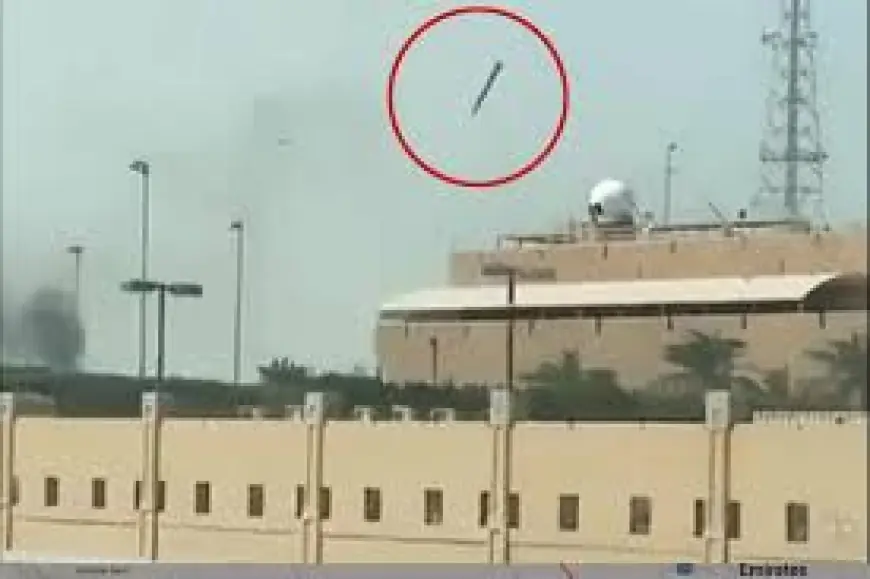
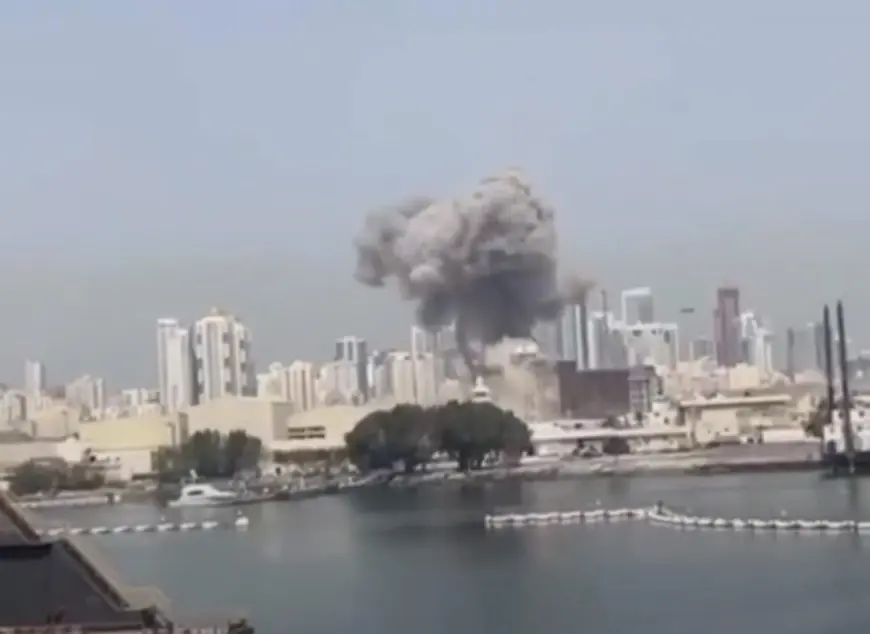
A missile strike hit a U.S.-linked facility at a Bahrain navy base on Saturday, Feb. 28, 2026 (ET), as Iran launched a wave of retaliation across the Gulf in response to U.S.-Israeli attacks on Iranian targets earlier in the day. The strike, centered on the Juffair area of Manama, places the headquarters hub for U.S. naval operations in the Middle East at the heart of a rapidly widening confrontation that is already disrupting travel, raising regional security alerts, and lifting energy-market anxiety.
Bahraini authorities confirmed the attack on a service center associated with the U.S. Navy’s Fifth Fleet footprint. Plumes of smoke were visible over parts of the capital, and air defenses across neighboring states were activated as additional missiles were tracked toward countries that host U.S. forces.
Bahrain Navy Base Strike: What Was Targeted in Juffair
Bahrain’s National Communication Centre said a missile struck a service center tied to the U.S. naval presence at Naval Support Activity Bahrain, the long-standing anchor point for maritime security operations across the Persian Gulf, the Red Sea, and parts of the Indian Ocean.
The facility in question is closely linked to the Fifth Fleet and U.S. Naval Forces Central Command, which coordinate patrols, escort operations, and regional maritime deterrence. While the strike was described publicly as hitting a support site rather than every element of the naval complex, the symbolism is stark: a location central to U.S. sea power in the region was placed directly under fire.
Officials did not immediately provide detailed damage assessments. Early statements also did not confirm fatalities at the Bahrain navy base, and U.S. officials indicated there were no immediate reports of American casualties as initial checks were conducted.
Iran Retaliation Across the Gulf and Pressure on U.S. Forces
The Bahrain incident came amid a wider volley of Iranian missiles aimed at multiple Gulf states, escalating the risk that the conflict will spread beyond Iran and Israel into the broader security architecture that supports U.S. operations.
Several countries that host U.S. personnel reported intercept attempts, air defense activity, and temporary restrictions on movement. Public warnings were issued urging residents to shelter indoors in some locations, while military forces heightened readiness around bases and critical infrastructure.
Iran’s leadership signaled the retaliation would not be limited to a single strike, increasing concern that the region could see a cycle of launches and counterstrikes over the coming days.
Why the Bahrain Navy Base Matters to Global Shipping and Energy
The Fifth Fleet presence in Bahrain is designed to keep key sea lanes open and deter disruption around vital chokepoints. That mission becomes more complicated when the hub itself is attacked, even if damage is limited.
The regional waters overseen from Bahrain connect three strategic corridors:
-
The Strait of Hormuz, a critical gateway for oil and gas shipments
-
The Bab al-Mandeb, linking the Red Sea to the Gulf of Aden
-
Approaches to the Suez route, central to Europe-Asia trade flows
Markets can react sharply to any perception that these lanes could be threatened. Even if shipping continues normally, elevated risk raises insurance costs and can tighten available tanker capacity, quickly feeding into fuel prices and inflation expectations.
Is the U.S. at War After Operation Epic Fury?
The strike on the Bahrain navy base lands during a broader U.S. military campaign that the Pentagon has described as Operation Epic Fury. President Donald Trump has publicly characterized the action as major combat operations against Iran, framing it as necessary to counter urgent threats tied to Iranian military capabilities.
Whether the United States is “at war” is legally distinct from the fact of active hostilities. A formal declaration of war would require action by Congress, but sustained combat operations and direct Iranian attacks on U.S. facilities create a war-like reality for personnel and regional partners regardless of the legal label.
The Bahrain strike, in particular, intensifies the domestic political debate in the United States over war powers and the scope of the mission, while also heightening allied concern in the United Kingdom, Canada, and Australia about the security environment for deployed personnel, diplomats, and citizens in the region.
What Happens Next: Key Signals to Watch in the Next 24–48 Hours
With missile exchanges already under way, the direction of the crisis will likely be defined by operational tempo and whether either side broadens target sets. The following signals will shape the next phase:
| Indicator | What It Suggests | Why It Matters |
|---|---|---|
| Follow-on strikes near the Bahrain navy base | Escalation against U.S. command hubs | Higher risk to personnel and regional basing |
| Expanded airspace closures | Threats extending beyond single countries | More flight cancellations and travel disruption |
| Maritime security advisories | Elevated risk to shipping lanes | Potential pressure on oil prices and freight costs |
| Additional launches at Gulf states | Sustained retaliation cycle | Greater chance of casualties and wider conflict |
| Emergency diplomatic activity | Openings for de-escalation | Potential pauses or negotiated limits |
For now, the Bahrain navy base strike underscores how quickly a confrontation centered on Iran can spill into the Gulf’s dense network of U.S. facilities and partner states. The next day will be shaped by whether further attacks follow and whether the region can avoid a spiraling exchange that pulls more countries into the line of fire.