

























Invitation to Pessimism

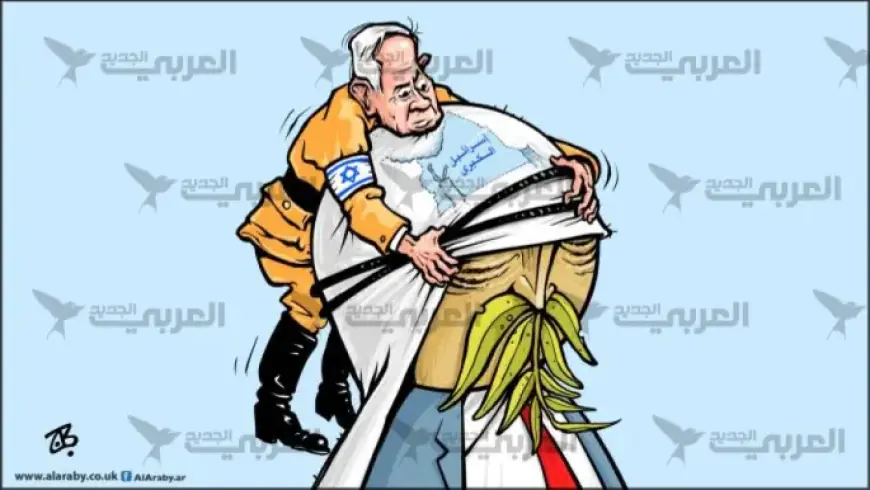
During his presidential campaign, Donald Trump, who later secured his second term, was asked about the possible annexation of the occupied West Bank by Israel. He responded, “I think that will succeed,” emphasizing success regardless of the legality or legitimacy of the actions involved. Following his election, his administration issued brief statements indicating a lack of support for the annexation, yet there was no tangible opposition to the complete seizure of West Bank territory.
Trump and Israeli Leadership
In multiple meetings with Israeli Prime Minister Benjamin Netanyahu, Trump refrained from discussing the situation in the occupied territories. He seemed to consider it an internal Israeli matter, which rendered his weak verbal opposition to annexation mere rhetoric. As global focus shifted towards implementing the second phase of the “Trump Peace Plan” in the devastated Gaza Strip, the U.S. Embassy announced plans to provide consular services in the Efrat settlement located in the Gush Etzion assembly, which is built on West Bank land.
- The U.S. recognized state lands in the West Bank as Israeli territory.
- Israeli law enforcement controls extend throughout the West Bank, curbing Palestinian authority.
Lack of U.S. Response
Despite actions taken by the Israeli Knesset, Washington remained passive, even as it moved toward recognizing settlements on occupied land as Israeli territories eligible for a consulate. The ongoing conflict in the West Bank and Gaza, led by the Israeli military and settlers against an unarmed population, is a pressing concern. The Trump administration, along with its officials, has consistently avoided endorsing a two-state solution, fully aligning with Israel’s stance.
Last year, Trump and his administration expressed outrage over European recognition of Palestinian statehood, signaling a disregard for Palestinians’ rights to self-determination. This approach diverges from decades of U.S. policy that acknowledged this right and condemned Israeli settlements as obstacles to peace. Other hostile decisions included barring Palestinians and citizens from several countries from entering the U.S., closing the PLO office in Washington, and recognizing Jerusalem as the capital of the occupation, followed by relocating the U.S. embassy from Tel Aviv.
Contradictions in U.S. Diplomatic Strategy
Trump’s vague and ambiguous peace hopes appear designed to obscure support for Israeli right-wing projects aimed at seizing the West Bank, limiting the residents’ autonomy. The day-to-day violence perpetrated by settlers, often backed by the Israeli police, continues unabated, regardless of Trump’s previous calls for restraint.
Recent Developments and Reactions
Meanwhile, amidst escalating tensions in Iran, a war rages in the West Bank and Gaza where the Israeli military and its settlers clash with civilians. U.S. Ambassador to Israel Mike Huckabee remarked on the potential for Israeli expansion into Arab territories, including parts of Jordan, Syria, Lebanon, Egypt, and Saudi Arabia—based on religious texts.
This is not the first instance of Huckabee making such statements, which have sparked widespread condemnation from Arab and Islamic nations, including the Arab League and the Gulf Cooperation Council. Saudi Arabia’s Ministry of Foreign Affairs called for an explanation from Washington regarding these remarks.
- No substantial diplomatic stance was taken by the U.S. to distance itself from Huckabee’s statements.
- No clarification was issued to represent a formal position of the U.S. administration.
Implications for Regional Stability
The administration’s silence suggests acceptance of Huckabee’s views, syncing with the broader political outlook of the U.S. Regarding upcoming peace talks, this raises concerns that the kind of peace envisioned may differ significantly from international expectations, particularly as defined by the United Nations.
As regional entities ponder the ramifications of these dramatic developments, there exists considerable skepticism. Policies perceived as expansionist motives may pressure Arab and Islamic nations to forsake their support for justice in Palestine.