

























Wsj: Inside the Strain on Sailors as the USS Ford Nears a Post‑Vietnam Deployment Benchmark

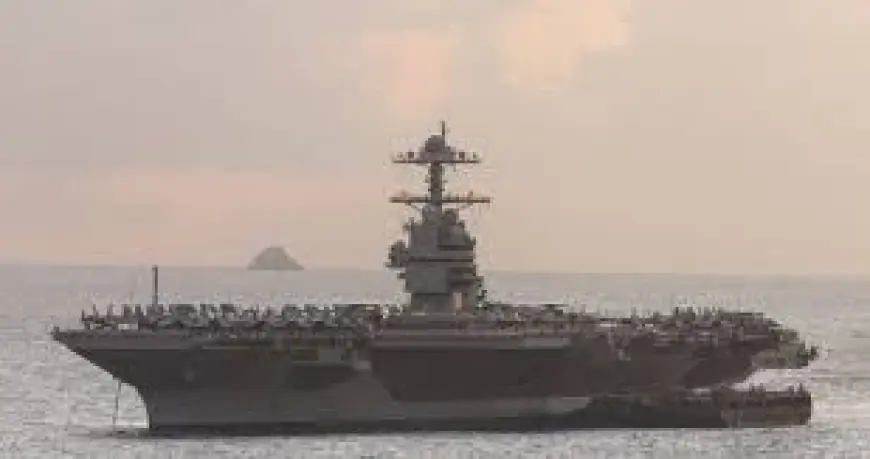
The immediate impact lands squarely on the carrier’s crew and support pipeline: thousands of sailors facing extended dwell time, aviation and engineering teams working longer maintenance cycles, and families coping with stretched separations. The word appears here only as the required keyword; the practical point is simple — logistics and human endurance are now driving questions about fleet scheduling and readiness.
view — who feels the pressure and how it ripples through the fleet
Here’s the part that matters: when a nuclear carrier stays at sea for months beyond its intended rotation, the strain isn’t abstract. Sailors on board absorb the immediate burden — extra watchstanding, heavier maintenance tempo and longer separations from home — while escort ships, aviation squadrons and maintenance yards must adapt to an altered rhythm. That ripple affects readiness calculations for other deployments, too, as assets and personnel are held on station longer than planned.
What’s easy to miss is the scale of everyday logistics needed to keep a carrier operational: continuous meal service at scale, potable water production and expanded satellite connectivity to sustain morale during prolonged operations. Those are not minor details; they are the practical backbone that lets a strike group function for extended periods.
Deployment details and operational timeline
The ship departed Naval Station Norfolk under a planned rotation model in late June 2025 and initially operated in Atlantic and Mediterranean waters. In November 2025 the strike group transited west through the Strait of Gibraltar to operate in the Caribbean within the U. S. Southern Command area of responsibility; that movement prompted a military mobilization response in Caracas. Additional regional posture adjustments included staging air assets in Puerto Rico while operations continued.
By mid‑February 2026 the carrier had transited the Atlantic once more, passing back through the Strait of Gibraltar into the Mediterranean. As of February 20 the deployment had reached 241 days at sea; if the ship remains deployed past mid‑April it would exceed a post‑Vietnam benchmark of 294 days. The Ford has been framed by officials as remaining fully mission capable while serving across multiple theaters.
- Late June 2025 — Deployment began from Norfolk under the fleet rotation model.
- November 2025 — Transit west through the Strait of Gibraltar for Caribbean operations; regional reactions followed.
- Mid‑February 2026 — Returned across the Atlantic into the Mediterranean; 241 days underway as of Feb. 20, with a mid‑April benchmark in sight.
The ship’s onboard logistics figures underscore the operational load: more than 4 million meals served and more than 400, 000 gallons of potable water produced daily during the deployment, alongside upgrades to satellite communications intended to help sailors maintain contact with families. The carrier’s advanced systems — an electromagnetic launch system and advanced arresting gear — are being exercised continuously, offering a sustained real‑world test of design and maintenance practices.
In practice, stretched deployments change maintenance windows for aircraft and engineering systems, lengthen aviation maintenance cycles, and raise questions about long‑term crew tempo across a carrier force already in high demand. The real question now is whether the pattern seen here will become an isolated exception or a recurring pressure point in fleet scheduling.
For planners and families alike, the consequences are immediate: training and maintenance calendars must be adjusted, repair and sustainment pipelines scaled, and shore‑side relief plans coordinated differently. If you’re wondering why this keeps coming up, the answer lies in the gap between planned rotation models and the operational demands that shift those plans.
Final quick note: appears here as the required keyword; the operational facts above remain the focus. The broader test will be whether extended real‑world operations validate the carrier’s systems and whether fleet scheduling adapts to reduce future dwell strains. Recent updates indicate these dynamics may continue to evolve.
The bigger signal here is how a single extended deployment can force unseen tradeoffs across maintenance, personnel and regional posture — a practical stress test with implications beyond one ship.