





















News Today: Risk and Uncertainty Grow as Closed Clinton Testimonies, a Denial and a Leaked Photo Stoke Questions in House Epstein Probe

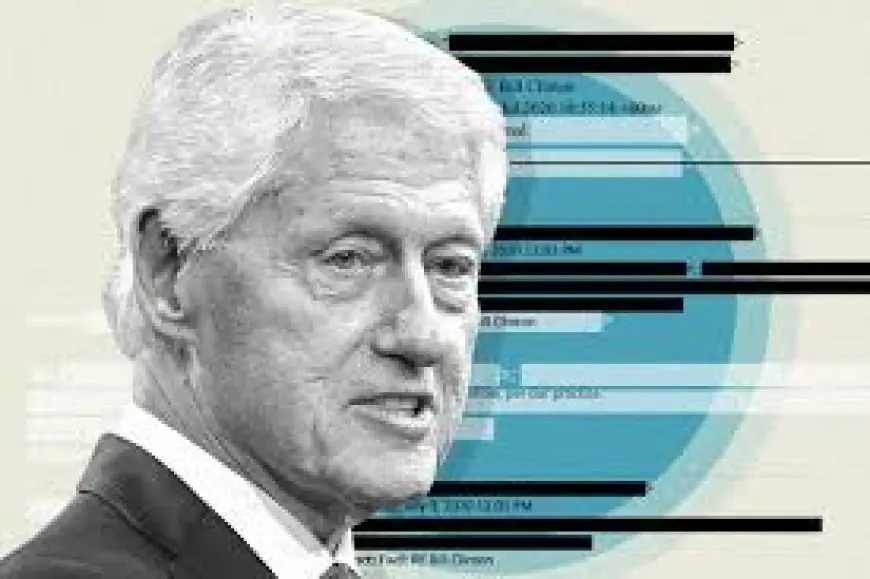
What’s unclear and why it matters now: news today centers on credibility and process. Closed depositions by the Clintons, a claim that Bill Clinton denied wrongdoing during hours of questioning in the House Epstein investigation, and a leaked deposition photo of Hillary Clinton have combined to elevate uncertainty about the investigation’s tone and trajectory. The immediate impact is political friction inside one party and rising doubts about how the probe will be perceived by the public.
News Today — Where the risk and ambiguity are concentrated
The central risk is reputational and procedural: closed testimonies leave large gaps in public understanding, creating space for competing narratives. One item from recent coverage indicates Bill Clinton denied wrongdoing during hours of questioning in the House Epstein investigation; that detail is being treated as developing and may evolve. At the same time, a leaked deposition photo of Hillary Clinton has prompted vocal anger from members of one party, who labeled the episode a "clown show. "
Here's the part that matters: closed sessions can protect sensitive testimony, but they also heighten mistrust when partisan actors fill the vacuum. The result is less clarity for the public and greater leverage for political messaging.
Event details and how the pieces fit together
At the center are three discrete elements from recent headlines: closed testimonies involving the Clintons tied to the House Epstein investigation; a denial of wrongdoing tied to Bill Clinton’s hours of questioning (noted as developing); and a leaked deposition photo of Hillary Clinton that provoked angry responses from Democrats who called the situation a "clown show. " Rather than replay a step-by-step chronology, the useful frame is how those elements interact to shape perception and risk.
- Closed testimony: restricts what the public knows and leaves narrative gaps.
- Denial during questioning: framed as a defensive account but labeled developing in the current coverage.
- Leaked photo: transformed a private deposition moment into a partisan flashpoint.
It’s easy to overlook, but the sequencing matters: a closed deposition followed by selective disclosures or leaks is precisely the pattern that escalates political reaction rather than resolving factual questions.
If you’re wondering why this keeps coming up for readers: the immediate effects are internal party anger and amplified uncertainty about the investigation’s credibility. The real question now is how congressional leaders handle closed evidence and whether additional disclosures will calm or inflame the debate.
To clarify expectations without adding unverified detail, watch for procedural moves—requests to unseal testimony, additional public statements, or formal votes—that would change how the investigation is seen. Those institutional actions are the only reliable levers to reduce the current uncertainty.
Micro Q&A
Q: What changed in the public conversation?
A: Closed testimonies plus a developing denial and a leaked photo shifted the debate from factual minutiae to trust and optics, prompting sharp partisan responses.
Q: Who feels the effect first?
A: Members of the Democratic caucus reacted strongly to the leaked photo, framing the episode as degrading to the process; congressional staff and the investigation’s public standing are also directly exposed.
Q: What could indicate a turning point?
A: Formal moves to disclose more testimony publicly or clear procedural rulings would signal a change; absent that, partisan messaging is likely to dominate.
What’s easy to miss is the operational trade-off lawmakers face: protecting sensitive testimony can be warranted, but extended opacity hands the political advantage to those who can shape the story in public-facing ways.