























Breaking News: SOTU Clash and Trump's 'Send Them Back' Remark Raise Immediate Stakes for House Democrats

This is breaking news because the fallout lands first on the lawmakers directly targeted and on vulnerable Democrats heading into an already tense political window. A high-profile State of the Union confrontation — followed by a sharp social-media post from the president — has put two Muslim members of the House and nearby colleagues in the spotlight, forcing party leaders to respond and vulnerable incumbents to explain their positioning.
Breaking News impact: who feels the immediate effect and how
Here’s the part that matters: the most immediate effect is reputational and political pressure. The two representatives called out after they shouted during the address are now at the center of a national backlash initiated by the president’s post. Party leaders publicly condemned the president’s language, while other House Democrats publicly defended the lawmakers who spoke up. At the same time, at least one vulnerable Democratic incumbent said the president’s challenge during the speech felt racially charged and made her uneasy.
What changes because of this is tangible: the controversy has refocused attention on immigration messaging and on floor behavior as a political liability or a rallying point, depending on a district’s electorate. That dynamic is now an active consideration for Democrats who face competitive races.
What's easy to miss is the way a single exchange inside the chamber quickly became a social-media escalation that demanded responses from caucus leaders and rank-and-file members.
Event details and immediate reactions
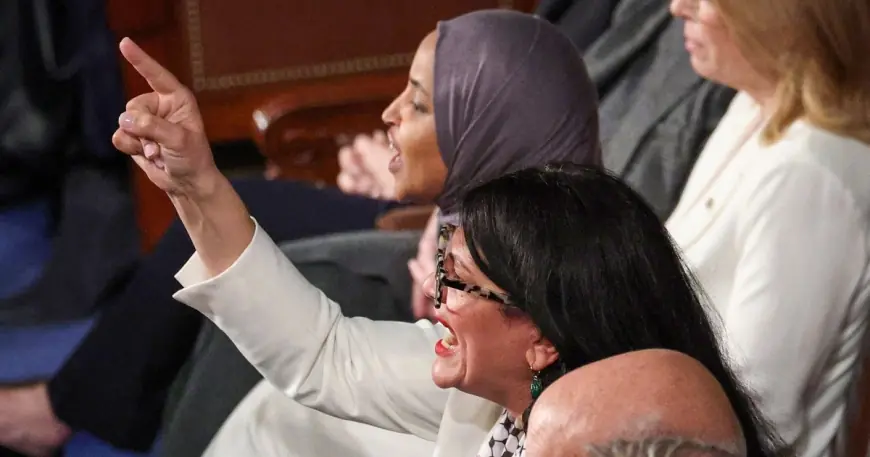
During a section of the address about immigration and an unrelated investigation involving a Somali community, the two House members interrupted the president from the Democratic side of the chamber. The president later posted on his social platform, characterizing their behavior as damaging and saying they should be sent back from where they came. He also leveled personal insults and brought up a prominent actor who had criticized him that night.
One of the lawmakers targeted was born in Somalia and immigrated as a child; the other was born in the state she represents. After the exchange, one of them said she had reminded the president that two of her constituents were killed by federal immigration agents. Both lawmakers continued to vocally challenge the president during the speech, including shouting references to those deaths.
House Democratic leadership pushed back at the president’s post, calling its language disgraceful and unpresidential. A caucus chair defended the targeted members as elected U. S. citizens who remain closely connected to their districts.
- Representative response: vocal defense from House Democrats and public condemnation from the caucus leadership.
- Vulnerable incumbents: at least one Democrat on a vulnerability list described the president’s challenge during the address as racially tinged and uncomfortable.
- Policy backdrop: the speech segment touched on immigration and a separate enforcement investigation involving a local community.
Timeline (compact):
- Feb. 14 — The Department overseeing immigration went into a shutdown.
- Feb. 24 — The State of the Union address where the shouting and subsequent political escalation occurred.
What could tip how this plays out: sustained attention to the president’s post, district-level reaction, and whether party leaders shift strategy or messaging in response. The real question now is whether the incident becomes a galvanizing issue for voters or a short-lived flashpoint.
For readers tracking political implications, stakeholders include the two targeted representatives, other House Democrats (particularly those in competitive districts), party leadership managing optics, and constituents in affected districts. Expect elected officials and local campaigns to adjust talking points and outreach in the near term.
Micro Q&A: What happened to the two constituents mentioned? One lawmaker said two of her constituents were killed by federal immigration agents, and she referenced that during the exchange. How did leaders react? House Democratic leaders publicly condemned the president’s post and defended the members. Could this affect midterm dynamics? It adds a volatile public messaging element for incumbents in competitive races.
The bigger signal here is how quickly an in-chamber confrontation can be amplified by social platforms into a sustained political pressure point — especially when it touches on identity and immigration. The situation is developing and details may evolve as members and campaigns respond.