
























Monarch Legacy Of Monsters: Season 2 Pulls Off What Most Marvel Shows Still Struggle To Do

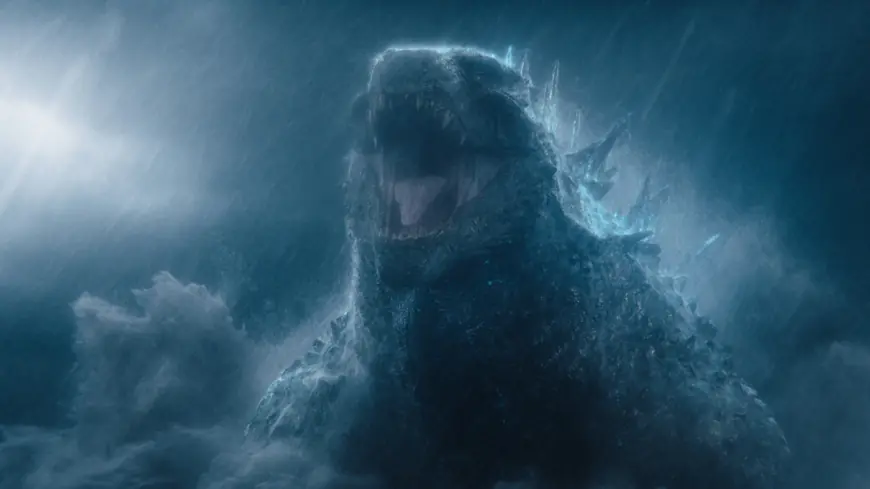
The second season of monarch legacy of monsters arrives with a rare ease in tying TV to film: it sits in the same MonsterVerse while remaining a self-contained story that critics say balances cinematic Titan battles with strong human work. That balance matters now because season 2 opened to early reviews and fresh plot developments that connect to the franchise’s biggest questions.
Shared-universe headaches and how the series avoids them
The series sidesteps problems that previously dogged in-universe television experiments. The episodic show Agents of S. H. I. E. L. D. struggled to align its weekly plots with larger film events, and later television efforts such as Daredevil and Jessica Jones largely ended up divorced from the feature films. A later wave of streaming series felt both too tied into and too disconnected from the movies at once. By contrast, this series—set in the Legendary/Toho MonsterVerse—clearly occupies the same world as the films without hiding when, where or how it connects, and it never grows so large that its omission from the films becomes awkward. The Monarch timeline in season 2 is positioned after the 2014 Godzilla film and is currently taking place in the year 2017, anchoring its events to established franchise beats.
Titans on screen: Godzilla, Kong and the new Titan X
The season increases on-screen Titan activity, giving Godzilla, Kong and a new creature called Titan X generous screen time. The show leans on high-end visual effects—critics have noted feature-film-quality work—and the presence of the monsters makes individual episodes feel like abbreviated entries in a bigger cinematic slate. Even when Godzilla or Kong do not appear in an episode, there is still discernible Titan activity; that monster-first approach is a built-in advantage for a shared universe whose leads are not human.
Monarch Legacy Of Monsters: critics highlight scale, pace and character work
Early critical responses describe season 2 as a confident expansion that balances large-scale thrills with thoughtful character work. Tara Bennett praised clearer plotting this season, noting the first half of the run moves like a rocket with several Titan set pieces and major twists in both the present day and past, while the back half slows down until a clever device delivers poignant emotional turns that close the season. Tessa Smith called the season equally action-packed and emotional, saying the scale feels massive and the writing has matured so stakes feel personal. Jeff Ewing emphasized that the season expands the MonsterVerse and is anchored by strong performances from Anna Sawai and Mari Yamamoto alongside spectacular monster moments. Chris Gallardo described the season as more character-driven overall, while also flagging some exposition dumps and narrative drops; he added that the kaiju fights remain explosive and brutal.
Apex Cybernetics, Brenda Holland and the seeds of coexistence and Mechagodzilla
The premiere, titled "Cause and Effect, " signals a shift in the balance of power. Monarch is no longer the only game in time, and rival tech company Apex Cybernetics has a larger role. A tense exchange between protagonist May (Kiersey Clemons) and Apex CEO Brenda Holland (Dominique Tipper) follows May’s harrowing escape from Skull Island; Brenda, checking up on her once-prized pupil, lets slip a key detail about plans for the rampaging Titan X and other kaiju that centers on coexistence. That notion echoes themes from Godzilla: King of the Monsters and retroactively helps make that divisive sequel feel more relevant. The series’ depiction of Brenda’s thinking also reads as early retconning for later franchise events, including Apex’s eventual disastrous creation of Mechagodzilla years down the road. The context of coexistence is complicated by past figures: the eco-terrorist Alan Jonah (Charles Dance) and Dr. Emma Russell (Vera Farmiga) previously unleashed Titans such as Rodan and Ghidorah on the world.
Origins, structure and reception: a split timeline and quick renewal
The television series grew out of a film effort to reimagine the origins of King Kong and Godzilla for the big screen, then expanded into a series that debuted in late 2023. Its storytelling deliberately splits between two half-siblings searching for their missing father in the present day and a group of researchers in the fledgling days of Monarch decades earlier, tying those timelines together in surprising ways. The show was a hit with fans and critics, leading to a second season announcement months after the first ended. Season 2 premieres on February 27, and early reviews suggest the series has found a rhythm: it delivers cinematic Titan battles, deepened human characterization—often compared favorably to the human work since 2017’s Kong: Skull Island—and increasingly audacious franchise setup without becoming a mere waiting game for film crossovers.