

























Bill Clinton Deposition Rekindles Epstein Scrutiny and Sparks New Political Battle

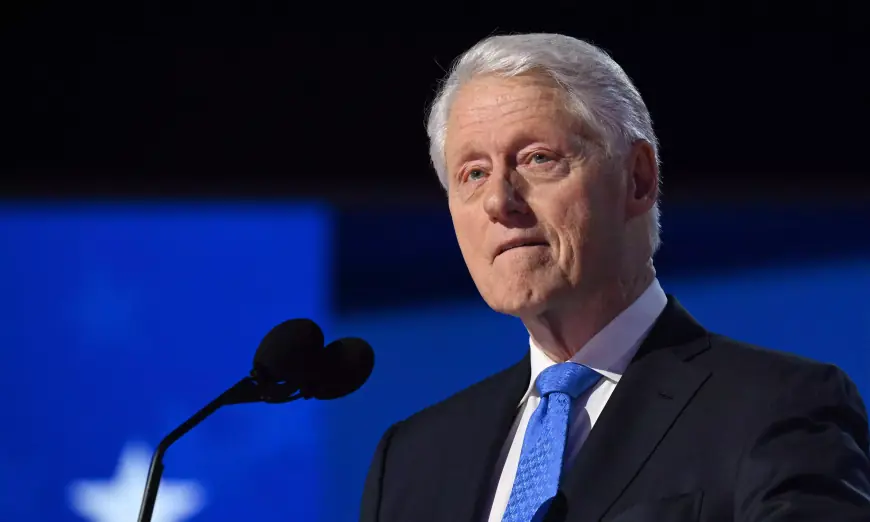
Former President Bill Clinton sat for a closed-door congressional session on Friday, February 27, 2026 (ET), as lawmakers pressed him about his past association with the late financier Jeffrey Epstein. The Bill Clinton deposition immediately became a lightning rod in US politics, with Republicans framing it as a major step in their inquiry and Democrats calling it a headline-driven exercise that should be broadened to include other prominent figures with known social ties to Epstein.
Inside the Bill Clinton Deposition: What Clinton Said Under Oath
In an opening statement circulated publicly at the start of the session, Clinton said he “saw nothing” that indicated criminal activity and “did nothing wrong.” He told lawmakers he had no knowledge of Epstein’s sexual abuse and said he severed contact years before Epstein’s 2008 guilty plea. The deposition ran for more than six hours, with questioning focused on the nature, frequency, and context of their interactions in the early 2000s.
Clinton acknowledged contact with Epstein during that period, including travel on Epstein’s private jet and meetings that overlapped with Clinton’s post-presidency work. He maintained he did not witness wrongdoing and argued he would have acted had he known. The committee’s line of questioning also included how Epstein gained access to influential circles and whether warning signs were missed by powerful people around him.
The Timeline That Lawmakers Keep Circling
The deposition spotlighted a well-known but still politically combustible timeline: Epstein’s social reach in elite circles, his continued access to power, and the lag between public allegations and legal consequences. Republicans emphasized the need to map networks and decision points. Democrats argued the inquiry risks becoming selective if it focuses heavily on one set of political figures.
Key reference points raised in this week’s testimony and public commentary include:
| Event | Date (ET) | Why It Matters |
|---|---|---|
| Hillary Clinton deposition | Thursday, Feb. 26, 2026 | Set the stage for questions about the Clinton family’s proximity to Epstein |
| Bill Clinton deposition | Friday, Feb. 27, 2026 | Direct testimony from a former president on contacts and travel history |
| Planned release of materials | Next few days | Committee leaders signaled video and transcripts will be made public |
A Rare Congressional Moment: A Former President in a Deposition Chair
The optics of a former president appearing under subpoena-level pressure are unusual in American politics. Clinton’s team had initially signaled resistance to the deposition request, calling it politically motivated, before agreeing to sit for questioning as contempt threats escalated. That escalation became part of the story in Washington: the inquiry is not only about Epstein’s orbit, but also about how aggressively Congress is willing to push high-profile witnesses in an election-shaped environment.
Committee leaders praised Clinton’s demeanor and willingness to answer questions, while Democratic members accused Republicans of maximizing spectacle. Both sides appear to be preparing competing edits and interpretations once the full video and transcript are released.
Fallout in the US: Oversight vs. Spectacle
The partisan fight now centers on what the deposition is meant to accomplish. Republicans argue the inquiry is a necessary accountability exercise for a scandal that spanned decades and crossed institutions. Democrats argue the committee’s approach risks undermining serious oversight by blending legitimate questions with viral politics and selective targeting.
The immediate next step is the committee’s promised public release of materials. That release is likely to drive another wave of scrutiny focused on what Clinton said about:
-
When and why he stopped associating with Epstein
-
The purpose of flights and meetings
-
Whether anyone in his circle raised concerns at the time
-
How Epstein maintained access to high-level figures despite persistent rumors
UK, Canada, and Australia: Why This Story Travels
Outside the US, the Clinton name and the Epstein scandal remain globally recognizable, and the political ripple effects are already being tracked in allied capitals. In the UK, interest is amplified by long-running public debate over elite accountability and how high-profile networks avoid scrutiny. In Canada and Australia, the story is landing as both a US political drama and a broader institutional warning—how reputations, philanthropy, and access can function as shields.
The international angle also matters because Epstein’s contacts and travel were not confined to one country. Even when hearings are domestic, the public appetite for answers is global, and the reputational consequences can spill across borders quickly.
What Happens Next: The Transcript Test and the Trust Test
The Bill Clinton deposition is now heading toward its most consequential phase: public release. A full transcript will either reinforce the committee’s central claims about who knew what and when, or expose gaps that critics say point to a process built for confrontation rather than clarity.
For Clinton, the near-term outcome hinges on whether the released record shows consistency between his opening statement and detailed questioning. For Congress, the broader issue is credibility: whether the inquiry produces concrete findings about systemic failures that allowed Epstein to thrive, or whether it becomes another example of investigative power being absorbed into partisan warfare.
As the video and transcript emerge, the political temperature is likely to rise again—this time not around the fact of the deposition, but around the precise words spoken under oath.