
























What Is Family Voting — How Gorton and Denton Observations Could Affect Voter Confidence

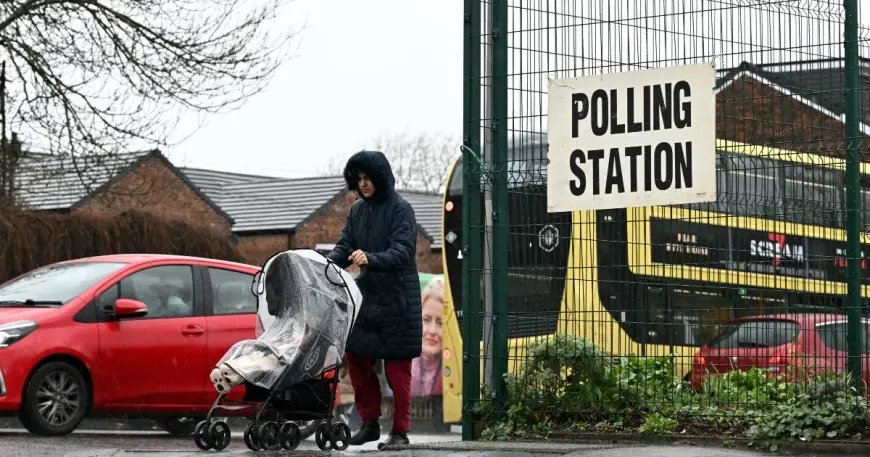
The immediate impact is local: voters in Gorton and Denton and the teams that ran the by-election face questions about ballot secrecy after independent observers flagged unusually high levels of what is family voting. Reform UK has taken those allegations to Greater Manchester Police and the elections regulator, and observers have presented specific counts and comparisons that are being reviewed. The result: a snapshot of contested processes and fast-moving scrutiny for the authorities responsible for the count.
Who feels the impact first — voters, parties and local administrators
Election observers, local election staff and competing parties will feel the earliest effects. Polling-station procedures and public confidence are at stake because the observers' findings suggest direct interference with the secret ballot in multiple locations. Here's the part that matters: if the patterns described hold up under review, turnout and trust in the immediate community could be strained while police and the regulator examine the evidence.
What Is Family Voting: observers' findings and counts
Independent observers identified a cluster of behaviours they call family voting—defined as accompanying voters into or near polling booths and influencing them to vote in a particular way. One observer organisation said it observed 32 cases of apparent collusion across the constituency, describing this as the highest level in its 10-year history of election observation. The same team sampled 545 voters and concluded that 12% were either directed or affected by family voting in their sample.
- Observers deployed four accredited personnel across the constituency, attending 22 of the 45 polling stations while polls were open.
- The team spent between 30 and 45 minutes at each station and worked in pairs.
- They reported family voting in 15 of the 22 polling stations observed (15/22 = 68%), with 32 cases in total and nine cases in one station alone.
Observers also noted additional irregular behaviours: voters photographing ballot papers and at least one instance where a person was authorised to vote despite them already — unclear in the provided context.
Observer background, legal frame and recent precedents
Democracy Volunteers, the group that released the findings, describes itself as a non-partisan domestic election observation organisation. It was present widely during the previous general election, operating in many parliamentary constituencies and more than one thousand polling stations. Accredited observers are entitled to attend polling stations and counts; accreditation requires a pledge to political impartiality and can be revoked if that standard is not maintained. Recent legal and guidance changes are part of this backdrop: new elections guidance was issued in 2022 raising cross-party concerns about family or community voting, and a Ballot Secrecy Act enacted in 2023 made family voting more clearly a breach of secret ballot rules.
Responses from parties, returning officers, police and the regulator
Reform UK’s leader has reported alleged family voting to Greater Manchester Police and the Electoral Commission and has urged a full investigation. He characterised the conduct witnessed as "a victory for sectarian voting and cheating" and raised concerns about integrity in predominantly Muslim areas, warning about potential coercion with postal votes and pressing the regulator to consider prosecutions and whether the scale of irregularities might call the election result into question.
The Green Party, which won the seat by a margin of more than 4, 000 votes with Reform UK in second place, dismissed the challenges as an attempt to undermine the democratic outcome and said the victory was achieved by a comfortable margin. A party representative described the attack on the result as reminiscent of high-profile tactics elsewhere and emphasised the significance of the win against Reform UK's spending.
The Electoral Commission has said it takes the claims very seriously and will carefully consider the report; it is in contact with the returning officer and Greater Manchester Police to review the concerns and information. Greater Manchester Police has confirmed a report has been made and is reviewing it, with a further update promised in due course. Manchester city council said staff had been trained to look for voter interference and that no concerns were reported to them while polls were open.
Short answers for voters and local stakeholders
Q: What are the concrete counts observers have released?
A: The observers reported 32 cases of apparent collusion, a sample of 545 voters with 12% affected, and family voting seen in 15 of 22 polling stations observed.
Q: Will this change the declared result?
A: The regulator and police are reviewing the material; calls have been made to assess whether irregularities affect the validity of the result.
Q: Are these observations unprecedented?
A: The observers say these are the highest levels in their 10-year history; they contrasted their findings with another recent by-election where family voting affected fewer stations and a smaller share of voters.
It’s easy to overlook, but the observers also flagged gaps in deterrence: signage discouraging family voting was visible in fewer than half of the polling stations they checked. The real question now is how quickly the regulator and police can review the reported incidents and the data the observers collected.
What’s easy to miss is that multiple formal checks and existing guidance already frame this issue; the coming days will show whether those mechanisms provide clarity or deepen local uncertainty.