

























Satellite Imagery and Long-Range Strikes: Damage at Votkinsk Signals a New Phase in Reach and Production Questions

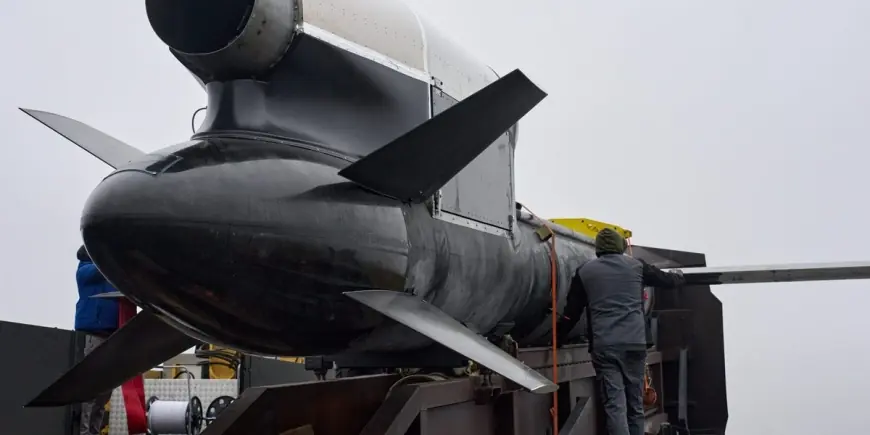
Why this matters now: satellite imagery has captured visible damage at a Russian industrial plant after a long-range Ukrainian strike, and leaders claim the hits were delivered by domestically produced Flamingo missiles at ranges of up to 1, 400 kilometers. That combination — photographic evidence plus high-range strike claims — changes how militaries and manufacturers will have to think about defenses, production security and supply-chain resilience in the near term.
Consequence-driven angle: what the visible damage changes first
Here’s the part that matters: visible damage in satellite imagery turns assertions about reach into operational questions. If workshops at Votkinsk show a gaping hole in a roof and clear fire damage, as later-published satellite imagery appears to show, operators and planners face immediate choices about dispersal, protection of production lines, and the vulnerability of long-range logistics. Volodymyr Zelenskyy framed the strike as a success for domestic weapons production, saying Flamingo missiles hit targets at 1, 400 km; that claim, paired with imagery, forces a reassessment of where assets can safely be sited.
Satellite Imagery: what the pictures show and the specific claims around the strike
Satellite imagery appears to show extensive damage to a plant in Votkinsk, an industrial town in the Udmurt Republic, with one workshop exhibiting a large roof hole and signs of fire damage. The strike on the plant, which is linked to the manufacture of Iskander ballistic missiles and also associated in different reports with Bulava and Oreshnik missiles, was described by Ukrainian officials and the president as a long-range operation. Officials placed distances in multiple ways: some descriptions noted the site lies about 860 miles from the Ukrainian border, while other statements described the Flamingo range as nearly 900 miles and explicitly as 1, 400 kilometers.
Operational details and claims around Flamingo missiles
Volodymyr Zelenskyy said there were precise attacks with Flamingo missiles and emphasized that he would not disclose how many were used; he noted some missiles were intercepted by Russian air defenses and some were not, and he stated that all missiles that were launched reached their target. Ukrainian open-source groups later published satellite imagery that appeared to show the workshop damage. A regional governor, Alexander Brechalov, said an unspecified facility in the Udmurt region had been attacked and that three people were sent to hospital; he did not confirm the missile type and warned of drone threats over the region.
Additional operational context included claims that Kyiv had unleashed a large wave of drones and missiles that evening in one of its biggest long-range attacks. Russia’s defense ministry said it shot down 77 Ukrainian drones on Saturday and did not mention Ukrainian missile threats. The ground-launched Flamingo is described as turbofan-powered, takes up to 40 minutes to prepare for launch, and has been compared by Kyiv to the US Tomahawk — noted as cheaper per unit and cited with an advertised longer range of 1, 900 miles in some comparisons.
Production, industrial resilience and political comments
Leaders emphasized production questions: Zelenskyy said manufacturers will increase output but that doing so depends on funding and the availability of certain components. He also said Russian forces are trying to track Flamingo production and that production lines previously had to be renovated after Russian attacks. Separately, reports from last October said the missile manufacturer, FirePoint, hoped to produce up to seven Flamingo missiles a day by the end of 2025. Kyiv has warned manufacturing was affected by a recent Russian strike and needs to "work on increasing quantity. "
Wider context: other imagery, movements and verification work
Other satellite and open-source monitoring work in the same coverage set highlighted a shopping centre on fire in Zaporizhzhia after a wave of Russian strikes overnight. Military movements in other theaters were noted: the aircraft carrier USS Gerald R Ford was seen leaving port in Greece after departing the Greek Island of Crete, appearing to head to the eastern Mediterranean as part of a US military build-up near Iran. Aviation footage showed three F-22s taking off from a Suffolk air base on Tuesday; aviation enthusiasts filmed F-22s leaving RAF Lakenheath and heading to Israel, and a major US newspaper, citing US officials, noted that F-22 fighters were on their way to Israel and some had already arrived. Experts suggested those F-22s could form part of an "air dominance machine" against Iran. The verification feed that published the imagery described its methods as using open-source intelligence, satellite imagery, fact-checking and data analysis, invited readers to get in touch by following a link, and noted the feed posts work throughout the day. Contributors named in the verification effort included Thomas Copeland, Richard Irvine-Brown and Alex Murray. The team invited readers to return for updates the next day.
Concise Q&A (quick takeaways)
- Q: Were targets hit? A: Leadership stated Flamingo strikes were precise and that all launched missiles reached their target; interceptions also occurred.
- Q: What does the imagery show? A: A workshop with a gaping roof hole and fire damage at the Votkinsk plant.
- Q: What changes next? A: Expect renewed focus on protecting production lines, supply-chain vulnerabilities, and longer-range defense postures.
What’s easy to miss is how quickly a single strike that is both claimed and visually corroborated can accelerate changes in dispersal and manufacturing decisions. The real question now is whether claimed ranges and observable damage will prompt faster shifts in where and how missiles are produced and defended.