

























Dan Simmons, Author of Hyperion, Dies at 77 After Stroke

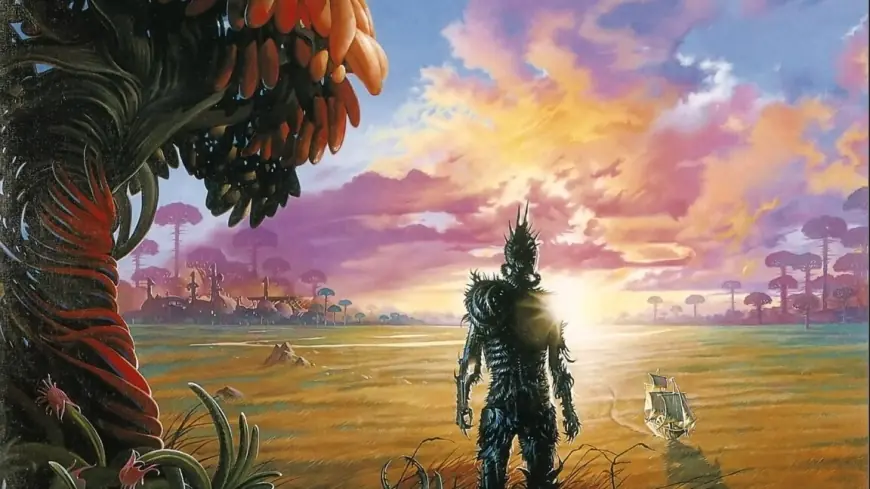
dan simmons, the writer best known for the 1989 novel Hyperion, has died after suffering a stroke. His passing removes a prolific voice from genre fiction at a time when his work—spanning more than three dozen books—continues to influence readers and writers alike.
Dan Simmons and Hyperion
The novel Hyperion, published in 1989, is widely regarded as the central achievement of Dan Simmons’s career. The book is structured around seven pilgrims whose intertwined backgrounds drive a voyage to the enigmatic Time Tombs, and those seven characters anchor the story’s mosaic of subgenres—from tragedy to military science fiction. Hyperion later became the first installment in the Hyperion Cantos; the series includes three sequels that complete an extended narrative arc Simmons carried across multiple volumes.
What makes this notable is how Hyperion combined broad-scale science-fiction worldbuilding with intimate, emotionally charged storytelling, a pairing that readers found unusually affecting for hard science fiction.
Elementary Education Career and Transition to Authorship
Before publishing fiction in the 1980s, dan simmons worked in elementary education. That earlier career preceded a shift into full-time writing in the decade when he debuted his first novels, and over subsequent years he built a portfolio that exceeded thirty-six titles. His output crossed genre boundaries—horror, historical fiction, and science fiction—often blending elements from each tradition in single works.
The cause-and-effect of that trajectory is straightforward: his background in education gave way to sustained literary production in the 1980s, which in turn produced a body of work large enough to include both standalone novels and extended series.
Notable Works, Themes and Legacy
Among Simmons’s varied books is The Terror, a fictionalized horror take on Franklin’s lost expedition, which drew notice for its ambition and tone. Across his career he returned to recurring subjects and influences; an interest in John Keats, for example, informed parts of the Cantos. Religious themes also surface in his fiction—Catholicism figures in one of Hyperion’s framing stories—while speculative devices such as the Time Tombs and beings like the Shrike give the series its distinctive temporal and mythic mechanics.
Simmons produced three sequels to Hyperion, and opinions about those follow-ups vary, but the Cantos together provide a completed storyline that many readers found satisfying. The series’ structure—modeled in part on Chaucer’s Canterbury Tales—allowed Simmons to explore different tonal registers within a single, sprawling narrative.
Death from Stroke and Immediate Impact
Simmons died after suffering a stroke at age 77. The stroke is the proximate medical cause that led to his death. The immediate consequence is the loss of an author described by readers as both prolific and genre-defining, with a catalogue that includes more than three dozen books and a headline work first published in 1989.
The broader implication is that a major voice who bridged literary techniques and genre storytelling is now absent from contemporary conversations about science fiction’s future directions. His work—especially Hyperion and the Cantos—remains available to influence new readers and writers, preserving an imprint on the field even as the author himself is no longer writing.
Tributes from readers and the ongoing readership of Simmons’s novels underscore the measurable reach of his work: a multi-volume epic, dozens of standalone titles, and a career that shifted from elementary education into a lengthy, productive run of fiction beginning in the 1980s.