
























Bridgerton Season 4 Shock: Who Is the New Lady Whistledown, Francesca’s Grief and How the Sex Scenes Compare

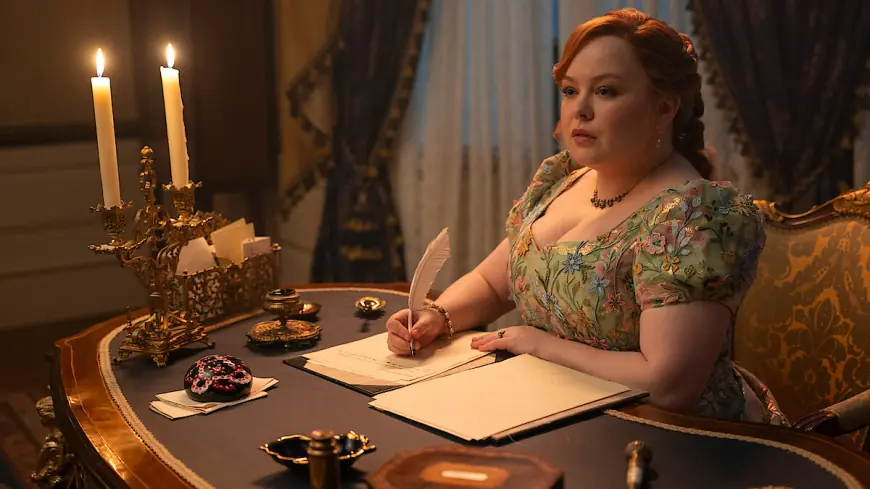
Part 2 of Season 4 of bridgerton debuted on the streaming platform on Thursday, delivering a cluster of developments that matter to fans: a mystery about a new Lady Whistledown, Hannah Dodd’s portrayal of Francesca amid sudden tragedy, and an outspoken reassessment of the series’ sex scenes. Each thread pushes the series in different tonal directions and reshapes expectations for what comes next.
Who is the New Lady Whistledown? The central mystery driving discussion
The question of who now pens the scandal sheet identified as Lady Whistledown is a focal point of recent conversation surrounding Season 4's second part. The headline question remains open-ended in current coverage; details identifying the new pamphleteer are not provided in the available context, leaving the identity of the new Lady Whistledown unresolved for viewers.
Hannah Dodd’s path to Francesca: auditions, casting and the moments that mattered
Hannah Dodd, an English actress aged 30, recalls auditioning intensely for the first season of the series for the role of Daphne Bridgerton but did not win that part, which went to Phoebe Dynevor. A few years later she filmed a self-tape for a very secretive project and did not initially realize it was the same series. Dodd spoke from a remote table at London’s 180 House in mid-February, chosen to avoid overhearing spoilers; she noted that other members were too wrapped up in their own conversations to notice what she was disclosing about Part 2 of Season 4.
Several months passed before Dodd learned the project was the series. She said that part of her hesitated about re-engaging with the show but that she loved the material; a few days after initial contact she met with the show’s creative team and a week later she began piano lessons as part of preparing for the role. Showrunner Jess Brownell said the production had seen hundreds of actors and that Dodd arrived late in the process but immediately felt right for the part; Brownell praised Dodd’s subtlety and capacity to portray shyness without weakness, while suggesting an inner strength would be required as the character’s arc intensifies.
Dodd was cast as Francesca Bridgerton for Season 3, stepping into a role vacated by Ruby Stokes, who had played Francesca in the first two seasons and left due to scheduling issues. Dodd acknowledged pressure joining an already established family on screen but said the cast welcomed her and helped her feel at home.
Francesca’s arc: marriage, John Stirling’s death, and divergence from the books
The events surrounding Francesca across the first four seasons mostly occur before the narrative of Julia Quinn’s novel When He Was Wicked, often referred to among readers as Francesca’s book. In the show’s Season 3, Francesca debuted into the Ton and formed an unexpected connection with John Stirling, the Earl of Kilmartin, portrayed by Victor Alli. By the start of Season 4 the couple have married and settled in his London home. In Part 2 of Season 4, John dies, a development that places Francesca immediately into grief.
Almost all of Francesca’s on-screen story to date has been imagined by the writers rather than drawn directly from the novel; readers of the book learn that John is alive for only about ten pages before a time jump, meaning the book spends less time on Francesca’s immediate grief. Showrunner Jess Brownell said the creative team had some clues from Julia Quinn about how Francesca might react, even as the series expands that material on screen.
How the new sex scenes stack up: a revived critical lens
The ongoing column that assesses sex scenes in contemporary film and television returned to the series for Season 4, Part 2, and framed its appraisal amid broader franchise ambitions: the family’s eight children—named alphabetically by their parents Violet and Edmund—remain a narrative engine for further seasons, which the platform appears poised to continue until each child’s story concludes.
Critics highlight several character arcs as context for their assessment. Benedict Bridgerton, played by Luke Thompson, has been characterized by aimlessness in earlier seasons, contrasted with his eldest brother Anthony, played by Jonathan Bailey, who embodies the duties of the viscount. Benedict experiments with painting and sketching, drinks late with a bohemian crowd, and the show invents a bisexual arc for him that is not present in the novels. At the start of Season 4, Violet, portrayed by Ruth Gemmell, worries about Benedict’s future while the Queen presses for his marriage.
Benedict’s season-long storyline centers on Sophie, portrayed by Yerin Ha, a maid and the illegitimate child of a deceased lord who sneaks into a masked ball wearing borrowed finery. Their meeting echoes Cinderella: they connect then separate at midnight, and much of the season follows the logistics of reuniting them, revealing Sophie’s background and making a marriage feasible.
Previous installments in the column gave Season 3’s sex scenes a 4 out of 10 and the Queen Charlotte miniseries a 3 out of 10. In the new assessment, the column’s writers point to the first explicit moment of Season 4: the brief sex scene between Francesca and her husband John Stirling (Victor Alli), Earl of Kilmartin. The scene is judged neither hot nor heavy; it begins with John on top, moving slowly and moaning, while Francesca lies with a pleasant but uninspired smile, suggesting John alone derives greater satisfaction from the encounter. Commentary on that scene in the available context ends abruptly, leaving final evaluative notes incomplete.
What’s next for the series and its characters
With the second half of Season 4 now available on the platform, the series has set multiple narrative directions: the unresolved Lady Whistledown mystery, Francesca’s immediate grieving process after John’s death, and a renewed critical conversation about how intimacy is staged. These strands will shape audience expectations and the creative choices the production may pursue in future installments; details about future plans are unclear in the provided context.