

























Navigating Nasdaq and S&P’s Worst Monthly Drop Since March

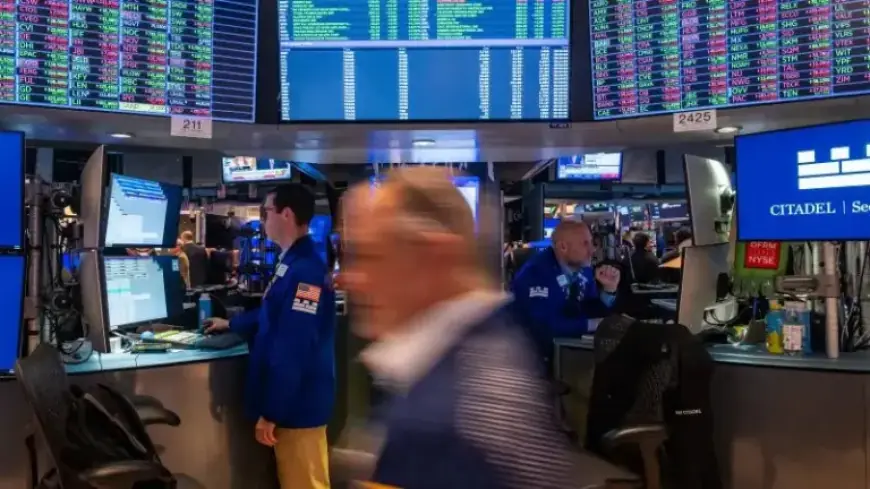
Recent market trends indicate a significant shift, marking the worst monthly drop for the S&P 500 since March. Investors are feeling the pressure as technology stocks, once the backbone of market growth, struggle to maintain momentum. The Nasdaq Composite—with its strong focus on tech—has not reached a record high in over four months. In contrast, other sectors have begun to rise.
Navigating the Current Market Landscape
The S&P 500 is currently flat for the year, showcasing a broader issue on Wall Street. As of late October 2023, fears surrounding the impact of artificial intelligence (AI) on business models are causing investors to rethink their positions. The Dow Jones Industrial Average, which is less dependent on tech, has seen a 1.5% increase in 2023.
Key Market Performance and Data
- The Dow dropped by 704 points (1.42%) recently.
- The S&P 500 fell by 0.95%.
- The Nasdaq experienced a decline of 1.2%.
- The VIX, Wall Street’s fear gauge, surged by 15%.
Currently, nearly 40% of the S&P 500’s value is concentrated in major tech companies like Nvidia, Microsoft, and Alphabet. This concentration has left investors vulnerable, especially as tech stocks show increased volatility. Jon Ulin from Ulin & Co Wealth Management advises against panic selling and suggests that portfolio diversification is essential in these volatile times.
Shifting Investment Strategies
Analysts are urging investors to consider adjusting their portfolios. With tech stocks facing ongoing challenges, Craig Johnson from Piper Sandler has downgraded his assessment of the technology sector from “overweight” to “neutral.” He recommends reallocating investments toward sectors showing consistent performance, such as energy and materials.
Performance of Various Sectors
- Energy: Top-performing sector, with associated ETFs up by 23% this year.
- Materials and Consumer Staples: Also among the strongest sectors in the S&P 500.
- Technology and Financials: Currently lagging behind, with tech sector ETFs down by 2%.
Investors are also looking to international markets, which have outperformed U.S. stocks this year. Strategies such as investing in an equal-weighted S&P 500 index—where each stock holds the same weight—are recommended to alleviate the effects of major tech downturns.
Long-Term Considerations Amid Volatility
In conclusion, while current market conditions may be unsettling, maintaining a long-term perspective is vital. Experts suggest focusing on diversification and not being overly reactive to short-term disruptions. Johan Strand from Badgley Phelps emphasizes the importance of a well-rounded investment portfolio in navigating these turbulent times.
Amid the uncertainty surrounding AI and technology, it’s clear that a carefully crafted investment strategy will be essential for future stability and growth. Investors are advised to remain vigilant and adaptable as they navigate this complex market landscape.