

























Green Party Celebrates Historic By-Election Win as Family Voting Claims Cast a Cloud Over Gorton and Denton

The green party secured a landmark victory in the Gorton and Denton by-election, with Hannah Spencer winning 40% of the vote in a result that leaves Reform on 28% and Labour on 25%. The outcome marks the Green Party's first Westminster by-election win and triggered immediate celebrations as well as controversy over allegations of family voting and accusations of cheating.
Green Party breakthrough in Gorton and Denton
The result was decisive: the Green Party took 40% in a constituency the party had not previously targeted, Reform finished second on 28% and Labour placed third on 25%. For the Greens this was described as their first by-election victory in Westminster and a night of undiluted triumph. The party had invited journalists to the first press conference of Hannah Spencer MP and to stay for her first constituency surgery, plans that went ahead without incident.
Hannah Spencer: From plumber to MP
Hannah Spencer, 34, will arrive at the House of Commons as the Green Party's first-ever Westminster by-election winner. She worked as a plumber after leaving education at 16 and began a full-time plastering course in 2026, commuting by car to college in Stoke while combining training with campaign work. Spencer apologised to customers who had booked her for jobs, saying she might need to cancel bookings because she is heading to Parliament.
Spencer framed her victory around practical experience and solidarity with working people. She emphasised that she and her constituents "work hard" and spoke about the cost of living as a central concern. She has led the Greens on Trafford Council, representing the Hale ward since May 2023, and she stood as the Green Party's mayoral candidate for Greater Manchester in 2024. On policy, she has called for an end to privatisation in the NHS and for the nationalisation of water companies. Palestinian flags featured on her leaflets and she stated during the campaign that she believed a genocide was taking place in Gaza.
Spencer used a campaign video to describe herself as someone who spends her life fixing things that are broken. If parliamentary life does not work out, she noted her trade skills would remain useful, quipping about the poor state of some parliamentary facilities and saying she would remember her hard hat when she is sworn in on Monday. She said she wanted to make space for people doing jobs like hers and to win a seat at the table for them.
Election numbers and immediate fallout
Observers and commentators had treated Gorton and Denton as a three-way contest that was difficult to call before polls closed. The final tally — Greens 40%, Reform 28%, Labour 25% — was read as a severe setback for Labour, undermining the idea that they were the only progressive party able to defeat Reform. For the Greens, the margin confirmed a breakthrough in a constituency not previously targeted by the party.
Spencer's victory speech was noted for its down-to-earth tone, pride in her working-class roots, and references to multicultural community solidarity. She spoke of understanding the pressures of the cost of living crisis and praised neighbours who look out for one another.
Family voting claims and official response
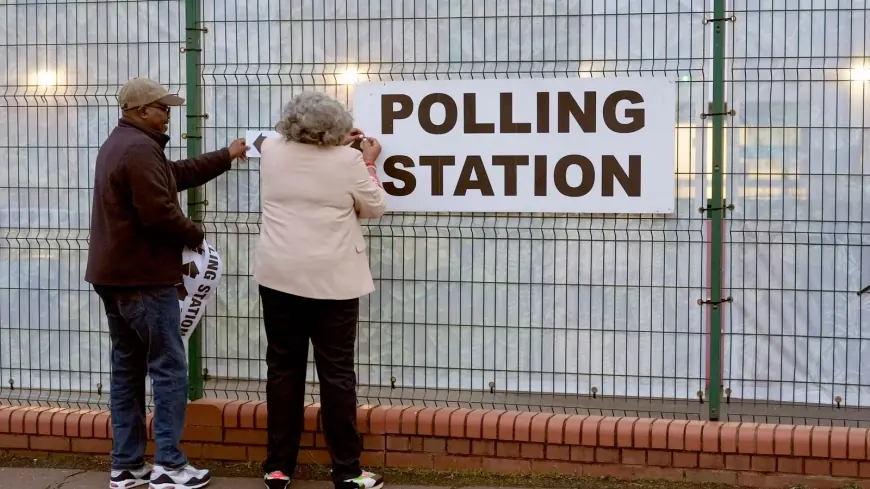
Polls in Gorton and Denton closed at 10pm, and reports of family voting emerged soon after. Official election observers recorded what they described as the highest amount of family voting in their 10-year history. Observers were present at 22 of the constituency's 45 polling stations and witnessed family voting in 15 of those 22 stations. They recorded 32 cases overall, with nine instances in a single polling station.
Four observers spent between 30 and 45 minutes at each of the polling stations they monitored, observing a sample of 545 voters; that sample translates to 12% of those voters either causing or being affected by family voting. The police confirmed a report had been made following a complaint by Nigel Farage. A cabinet minister described the reports as concerning, said elections must be conducted in line with electoral law, emphasised that people should be able to vote free from coercion, and suggested that appropriate authorities, potentially including the electoral regulator, should look into the matter.
Opponents, accusations and aftermath
Hannah Spencer's opponents reacted angrily. Reform's Matt Goodwin was described as furious after the loss; he accused the Greens of sectarianism and cheating. The campaign had included controversial remarks attributed to Matt Goodwin about people who are black or brown not being properly British and suggestions that white girls should leave school to have babies rather than pursue jobs, matters that were flagged as having alienated some voters. Nigel Farage made similar comments from a distance but kept a measure of separation from Matt Goodwin's defeat.
Commentary on the aftermath suggested Matt Goodwin had behaved as if he had a divine right to win and that Reform risked becoming a new entitled establishment elite. Amid the rancour, some observers noted that at least Goodwin would no longer need to pretend he planned to settle permanently in the constituency. The longer-term consequences for Reform, Labour and the Green Party will be watched closely as any investigations into voting conduct proceed and as Hannah Spencer prepares to take her seat alongside the other Green Party MPs: Siân Berry, Adrian Ramsay, Carla Denyer and Ellie Chowns.