
























Bridgerton’s Shock Season 4 Turn: Who Feels the Impact First and Why It Matters

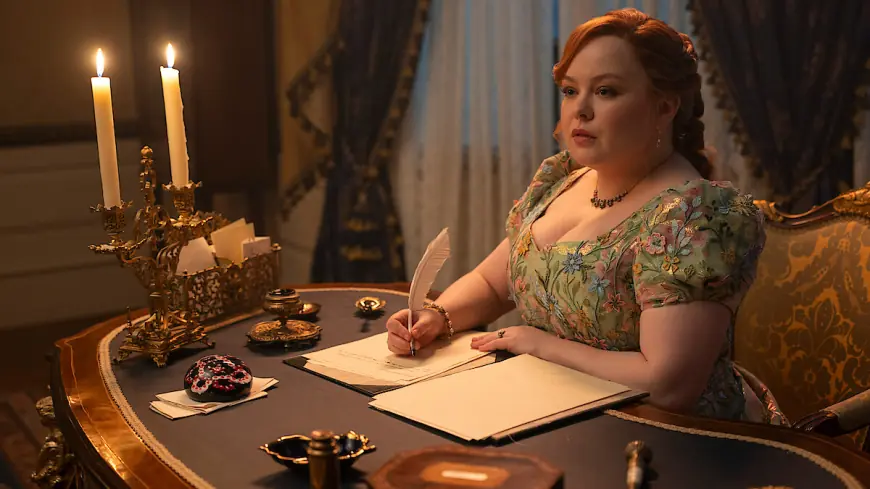
Here’s why it matters right now: the latest part of the series refocuses the story away from familiar leads and places grief and creative reinvention at the center, which affects performers, viewers and the writers’ room first. The streaming drama’s Season 4, Part 2 pushes Francesca into new territory, introduces a revealed Lady Whistledown after a shock twist, and reshapes how intimacy and character choices are being handled in the ongoing narrative—bridgerton appears in these shifts as both subject and signal.
Bridgerton’s immediate fallout: grief, casting change and a new anonymous narrator
The most direct impacts land on a small cluster of people: the actress playing Francesca, the actor who portrays her husband, the ensemble she joins, and the audience asked to accept storylines that diverge sharply from the books. A surprise reveal in Season 4 has produced a new Lady Whistledown figure after a dramatic twist; details about that reveal remain developing and unclear in the provided context. For performers, a sudden on-screen death and freshly written beats demand fast emotional recalibration. For viewers, the tonal turn reframes whose stories the show privileges going forward.
How the cast and casting choices are being reshaped
Hannah Dodd, an English actress aged 30, has a particular stake: she originally auditioned intensely for the show’s first season—seeking the role of Daphne—and lost that part to another actress. Years later she submitted a self-tape for a secretive project and only learned months afterward that the project was this series. Dodd described meeting the production team and quickly starting piano lessons shortly after being cast. She took over the role of Francesca in Season 3, replacing Ruby Stokes, who had played the part in the first two seasons and left because of scheduling issues. Dodd says she felt pressure joining an already tight-knit family on screen but that the other performers made her feel at home.
What the Francesca–John storyline now delivers and what changed from the books
On-screen Francesca’s trajectory has been largely created by the writers rather than following the novelist’s sequence. In the show Francesca debuted in Season 3 and formed an unexpected connection with John Stirling, the Earl of Kilmartin, played by Victor Alli. By the start of Season 4 the couple are married and living in his London home; in Part 2 John then dies, leaving Francesca to confront immediate grief that the adaptation chose to dramatize. The original novel that includes Francesca’s story begins after John’s death—his presence lasts only a short section—so the series’ choices expand what viewers see of her immediate loss. The showrunner has said those book clues informed the reaction on screen, but the on-camera grief is an invention of the writers for this version.
Intimacy, tonal choices and where critics landed
Critical evaluation of the season’s sex scenes has been mixed in recent commentary. Previous installments earned low marks for erotic charge—one season’s sex scenes were scored 4 out of 10 while a related spinoff scored 3 out of 10—and reviewers examining Season 4 found the show’s new intimate beats subdued. The opening sexual moment in Part 2 belongs to Francesca and John: the scene is described as neither hot nor heavy, beginning with John on top and Francesca lying with a pleasant but uninspired expression. For John the encounter reads as satisfying; for Francesca it appears routine. That choice highlights how the series is using intimacy to underline emotional distance rather than erotic intensity.
Parallel strands in the season follow other family members. The second son, Benedict (played by Luke Thompson), has been written as aimless: dabbling in painting, drinking late with a bohemian crowd, and exploring interest in both men and women—a change created for the show and not present in the novels. At the season’s outset his mother, Violet (played by Ruth Gemmell), is in despair about his future while royal pressure encourages a match. Benedict’s main arc connects him with Sophie (played by Yerin Ha), a maid and the illegitimate child of a deceased lord, whose masked-ball moment and Cinderella-like separation set up much of the season’s logistical drama about love and marriage.
Here's the part that matters…
- Performers: Hannah Dodd’s Francesca must absorb on-screen bereavement crafted by writers rather than pulled from the novel’s timeline.
- Casting: Dodd replaced Ruby Stokes after scheduling conflicts; she had previously auditioned for a different lead in Season 1.
- Storytelling: the writers expanded Francesca’s pre- and immediate-post-marriage arc; the book positions John’s death earlier with a time jump afterward.
- Tone and intimacy: the series is using sex scenes to underscore emotional states rather than purely erotic payoff.
Signals that will confirm the next turn
The real question now is how audiences and the rest of the creative team respond to these choices. Part 2 of the season debuted this week, following Part 1 by about a month, and future coverage and viewer reaction will clarify whether the narrative risks pay off. Separately, behind the scenes the showrunner has been in public discussion about earlier creative debates—on topics ranging from a character’s virginity to the narrator’s future presence and planned visual changes—indicating the production continues to iterate boldly on source material.
What's easy to miss is that much of Francesca's on-screen journey was constructed specifically for the series, not lifted intact from the novel; that makes her grief a deliberate invention to test both the actress and the audience.
This piece was delivered from an automated reading and contains spoilers for Season 4, Part 2. Details about the newly revealed Lady Whistledown remain developing and unclear in the provided context; expect further clarification as the creative team and subsequent episodes unpack the aftermath.