























Burger King Whopper Changes: Chain Revamps Iconic Sandwich After Customer Complaints

Burger King has rolled out a package of burger and packaging updates to the Whopper after sustained customer complaints, saying the move marks the first major elevation of the sandwich in nearly a decade. The announcement, made Thursday, promises changes aimed at preserving the burger’s presentation and boosting perceived quality.
Tom Curtis and Burger King U. S. & Canada decision
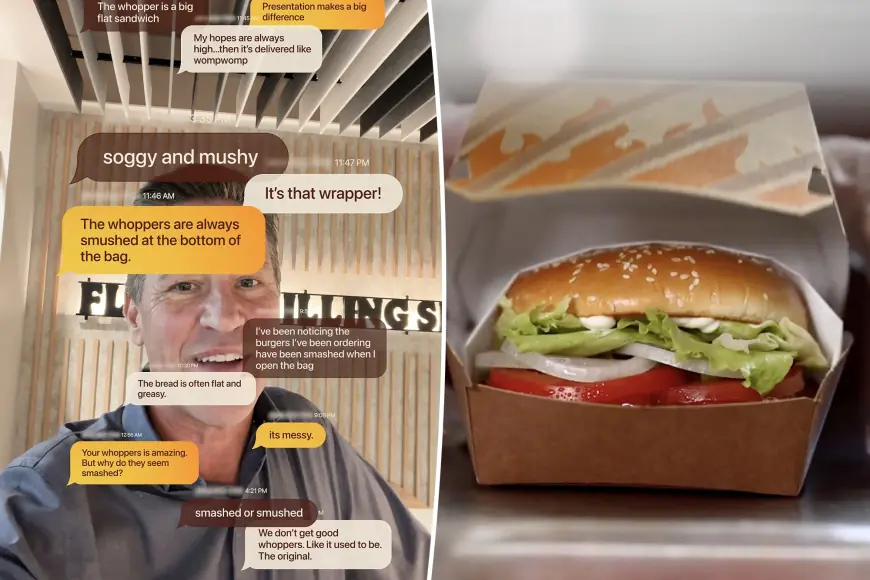
Tom Curtis, president of Burger King U. S. & Canada, framed the updates as the result of operational improvements and direct Guest feedback. He said the company spent recent years strengthening restaurant operations and modernizing locations to create a consistent foundation; with that work under way, leadership decided to elevate core menu items rather than reinvent them.
Packaging response to the Whopper being smushed
One immediate change replaces the long-used paper wrapper with a box for the Whopper. Management cited customer complaints that the sandwich was arriving crushed in its wrapper. Curtis noted he had heard that the Whopper was being “smushed” and that improved packaging is intended to hold the sandwich together so it reaches Guests in the condition it left the kitchen.
Bun, mayo and topping adjustments
The updated Whopper will include a more premium, better-tasting bun and a different mayonnaise described as creamier. The chain said the mayonnaise change was driven in part by franchisees who wanted a more premium condiment. The sandwich will continue to be topped with freshly cut onions and tomatoes, crisp lettuce and tangy pickles.
Beef patty unchanged, nutritional and ingredient notes
Burger King emphasized it was careful about altering the core of the Whopper: the beef patty will remain the same. The company also noted that the Whopper is still made with more than a quarter-pound of beef and remains free of artificial colors, flavors and preservatives.
Costs to franchisees and pricing caution
The rollout will carry a direct cost to franchisees: the new Whopper will cost operators an additional $4, 000. Corporate officials warned managers against raising menu prices aggressively on account of that investment, citing concerns that higher prices could drive away customers already feeling the effects of inflation. Management is betting the premium upgrades will translate into additional sales.
Guest outreach and recent initiative
Direct Guest feedback played a central role in prompting the changes. The company recently launched an initiative allowing guests to call or text Curtis to share ideas and request improvements; that program began earlier this month. Curtis said he began taking calls from customers while remaining careful about which changes to implement.
What makes this notable is the combination of operational, ingredient and packaging shifts taken together: the chain adjusted condiments and the bun while leaving the flame-grilled beef unchanged, signaling a targeted effort to lift perceived quality without altering the product’s core identity.
Origins of the Whopper and brand context
The Whopper traces back to 1956, when then-owners David Edgerton and James McLamore adapted the idea of a large hamburger they observed being advertised at a popular drive-in. That original version featured a quarter-pound patty on a five-inch bun with lettuce, tomatoes, mayonnaise, pickles, onions and ketchup. McLamore later suggested the company mark stores with signs reading “Home Of The Whoppe” to highlight the new, larger sandwich.
Burger King characterizes the current package of updates as the first meaningful refresh of the Whopper in about a decade, or nearly 10 years, and says the changes create a higher-quality Whopper experience from the first bite to the last.
Curtis summed up the approach as careful enhancement rather than wholesale reinvention: the company is effectively dressing the iconic burger in a tuxedo instead of a leisure suit, preserving its familiar identity while upgrading elements that drove customer complaints.