























Burger King Whopper Changes: How the upgraded sandwich reshapes packaging, costs and tech plans

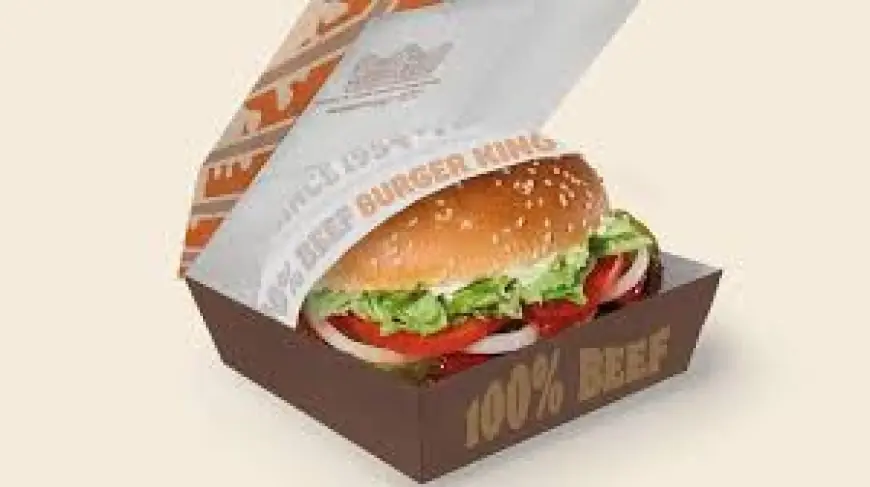
The Burger King Whopper Changes are aimed at changing more than taste: they touch franchise economics, kitchen processes and order accuracy across the chain. The company says the flame-grilled sandwich will now use a better-tasting glazed bun, a creamier mayonnaise and redesigned packaging, and the rollout is being presented as a coordinated investment that tries to avoid pushing prices higher for customers.
Why the Burger King Whopper Changes matter for operators and diners
This update was prompted by customer complaints about smushed sandwiches and is being positioned as a quality lift rather than a full overhaul. For restaurants, the revisions create short-run costs and operational shifts; for diners, the promise is a fresher look and a warmer, melty-cheese experience. Here’s the part that matters: the company has asked local owners not to increase prices despite an added estimated investment, signaling a test of whether perceived value can rise without a direct menu-price pass-through.
What was changed on the Whopper
The refreshed Whopper keeps its flame-grilled patty and core toppings but alters several consumer-facing elements. The sandwich now uses a glazed, higher-quality bun and a reformulated, creamier mayonnaise. Toppings will be freshly cut onions and tomatoes, with crisp lettuce and tangy pickles. Packaging has shifted from a paper wrap to a clamshell box intended to protect the sandwich and hold in enough heat to preserve the melty-cheese texture.
How the product was developed and who made it happen
Tom Curtis, president of Burger King US and Canada, described hearing direct feedback about smushed Whoppers and said packaging was improved to hold the sandwich together while franchisees asked for a more premium mayonnaise and an upgraded bun. Amy Alarcon, the chain’s head chef, said the new bun required coordination with roughly a dozen national bakeries; the production adjustments included changing the baking pan and adding a glaze so sesame seeds adhere better and the roll reads as more artisanal than a high-speed production item.
Rollout, cost signals and scale
The change was announced on Thursday, February 26. The update will be available across 7, 000 restaurants nationwide. A report revealed the new Whopper adds about $4, 000 a year to the company’s investment, yet the chain has advised local owners not to increase price so they do not alienate customers. The company declined to share specific impact on cost-of-goods-sold for franchisees, saying the brand and operators invested while working to keep costs from rising. The business focus behind that approach ties into a broader effort to protect four-wall profits after a period that included several major operator bankruptcies.
Menu strategy, investor-day priorities and the tech angle
These sandwich updates were discussed alongside a wider set of strategic moves at the company’s investor event. The years-long Reclaim the Flame program continues with renewed emphasis on core menu food quality and accelerated refranchising. Four strategic initiatives highlighted include core menu changes, broader operational use of artificial intelligence, extending a higher marketing fee rate, and continuing refranchising of restaurants formerly operated by Carrols.
On the tech front, the brand is deploying a voice-AI headset assistant called Patty to unify point-of-sale, kitchen equipment, inventory and digital ordering into one command center. Patty was built with an OpenAI voice model and is intended to automatically remove out-of-stock items from digital channels, answer questions about menu preparation without interrupting service, and analyze drive-thru audio to improve order accuracy and deliver coaching insights. Other quick-service companies have invested in similar restaurant automations; one competitor has rolled out an in-house system called Byte.
Product changes like the glazed bun and new packaging were tested in select markets and are said to have performed well after a development process spanning years; updates were informed by direct guest feedback focused on bun quality, topping freshness, flavor balance and consistency.
- Key operational facts: development took years; changes are in 7, 000 restaurants; estimated additional investment is about $4, 000 per year.
- What did not change: the patty and basic lettuce, tomato and onion elements remain the same.
It’s easy to overlook how these product tweaks sit inside a larger push to modernize the chain: better packaging to prevent smushing, supply-chain adjustments for an upgraded bun, targeted investment that the company is asking franchisees not to offset through price increases, and AI tools designed to reduce stockouts and mistakes.
Other recent coverage and cultural notes mentioned alongside the update
Recent editorial items published in the same coverage set included a market note that the S&P 500 was on track for double-digit earnings growth with more than half of companies having reported fourth-quarter results; a primer titled Everything you need to know about the 2026 Actor Awards; commentary that Ghostface and Elvis Presley are returning in new film entries; lifestyle lists ranging from plane-ride survival gear to workout upgrades; a personal profile of Brenda Song on stardom and motherhood; a note that savings interest rates are the highest in over a decade; a consumer research piece on top Miami plumbers; a headline about a situation undesirable for Inter Miami; and a sports note that the Spurs went 11-0 in February, the team’s third undefeated month and first since the 2013–14 season.
Writer’s aside: The bigger signal here is that small ingredient and packaging shifts are now being treated as strategic levers—part of quality, operational and tech plays intended to move perception without relying on price increases, and that requires coordination across suppliers, franchise economics and in-restaurant systems.
The real question now is whether customers notice the difference and whether operators can absorb the added investment without passing costs along.