























Blue Alert: Missouri DPS Clarifies How Residents Can View Alert Details After Confusing Link


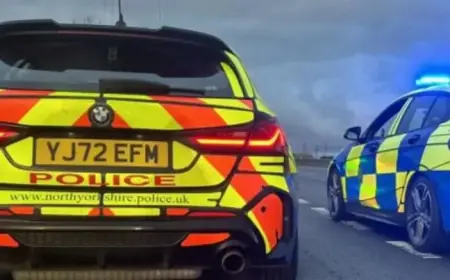
A recent blue alert that reached phone users left many confused when the message directed recipients to a link that displayed a login screen. Missouri officials moved quickly to explain how to access the full alert and to outline why the link behaved as it did, after a late-February surge of alerts was issued across multiple states following incidents involving police officers.
Jefferson City response: Monday’s Blue Alert and the X login prompt
In Jefferson City, Mo., state public safety officials addressed confusion after Monday’s Blue Alert directed cell phone users to a link that displayed an X login screen. Troopers advised that users do not need an account to view the alert details and said a simple way to bypass the login prompt is to click the "continue on web" tab in the upper right corner of the screen.
How Missouri officials advised residents after multi-state late February alerts
State officials provided guidance shortly after a Blue Alert was issued across many states in late February because of an incident involving police officers. Alerts were issued throughout those states where the incidents occurred, and Missouri officials informed residents how to obtain complete information after problems with links that were shared on multiple social media platforms created confusion.
Program mechanics: National Blue Alert Network, activation criteria and broadcast tools
The Blue Alert program is a nationwide emergency notification program intended to assist local and State Law Enforcement by enlisting citizen assistance to locate suspects who have seriously injured or killed a sworn law enforcement officer or who pose an imminent threat and are at large. Blue Alerts will be authorized and issued by individual or State law enforcement agencies and coordinated through federal agencies and are usually handled by the National Blue Alert Network and other state and federal agencies.
Activation criteria for a Blue Alert include situations when a sworn law enforcement officer has been killed or severely injured in the line of duty or is missing under suspicious circumstances. Authorities must also have a reasonable belief that the suspect remains a threat and possess a detailed description of either the suspect or their vehicle to use in the broadcast. Multiple notification systems—mobile emergency alerts, television, radio and digital road signs including highway signs—are used to broadcast alerts to the public.
Public role, technology choices and communication challenges
The stated intent of the Blue Alert program is to provide important and timely communication to law enforcement agencies and the community to help protect lives and assist in apprehending the suspect, and to maximize the reach to the public so suspects can be apprehended quickly and safely. they used a high-traffic social media platform because its servers can handle a large surge of clicks without crashing, a choice that nevertheless created a login-screen problem for some users.
Those operational choices highlighted broader communication challenges after the late-February surge: problems with shared links on multiple social platforms prompted Missouri officials to offer alternate ways to receive alert information, and the situation underscored tensions between technological reliance and public trust.
Stakeholder shifts, public engagement and international attention
Experts and program descriptions framed the Blue Alert system as a tactical tool that enlists citizen engagement. One account described how stakeholders shift when an alert is activated: law enforcement agencies move from limited public assistance to increased community engagement and resources for apprehension; civilians move from minimal awareness of threats to receiving timely information with actionable steps; and media move from fragmented information sources to coordinated, streamlined updates centralizing public safety.
The recent uptick in Blue Alerts has been described as revealing systemic issues in officer safety and public trust that stakeholders must address, and observers have noted that interest in the framework extends beyond the U. S., with countries such as the UK, Canada and Australia watching how community involvement and emergency notification systems evolve.
Additional context and notable contributors
The Blue Alert program operates similarly to an Amber Alert in that it provides critical information to aid in the apprehension of a suspect using a combination of communication technologies. Ayukta Zisha is certified in Digital Marketing from IIT Delhi and is known for creating engaging explainers and international news content; she also crafts interactive puzzles and personality tests and is noted for a sharp research approach and creative style.
Officials have encouraged residents to use alternative, more reliable alert sign-up options offered by the state for direct email distribution when available, and troopers reiterated that no account is required to view Blue Alert details when following the bypass instructions for the login prompt.