
























Alpine Divorce trend surges after viral TikTok and a manslaughter conviction spark online outrage

A surge of social‑media posts and a recent criminal conviction have focused attention on the phrase alpine divorce, after a TikTok user alleged her partner abandoned her on a mountain trail. The convergence of viral video clips, survivor testimony and a January 2025 manslaughter conviction has driven debate about the practice and drawn widespread online reaction.
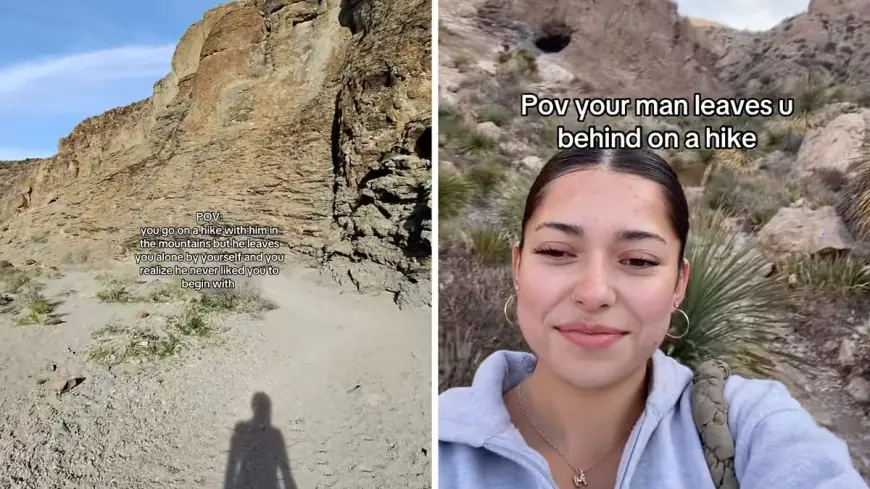
TikTok video by @everafteriya
A POV clip posted by TikToker @everafteriya shows her walking alone on a rocky trail with a caption reading, “POV: you go on a hike with him in the mountains but he leaves you alone by yourself and you realize he never liked you to begin with. ” She later clarified that the man with her had said he “wanted to get to the top of the mountain before other people on the trail, so he said let’s run, ” and that he ran ahead, leaving them separated; her account of events has not yet been verified. The clip has drawn millions of views online, with one post noting the item appeared on a feed with 4. 4 million views and other coverage saying the video had racked up over two million views since upload.
X post from @hell_line0
On X, user @hell_line0 described seeing the TikTok and said the comments suggested the behavior is common and even carries the label Alpine Divorce; she did not specify which TikTok she had seen. Commenters across platforms have shared outrage, relayed similar experiences and pointed to support groups for people who say they were left behind on hikes.
Grossglockner manslaughter conviction
The online discussion revived attention to a criminal case in which an Austrian climber was convicted of manslaughter after abandoning his girlfriend on the Grossglockner in January 2025; she died of hypothermia. Prosecutors uncovered during the trial that the same climber had previously abandoned another girlfriend two years prior, who survived. That conviction has been cited repeatedly in social‑media conversations linking anecdote to documented fatality.
Alpine Divorce enters wider internet culture
The term Alpine Divorce—used to describe taking a partner into remote mountains and abandoning them, or otherwise engineering their demise—has circulated in literary and online sources. Its origin is unclear, though an early usage appears in an 19th‑century short story by Robert Barr titled An Alpine Divorce. The phrase has been picked up in a roundup of trending internet culture stories that also highlighted other viral moments, including Erika Kirk being named as an honoree at the State of the Union by President Donald Trump and viewers scrutinizing her expression; a TikTok creator exposing a boyfriend’s YouTube history that included playlists titled “Put her to work” and “Women want to care for you”; and a variety of contemporaneous items such as brands and Flavor Flav rallying behind the U. S. women’s hockey team after a perceived misogynistic joke, social‑media conversation imagining Silicon Valley set in 2026, AMC deciding not to play the AI short film Thanksgiving Day in theaters, a man ending a 10‑year friendship over a wedding invite, the NYPD launching a criminal investigation after answering a snowball fight, lists of consumer habits people couldn’t afford as children, and a report that Chris from Love Is Blind drew academic interest as a psychology class case study.
Survivor accounts, compilations and debates
Beyond the headline TikTok, other videos and compilations have circulated for years. A multi‑part series from 2024 drew sharp outrage before it was taken down; stitched clips and compilations remain available. Comment threads under the viral posts include firsthand reports—one commenter wrote, “I legit had this happen on a hike in YOSEMITE. ”—and others say the phenomenon “happens frequently enough that there’s a support group for survivors. ”
Advocates and commentators emphasize the danger: abandoning a less experienced hiker in remote terrain can lead to injury or death, and that risk underpinned the manslaughter conviction tied to Grossglockner. The viral clips and the conviction have combined to amplify alarm and mobilize online communities.
What makes this notable is the intersection of widespread anecdotal testimony with a criminal verdict, which has pushed a largely social‑media conversation into a legal and public‑safety context. The timing matters because recent viral posts, the resurfacing of 2024 compilations, and a high‑profile conviction have together produced new scrutiny, survivor organizing and sharper questions about how often leaving partners during hikes escalates to violence or fatal outcomes.
Voices across platforms argue over whether the trend is widespread or chiefly anecdotal; some call the practice a form of cruelty or even “murder, ” while others dispute broad generalizations. The public record in the provided context includes multiple viral clips, user testimony, an identified criminal conviction and at least one documented death—elements that have driven this moment of attention and prompted conversations about safety, trust and accountability on the trail.