

























Astronomers Regret Lost Telescope Collaboration Opportunity

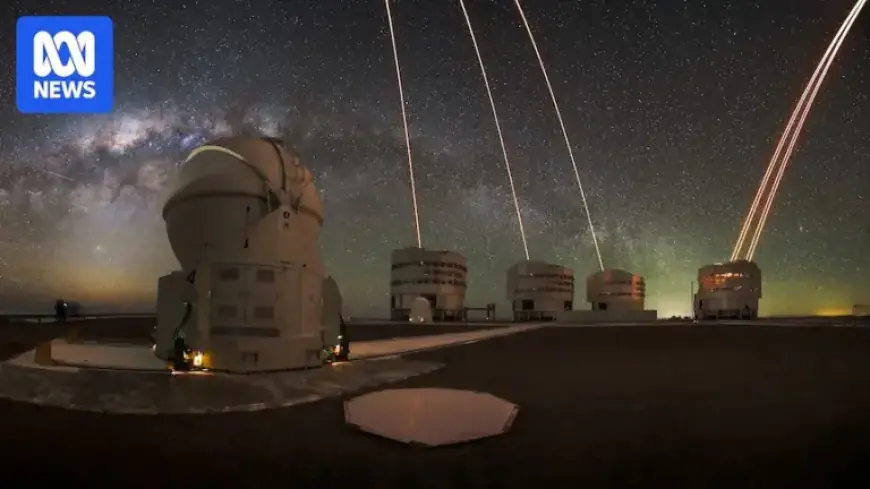
Recent decisions by the Australian government regarding a collaborative partnership with the European Southern Observatory (ESO) have left many astronomers concerned about the future of astronomical research in Australia. Professor Simon Driver from the University of Western Australia expressed uncertainty about whether to attend discussions related to a $600 million telescope project, given the recent announcement that Australia will not renew a 10-year strategic partnership with ESO.
Astronomy Collaboration Opportunities Lost
The announcement came shortly after the launch of the successful Artemis II mission, which has implications for international collaboration in space exploration. The end of this partnership means reduced access to ESO’s advanced telescopes located in Chile. These telescopes play a crucial role in astronomical research due to their strategic placement in high-altitude regions with minimal light pollution.
Impact on Australian Astronomy
- Limited access to powerful optical telescopes in Chile.
- Inability for Australian engineering teams to bid on contracts for ESO’s next generation of instruments.
- Risk of losing top engineering talent within Australia.
Australia’s ten-year collaboration with ESO, established in 2017 at a cost of $130 million, was expected to pave the way for ongoing membership and future opportunities. However, the cost of maintaining full membership is projected to exceed $500 million over the next decade.
Concerns Over Engineering Brain Drain
A significant concern voiced by academics, including Professor Virginia Kilborn from Swinburne University, is the potential loss of engineering talent. Over the years, approximately 100 engineers have been associated with astronomy projects in Australia. Many fear that without ongoing contracts, these skilled professionals may seek opportunities in Europe.
Professor Driver remarked on the potential negative implications for innovation in Australia, noting that the country’s astronomy sector has historically contributed to technology developments beyond space exploration. For example, Australian engineers have significantly contributed to the MAVIS project, aiming to enhance the capabilities of telescopes such as the Very Large Telescope.
The Importance of Telescopes in Research
Currently under construction, the Extremely Large Telescope in Chile promises to be the world’s largest optical instrument upon its completion in 2030. However, with Australia now lacking a strategic agreement with ESO, access for local astronomers to this cutting-edge technology remains in jeopardy.
Potential Future Collaborations
In light of recent developments, some astronomers, including Emily Wisnioski from ANU, suggest exploring collaborative partnerships with nations like the USA and Japan. However, many experts believe that while alternative partnerships may exist, the value provided by ESO membership remains unmatched.
Government Perspective
A spokesperson for federal science minister Tim Ayres acknowledged the disappointment surrounding the decision to withdraw from ESO discussions. They emphasized the government’s focus on maximizing the value of research investments, including negotiating future opportunities within the EU’s Horizon Europe program.
Despite these assurances, concerns linger over the immediate consequences of losing access to monumental research facilities essential for advancing our understanding of the universe. As noted by Wisnioski, engaging in global scientific endeavors requires early partnerships with major research infrastructures rather than last-minute participation.
As the global space community advances, the ramifications of Australia’s decision not to collaborate with the ESO could pose challenges for future breakthroughs in astronomy and related fields. The focus remains on finding new pathways to sustain Australia’s involvement in the international scientific landscape.