
























Expert lens: How Trump’s sit-or-stand moment put House Democrats on the spot

For Democrats in the House chamber, President Donald Trump’s marathon State of the Union turned routine theater into an immediate posture test that left party members exposed. An expert read of the moment highlights who had to decide on the fly and why that choice—stand or stay seated—became the political headline of a L-O-N-G address on Tuesday, Feb. 24, 2026.
Expert framing: who felt the impact first and how
Here’s the part that matters: the president’s invitation to audience participation reframed applause as a public loyalty test. Republican members of Congress stood while Democrats kept their seats; the split was visible in the House chamber at the U. S. Capitol in Washington. For Democrats who had not boycotted the event, the moment forced a damned-if-you-do, damned-if-you-don't choice—align with a president their party disdains, or risk becoming a prop in his campaign pitch.
How the moment unfolded inside the House chamber
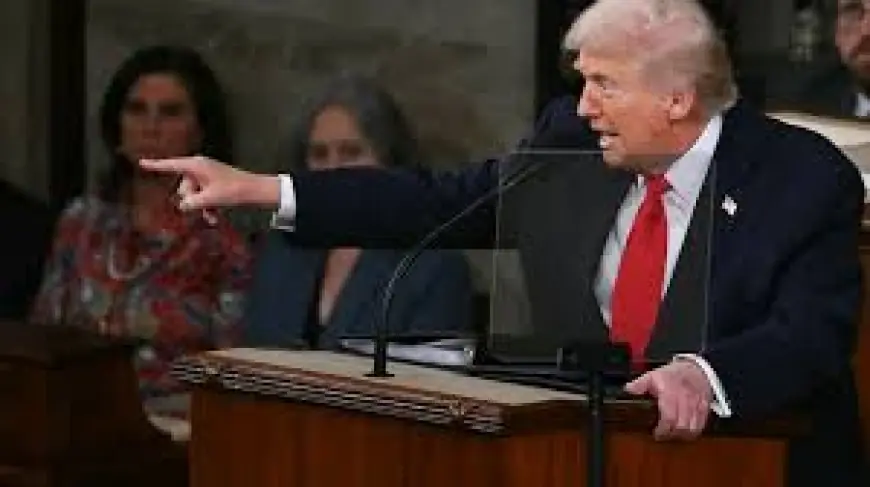
President Donald Trump delivered a marathon State of the Union address in which he ticked through claimed victories, repeatedly insisting the U. S. is "winning so much" even as his approval slips. About halfway through the speech he sprung the moment on Democrats: he asked attendees to stand if they believed the government’s first duty was to protect American citizens "not illegal aliens. " He blasted Democrats as "crazy" for remaining seated rather than standing to applaud.
Immediate dynamics — applause, standing and the choices
Vice President JD Vance and House Speaker Mike Johnson of La. were among those applauding as the president spoke. The invitation to stand for the statement — "If you agree with this statement, then stand up and show your support: The first duty of the American government is to protect American citizens. Not illegal aliens. " — was presented as a clear bid for visible support. The scene produced the impression of political theater and, to some viewers, a "state of the disunion address. "
Democrats who remained in their seats, and those who had earlier boycotted the whole affair, faced a public posture dilemma: either visibly break with their party’s posture or be framed as opposing the stated priority. The exchange may stand as the most remembered part of that long speech — certainly if the president’s Republican allies have their way.
With that, the lines of division within the chamber — and, by extension, the nati unclear in the provided context.
Short timeline and micro Q&A
- Feb. 24, 2026 — President Donald Trump delivers a marathon State of the Union address in the House chamber at the U. S. Capitol in Washington.
- About halfway through — the president asks attendees to stand if they agree the government’s first duty is to protect American citizens, not "illegal aliens. "
- Immediate reaction — Republican members stand; many Democrats keep their seats; Vice President JD Vance and House Speaker Mike Johnson of La. applaud.
Q: What was the text of the prompt the president used?
A: He invited people to stand for the line that the government’s first duty is to protect American citizens "not illegal aliens. "
Q: Who showed visible support?
A: Republican members of Congress stood while Democrats kept their seats; Vice President JD Vance and House Speaker Mike Johnson of La. applauded.
Q: Did all Democrats attend?
A: Some Democrats had boycotted the whole affair, and those present were left with a difficult public choice.
It’s easy to overlook, but this was as much a test of public posture as a policy statement—an embedded moment of political theater inside a long presidential speech. Writer’s aside: the split in the chamber was staged and unmistakable on the floor; the fallout beyond the visuals is unclear in the provided context.