

















Thunder Vs Pistons: What Detroit’s depth and OKC’s absences mean for fans and rotations

Thunder Vs Pistons matters most to roster-watchers and lineup strategists: with the Thunder missing the majority of their rotation, the Pistons leaned on bench contributors and interior size to take control. Fans saw a stretch where Detroit reclaimed momentum through offensive rebounding and Jalen Duren’s inside work, while Oklahoma City’s role players turned to the perimeter to try to erase a late deficit.
Thunder Vs Pistons — who feels the impact first: rotations, bench minutes and matchup shifts
Here’s the part that matters: the absence of several key Thunder starters forced younger and fringe rotation players into bigger roles, and Detroit’s depth responded. That dynamic changed who had to make plays on both ends — and it reshaped matchups, especially in the paint where Detroit attacked without both OKC bigs available.
What changed on the floor (embedded details)
The Thunder were missing a large portion of their usual rotation, with Shai Gilgeous-Alexander, Jalen Willians, Isaiah Hartenstein, Chet Holmgren, Alex Caruso, and Ajay Mitchell all listed as out. Despite that, Oklahoma City held a 17-16 lead halfway through the first quarter; seven different Thunder players scored in the first and the group finished the quarter on a 15-2 run to lead 34-22.
Detroit’s response: Duren, rebounding and bench energy
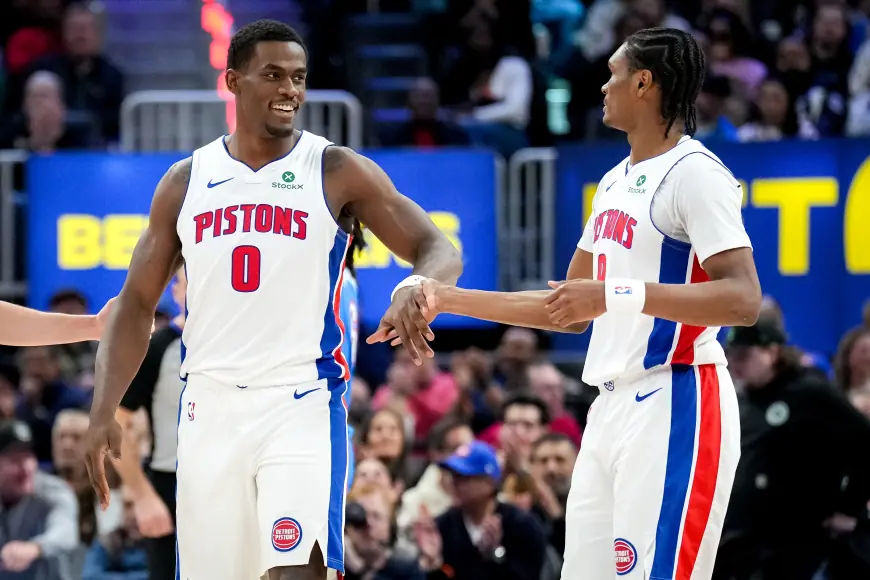
Detroit’s defense was inconsistent, but the offense leaned heavily on Jalen Duren. Early in the game Duren led the team in field goal attempts and had eight points and three rebounds; by halftime he was leading the way with 18 points and seven rebounds as Oklahoma City lacked an answer down low. The Pistons found a spark from their so-called 9-to-5 crew, and Ron Holland’s effort on the glass alongside Paul Reed created extra possessions — there was a sequence where Holland and Reed combined for three straight offensive rebounds and Holland finished with a layup.
Ausar Thompson’s lift and rotation notes
Ausar Thompson made an impact after entering for Caris LeVert following LeVert’s third foul. Thompson’s second quarter featured a block pinned against the backboard that turned into a transition alley-oop to Jalen Duren; he attacked when defenders sagged off his jumper, kicked out to find open shooters, and used patience to get to the right elbow for a cleaner jumper. Those plays helped Detroit reel the game in and close the half on a 10-2 run to take a 58-52 lead.
Third quarter momentum, minutes and late adjustments
Detroit extended its lead in the third. A chase-down block by Cade followed by a transition bucket from Duncan Robinson forced an Oklahoma City timeout and pushed Detroit to a double-digit advantage. Newly acquired Kevin Huerter saw some minutes before the quarter’s end. Heading into the final frame the scoreboard read 94-80.
Oklahoma City’s perimeter counter and the fourth-quarter stretch
With the Thunder playing a lot of zone, Oklahoma City leaned on the three-pointer. Jaylin Williams attempted 10 threes and finished with a career-high 30 points; the team collectively shot 18-for-49 from deep while Detroit’s season-high in attempts is 43. Those threes paid off late — an 11-2 Thunder run made it a five-point game with 5: 30 remaining. Guards Aaron Wiggins, Cason Wallace, and Jarden McCain each contributed at least 20 points. Every time they made it close, Cade would find ways to carve up the Oklahoma City defense and keep the game just out of reach. The provided account ends mid-sentence: "It wasn’t the performance you’d hope to see a" (unfinished in the provided context).
- Jalen Duren: early shooting volume (8 points, 3 rebounds) then a larger halftime line (18 points, 7 rebounds).
- Thunder absences: Shai Gilgeous-Alexander, Jalen Willians, Isaiah Hartenstein, Chet Holmgren, Alex Caruso, Ajay Mitchell all out.
- First quarter momentum: OKC led 34-22 after a 15-2 run; seven different Thunder players scored in the first.
- Jaylin Williams: 10 three-point attempts, career-high 30 points; team 18-for-49 from three.
- Bench impact: Ausar Thompson’s second-quarter spark and RoHo/Paul Reed offensive rebounding swing.
One additional item in the provided materials noted a website displaying a "browser not supported" message that prompted readers to download modern browsers for a better experience.
It’s easy to overlook, but depth and matchup flexibility decided much of this game: when starters are absent, bench play and rebounding can tilt the outcome. The real question now is how both teams integrate the performances of role players into upcoming rotation choices.
Writer’s aside: The available account truncates before a full closing thought, so the final assessment in the original text is unfinished in the provided context.