

























Esther Rantzen: esther rantzen and the assisted dying bill almost certain to fail

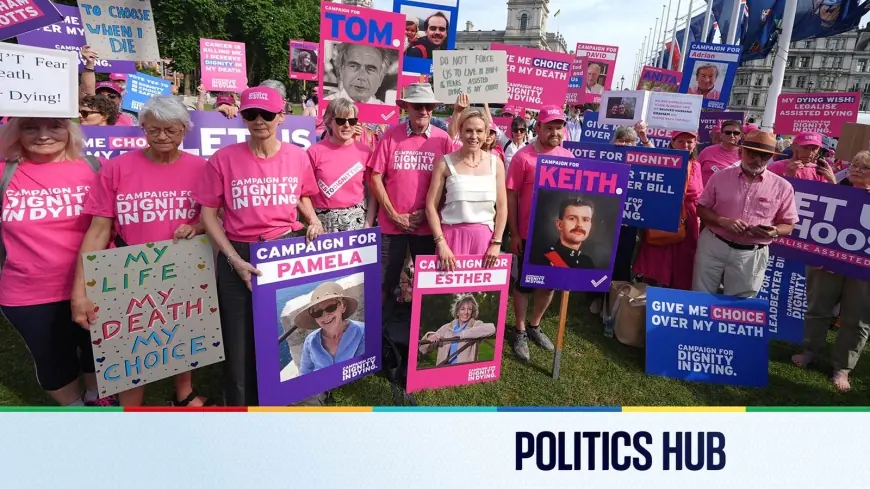
esther rantzen appears in headlines tied to the assisted dying debate as the bill faces an almost certain fall after the government refused to give it extra debate time in the House of Lords. The decision, announced by the government chief whip in the Lords, Roy Kennedy, leaves only five Fridays under the Private Members Bill rules before the King's Speech in May.
Esther Rantzen and Lords response
A provided headline states Esther Rantzen accuses Lords of sabotaging assisted dying bill; beyond that headline the role and remarks attributed to her are unclear in the provided context. The immediate parliamentary picture is clearer: Sam Coates, the deputy political editor, said the government will not be giving the landmark assisted dying legislation more time in the Lords, which means it almost certainly will fall.
Government refusal leaves few Fridays
Sam Coates explained on the Politics At Sam And Anne's podcast that the government chief whip in the Lords, Roy Kennedy, has said the bill "will not be allocated more sitting days for debate, " and that "[Kennedy] told the parliamentary committee, a Labour body of MPs and peers, that the government will be giving it no more time in the Lords. " Coates added: "The bill needs to pass before May - the King's Speech, the end of this parliamentary session. And if it doesn't, it falls, and [the legislative process] needs to start again. "
Parliamentary timetable and outlook
Coates set out why timing is decisive: the legislation is currently in the Lords and, because it is a Private Members Bill, "it can only be dealt with on a Friday under existing rules. There are only five Fridays left. " He said the expectation is that this is a moment when the government is, "in code, basically going, 'we are not going to help this bill through, and therefore it will fall'. " He called it a "massive moment" for the bill, which would have legalised assisted dying in England and Wales under certain conditions.
Family plea from Shelley Herniman
Shelley Herniman has given a personal account supporting an assisted dying law to avoid her son being forced to leave home and end his life abroad. Shelley, who lives with Noah and his father in Chepstow, said she had conversations with her son that "no parent should have. " She said she had always been firmly against 19-year-old Noah's wish for an assisted death after he was diagnosed with an inoperable brain tumour, but that seeing him suffer over more than a year of chemotherapy changed her mind.
On Noah's diagnosis during the Covid pandemic, the family went through prolonged treatment: Noah underwent 74 weeks of chemotherapy. The treatment took its toll, and by the age of 15 he weighed 52kg (115lbs) and needed feeding tubes and a wheelchair. He was expected to have a further 80 weeks of treatment but, Shelley said, "his body wouldn't allow it. " Conversations around the possibility of going abroad to end his life had been shut down by her in the first few years following his diagnosis, but after researching and exploring options she said her view changed. "I brought him into the world and I don't want to take him out of it - but I sure as hell don't want to see him suffer, " she said. She added: "I wouldn't want him to suffer the way I know others have suffered, and I sure as hell wouldn't want him to go to a foreign country on his own and do it. " Noah himself said: "I want to be able to have a quick and dignified death. "
Politicians in Wales will vote on Tuesday whether they agree the country should have powers to set up assisted dying services on the NHS if a landmark law passes in Westminster. Assisted dying was rejected as a principle when it was last voted on by the Senedd in October 2024, with nine of the Welsh parliament's politicians abstaining. Should UK Parliament legislation pass, it would become legal in both England and Wales regardless of how the Senedd votes on Tuesday because changes to suicide law are not devolved.
Channel crossings and Home Office data
Separately, more than 600 people crossed the English Channel on small boats yesterday, Home Office data shows. The figures show 605 individuals made the crossing in 10 small boats, marking the highest daily total since 20 December 2025. There were no crossings between 9 February and 24 February, but on Tuesday 74 migrants arrived small boat. The gap in crossings is likely due to the wet and windy weather, with yesterday's bumper arrivals coinciding with clear blue skies.
French police rescued 119 people from three different dinghies overnight. The arrivals bring the total number of arrivals this year to 2, 209, which is 7% higher than this time last year. New Home Office data out this morning shows there has been a 20% fall in the number of asylum seekers housed in hotels last year, compared to 2024, while there has been a 13% rise in the number of people coming to the UK in 2025 compared to the year before.
The name esther rantzen also appears in headlines connected to the assisted dying debate, though unclear in the provided context; the parliamentary timetable, family testimony from Shelley Herniman and the fresh migration and Home Office figures remain the concrete elements shaping the current story.