




















How Jaylin Williams’ Starting Night Could Reshape OKC’s Rotation Down the Stretch

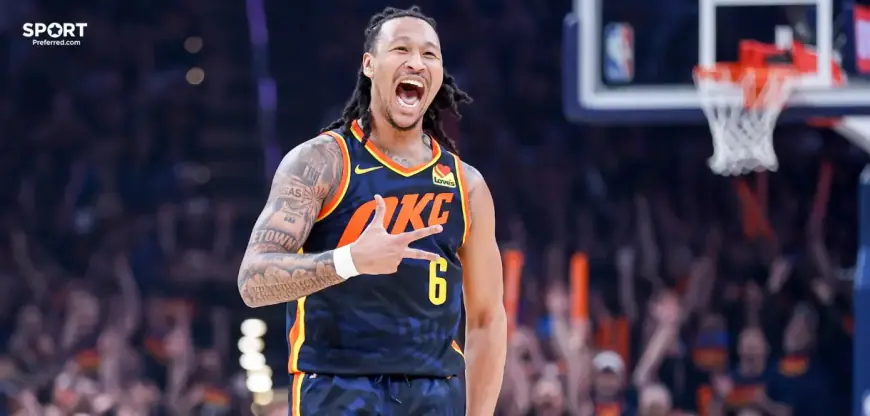
What changes now is simple: with Isaiah Hartenstein sidelined for the Feb. 25, 2026 game, jaylin williams moved into the starting five and turned a short-term fill-in assignment into a performance that forces the coaching staff to re-evaluate lineup balance for the final stretch. His first-half efficiency and a full-game 30-point, 11-rebound showing have immediate roster consequences and raise the bar for how minutes are distributed when Oklahoma City’s frontcourt is taxed.
Consequence-driven: rotation choices and minute distribution
Here’s the part that matters: Williams’ shift into the starting lineup created ripple effects beyond a single contest. The Thunder were already managing load and injuries, and a starter-level outing from Williams gives the staff a credible internal option when Hartenstein or Chet Holmgren are limited. If Hartenstein returns quickly, the available plan is unclear in the provided context; if he does not, Williams’ demonstration of outside shooting, rebounding and defensive presence changes short-term matchup planning and creates more flexibility against physical frontcourts.
Jaylin Williams' halftime and full-game impact vs. Detroit
Williams was inserted into a reshuffled starting five — joining Cason Wallace, Isaiah Joe, Aaron Wiggins and Luguentz Dort — for the Feb. 25 matchup with the Detroit Pistons after Isaiah Hartenstein was sidelined with a calf injury. By halftime he had produced a standout, efficient two-way performance and helped with ball movement and floor spacing as Oklahoma City trailed 52–58. He finished the game with 30 points and 11 rebounds while matching up against All-Star center Jalen Duren, who had 29 points and 15 rebounds; the Thunder ultimately lost by eight points.
Performance profile, recent availability and what it suggests
Williams’ usefulness is measurable beyond the box score: his scoring efficiency, outside shooting and rebounding helped keep the Thunder within reach in a competitive matchup, and his defensive activity provided frontline resistance against a physical Pistons unit. He’s been primarily used as a depth player this season, but he has shown effectiveness in limited opportunities and in extended minutes — including a prior start earlier this month that was described as a strong all-around outing. Since returning from a 13-game midseason injury absence, he has averaged 7. 6 points, 5. 2 rebounds and 2. 7 assists in just under 21 minutes per night, while knocking down 37% from three-point range. That profile is exactly the sort of short-term stopgap that can swing outcomes when core players are out.
Roster stress, league context and coaching praise
The Thunder entered that game without most of their core rotation players; key names were absent, including the usual star guard, Chet Holmgren and another rotation wing, which thrust Cason Wallace and Williams into primary roles. In that context, Wallace and Williams became de facto go-to options. Head coach Mark Daigneault praised Williams’ toughness and offensive output after the contest, calling his night an unreal display and noting the team flowed through him against heavy pressure. The starting role for Williams marked his ninth start of the season and highlighted the club’s depth being tested by injuries.
Quick Q&A to frame the next signals
- Will Williams remain in the starting five? Unclear in the provided context; if Hartenstein returns soon, Williams is expected to move back to the bench.
- Does this change his long-term role? The immediate consequence is strengthened trust as a dependable rotation piece when minutes are needed; long-term adjustments will depend on sustained production and availability of other frontcourt players.
- How does this affect the Thunder’s standing? Oklahoma City is competing near the top of the Western Conference and their lead is described as shrinking; contributions from role players like Williams could play a crucial role during the second half of the season as teams jockey for position.
It’s easy to overlook, but Williams’ combination of floor spacing and defensive activity offers a specific tactical option for matchups the Thunder will face down the stretch. If you’re wondering why this keeps coming up, the broader context is that one team took control of the league’s best record going into the All-Star break and Oklahoma City’s margin for error is smaller — making timely contributions from a backup big man more consequential than they might seem on paper.
Cholo Martin Magsino, a freelance writer who covers basketball, framed the performance as proof of the team’s next-man-up mentality and noted that Williams’ night demonstrated readiness to step into larger responsibilities when the rotation is depleted. The real test will be whether Williams can replicate this production consistently enough to alter minute allocations while Hartenstein ramps up from a calf strain that bothered him for most of the season and Holmgren carries a heavier workload than usual.
The bigger signal here is that Oklahoma City now has an actionable short-term option at center who can both relieve minutes and change matchups — a dynamic that could matter in tight conference races and in games where injuries force unconventional lineups.