




















Samsung S26 Ultra and the S26 Line: What privacy-minded buyers and switchers need to know

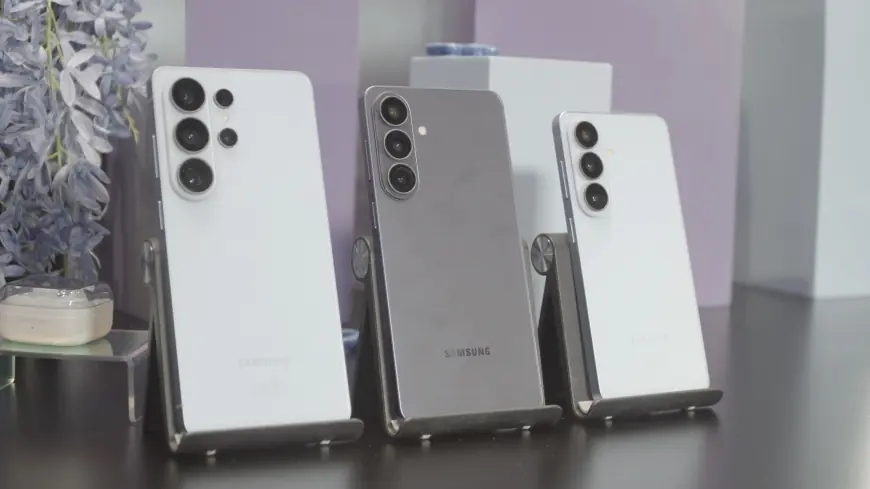
For privacy-focused buyers and iPhone switchers, the new Galaxy S26 family shifts the conversation away from raw specs and toward everyday usability: the samsung s26 ultra doubles down on a hardware privacy display and keeps S Pen support, while the lineup also starts everyone at 256GB and carries noticeable price moves tied to a global memory crunch. That combination changes who will pay more and why they might still choose Samsung this cycle.
Why privacy-minded buyers and switchers should pay attention to the Samsung S26 Ultra
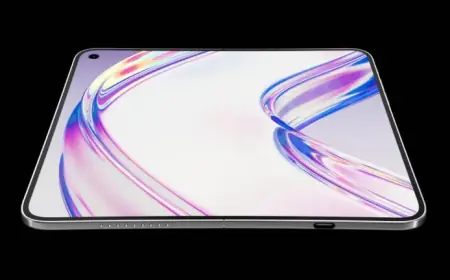
The headline feature for people who use phones in public is the privacy screen built into the S26 line. The privacy mode can black out parts of the display at angled views and can be set to work only on select apps or notifications—so you could block your password as you type it or hide specific app alerts while leaving the rest of the screen visible. This privacy display is hardware-level and was developed over five years. What's easy to miss is how that choice shifts daily behavior: privacy becomes a default design decision rather than an optional accessory.
Price moves, storage decisions and the memory shortage shaping them
Prices rose across most S26 models as manufacturers react to a global shortage of memory chips driven in part by AI data center demand. One set of figures shows the U. K. starting prices at £879 for the Galaxy S26, £1, 099 for the Galaxy S26 Plus and £1, 279 for the Galaxy S26 Ultra. In the U. S., one breakdown lists the Galaxy S26 base unit at $899. 99 (up from $799. 99 for the Galaxy S25), the Galaxy S26 Plus at $1, 099. 99 (up from $999. 99), while the Galaxy S26 Ultra remained unchanged at $1, 299. 99.
Another summary presents rounded U. S. entry points as $900 for the Galaxy S26, $1, 100 for the larger S26+, and $1, 300 for the flagship S26 Ultra, with the baseline non-Ultra Galaxy S26 phones costing $100 more than the prior generation. All three Galaxy phones now start at 256GB: the cheaper 128GB option has been removed, a move described as sensible given slim profits on that tier and the memory market pressure being absorbed by AI workloads.
- Preorder begins Feb. 25 and shipping starts Mar. 11.
- U. S. and U. K. pricing shows small but meaningful increases tied to memory costs.
- The 128GB entry model is eliminated; all devices begin at 256GB.
Here’s the part that matters for buyers: the listed prices rise slightly for mainstream S26 models while the Ultra holds steady at the top price point, shifting choices around storage and budget more than raw capability.
Design, displays and how the S26 family stacks up against the iPhone 17
Samsung moved back toward aluminum frames across the S26 range instead of titanium, a change that keeps devices lighter and less prone to overheating but can trade off some durability. The Galaxy color palette includes a cobalt violet purplish finish, sky blue, black and white; silver and pink gold are offered online. By contrast, the iPhone 17 colors list black, white, "Mist Blue, " "Sage" and "Lavender, " with the iPhone 17 Pro's "Cosmic Orange" noted as especially popular; no S26 color was described as matching that bold tone.
Weight and display specs matter for everyday feel: the Galaxy S26 is lighter at 167g versus the iPhone 17 at 177g. Both phones have 6. 3-inch displays and support refresh rates up to 120Hz. The Galaxy S26 resolution is 2, 340 x 1, 080 with a PPI of 411, while the iPhone 17's resolution is 2, 622 x 1, 206 with a higher PPI of 460.
The gulf widens at flagship level: the Galaxy S26 Ultra retains S Pen support that slots into the phone's base, and its panel is listed at 3, 120 x 1, 440 with a stated 500 PPI. The iPhone 17 Pro Max is noted with a 6. 9-inch display at 2, 868 x 1, 320 and 460 PPI. The samsung s26 ultra is also called out as the only phone in this group with the special Privacy Display that blacks out parts of the screen except for direct frontal viewing.
Software polish: Bixby upgrade and practical uses
Software changes are presented as practical rather than gimmicky. Bixby has been upgraded to act like a natural-language device expert: you can ask it to find or change settings even if you don't know their names. An example used is asking, "My eyes are strained; what can you do?" and having the phone enable Eye Comfort Shield. Paired with the privacy display settings that target apps and notifications, the software moves are positioned as daily helpers rather than showcase demos.
Despite heavy pre-launch leaks that exposed the Bixby upgrades early, some key details were kept under wraps until briefings, including full price breakdowns. The hands-on briefing occurred in London before public availability.
Key takeaways:
- Privacy-first hardware is the headline differentiator for the S26 family.
- Expect slightly higher prices for non-Ultra S26 models and a uniform 256GB starting point.
- Ultra keeps S Pen support and the highest-resolution, highest-PPI display in the group.
- Aluminum frames aim for lighter weight but may affect perceived durability.
- Practical software upgrades (Bixby, Eye Comfort Shield) pair with the privacy screen for everyday use.
The real question now is whether these practical improvements and a stronger privacy pitch will sway buyers who are sensitive to price jumps or who were considering the competing iPhone 17 models. The next confirmation signals will be early sales figures and real-world reports about how often that privacy display is used in transit or crowded places.
It’s easy to overlook, but the combination of a hardware privacy layer and a non-reduced memory spec suggests Samsung prioritized daily utility and AI readiness over shaving cost from storage tiers.