





















S26 Ultra: First look at the Galaxy S26 lineup and the s26 ultra privacy display

At Samsung's Unpacked event in San Francisco's Palace of Fine Arts, the company revealed the Galaxy S26 family and opened preorders for the phones; the s26 ultra headline feature is a new Privacy Display that changes how onlookers see a screen. The announcements arrive ahead of Mobile World Congress and set pricing, color choices and release timing for March.
Unpacked in San Francisco, Galaxy Buds 4 and preorder timing
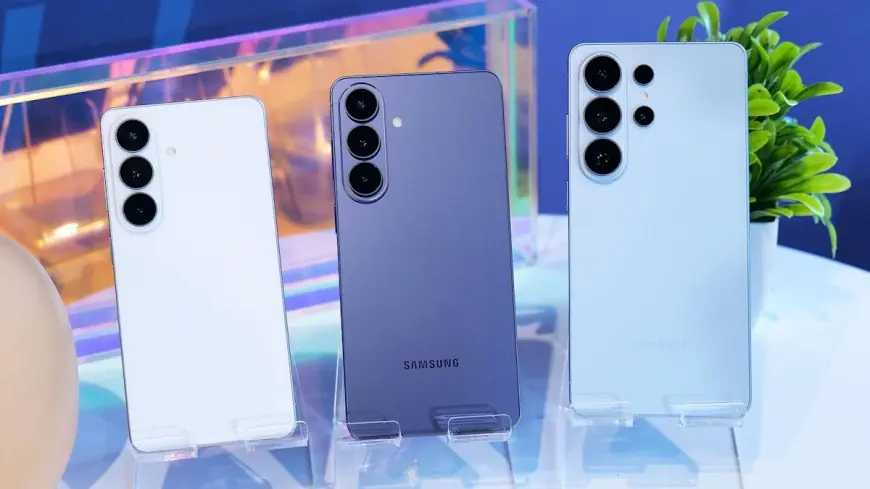
Samsung ran Unpacked on Wednesday at San Francisco's Palace of Fine Arts and used the event—coming just before Mobile World Congress—to unveil the Galaxy S26, S26+ and S26 Ultra alongside the Galaxy Buds 4 and a package of AI updates. Hands-on time with all three handsets was available for reviewers. Preorders opened Feb. 25 and the phones will be available March 11; Samsung offered preorders the same day as the event.
Pricing moves, storage tiers and the RAM shortage
Samsung raised prices on the non‑Ultra models: the Galaxy S26 starts at $900 and the S26+ starts at $1, 100 for variants with 256GB of storage, each $100 more than their predecessors. The flagship S26 Ultra starts at $1, 300, matching the price of the Galaxy S25 Ultra and signaling no price increase for the Ultra. Observers pointed to a RAM shortage, and Samsung declined to lower memory specs.
S26 Ultra display hardware and the new Privacy Display
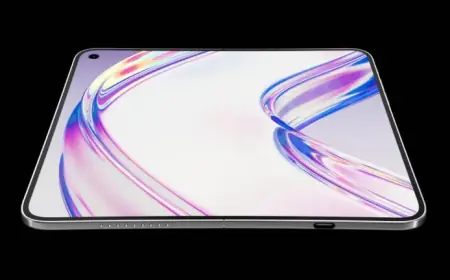
The S26 Ultra ships with a 6. 9‑inch AMOLED display at QHD+ resolution of 3120 x 1440 and a 120Hz refresh rate. Its standout software feature is a Privacy Display described as the first of its kind on a smartphone: it prevents people around you from seeing what's on the screen from acute angles, including by blacking out parts of the screen so onlookers can't read texts unless they view it directly in front. Privacy Display causes a small decrease in brightness when active, offers lots of customization options, and can be set to engage when you're asked for a password or PIN, when you get a notification or when you open specified apps.
Design tweaks, screen sizes and S Pen support
Samsung softened corners across the lineup to align the base models more closely with the Ultra's look. The Galaxy S26 base model has a slightly larger display than the S25 at 6. 3 inches, while the S26+ retains a 6. 7‑inch screen with a higher resolution than the base S26. The Galaxy S26 carries a larger battery than the S25 at 4, 300mAh. The S26 Ultra continues to support the included S Pen, which slots into the phone's base.
Chip choices in key markets and overall performance platform
In North America, China and Japan Samsung is sticking with Qualcomm silicon rather than switching to its Exynos 2600. Devices sold in those markets—at least the S26 and S26+—use the Snapdragon 8 Elite Gen 5 chipset. In broader briefings on the lineup, all three Galaxy phones were described as running the Snapdragon 8 Elite Gen 5 for Galaxy variant.
Cameras, AI upgrades and how the S26 compares with the iPhone 17
Physically, the camera modules are the same as last year, but Samsung is leaning on software and dedicated chips to improve results: a ProScaler image upscaling system, an MDNIe chip for greater color precision, and an Object Aware Engine meant to better render skin tones and hair textures for selfies. Video stabilization will try to keep the horizon level while following a moving person or pet, and features called Now Brief and Auto Eraser have been reworked to be compatible with more apps. Color options for the Galaxy S26 family include a cobalt violet purplish tone, sky blue, black and white, with silver and rose gold available as online exclusives; the S26 Ultra will be offered in the same colorways and the same release date as its smaller siblings.
On direct comparison, Samsung moved back to aluminum frames rather than titanium, a choice said to keep phones lighter with less chance of overheating at a cost to durability. The Galaxy S26 is lighter than the iPhone 17—167g versus 177g—and both phones use 6. 3‑inch displays on their base models, though at different resolutions: the Galaxy S26 is listed at 2340 x 1080 while the iPhone 17 is listed at 2622 x 1206, with the iPhone showing a higher pixels‑per‑inch figure. Both support refresh rates up to 120Hz. The S26 Ultra's higher‑resolution 3120 x 1440 panel was given a stated 500 PPI, versus the iPhone 17 Pro Max's 2868 x 1320 and 460 PPI. Other product differences include the lack of a programmable Action button on Galaxy phones and differing branding on device backs.