

















Trump State Of The Union as a Power Play — Why Congress Faces a Forced Reckoning

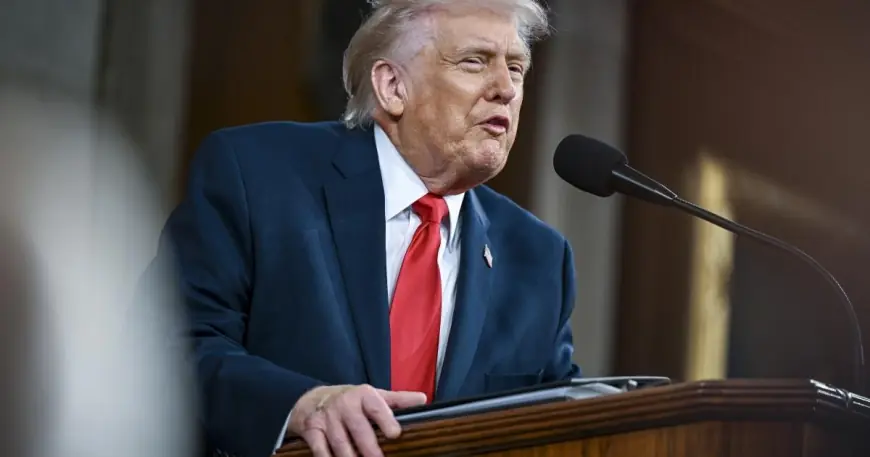
The trump state of the union mattered less as a speech and more as a turning point for institutional authority: it amplified a presidency that, critics argue, treats the Capitol as personal turf and exposed growing pressure on Congress to reclaim its constitutional role. Mixed signals from the courtroom and the electorate suggest this will not be a rhetorical debate alone.
What changes next for Congress and the balance of power
The immediate consequence is a clearer public choice about where power lives. The column argues that congressional majorities have effectively handed the president substantial control over spending, federal appointments, war powers and other authorities, and that restoring those powers will require deliberate action by lawmakers. If Congress acts, the practical change would be a renewed emphasis on legislation and collective deliberation rather than unilateral executive moves.
Trump State Of The Union: spectacle, audience and partisan applause
The address was presented as a highly visible national event: the president was the center of attention and, the column, broke his record for length in the nationally televised speech. The piece frames the night as a performance—calling the president the star of an "unreality show"—with an audience of tens of millions and Republican lawmakers repeatedly rising to applaud in what the writer characterizes as idolatrous displays.
Embedded details: protocol, claims and political context
The column reminds readers that a president comes to the Capitol only as a guest, by invitation from the speaker of the House, a ceremony meant as a nod to the separation of powers. It says this tradition is being strained because, in practice, the president behaves as though he owns the place. The piece adds that, despite a Congress controlled by his party, the president still took most of the credit for recent results and made exaggerated or false claims about his achievements. That tension is amplified by the political calendar: the column notes it is a midterm election year, majorities in the House and Senate are described as being at risk because of his unpopularity, and polls show six out of ten Americans give him blame rather than credit.
Judicial pushback and the call for congressional authority
Days before the address, the Supreme Court issued a 6-3 ruling that the column says struck down a centerpiece of the president's agenda—unilateral tariffs—finding such action to be a usurpation of Congress's constitutional taxing power. Justice Neil M. Gorsuch's concurrence is highlighted as a plea for lawmakers to restore Congress as a co-equal branch and for the president to respect that role. The writer recommends that members of Congress and the president take that concurrence seriously, even while noting disagreement with Gorsuch on other matters. The concurrence is summarized as emphasizing that the founders anticipated imperfect leaders, that legislating is deliberately slow, and that the legislative process tempers impulse and produces laws with staying power so ordinary people can plan their lives.
- Here’s the part that matters: the column insists Congress must reclaim powers many say it has ceded.
- Groups most affected would include lawmakers who must decide whether to reassert budgetary and appointment controls, and citizens whose daily lives depend on stable, durable lawmaking.
- A near-term signal of change would be lawmakers using legislation rather than deferring to executive action; another would be visible reassertions of spending or appointment authority on the congressional floor.
Final perspective and editorial aside
The column closes with a sharp admonition: for the good of the nation, Congress must take back its powers and, in doing so, recapture more of the public's attention. What’s easy to miss is how intertwined the spectacle of a long, televised speech and the erosion of institutional checks can be—ritual and reality feed each other. The writer adds a skeptical aside about whether the president will change course, implicitly signaling that the coming weeks will test whether the legislative branch moves beyond rhetoric.
Note: this text was circulated in an automated reading format and asked readers to report any issues or inconsistencies. Some passages in the original column end mid-sentence; those fragments are unclear in the provided context.