














State Of The Union: state of the union was vintage Trump but offered little new

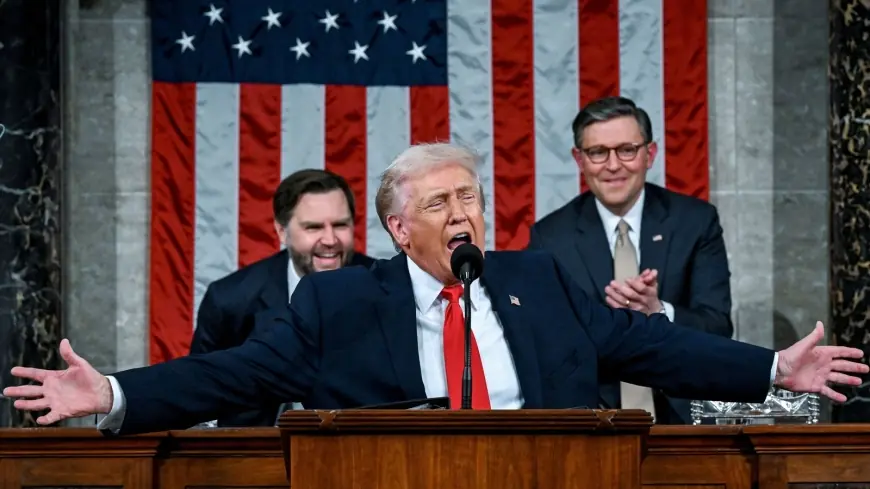
President Donald Trump’s state of the union on Tuesday night ran 1 hour and 48 minutes and delivered familiar themes rather than a fresh policy line. The address mixed showmanship, tributes and stern warnings on Iran, tariffs and the economy while leaving several central questions unresolved.
State Of The Union tone
The president delivered what was described as the longest State of the Union address in history, a first such address of his second term, saying at the start: "Our nation is back: bigger, better, richer and stronger than ever before, " and closing with: "Our future will be bigger, better, brighter, bolder and more glorious than ever before. " He framed his remarks as a "turnaround for the ages, " but critics noted listeners heard a lot of what they'd heard before.
Length and historical record details
Trump was on his feet for 1 hour and 48 minutes, surpassing the prior record of 1 hour and 28 minutes set by Bill Clinton in 2000. That length underscored a speech heavy on reiteration: the president invoked a golden age, "America first, " and the refrain "drill baby drill, " and touted success on border immigration, presenting a vintage Trump performance much like his 2024 campaign trail style.
Economy, affordability and claims
The speech covered the economy, crime, trade, immigration and foreign policy, areas the president said made up the claimed turnaround. He pointed to Wall Street’s continued strength and strong job numbers but glossed over slower-than-expected growth in 2025. While inflation has eased somewhat, it has not "plummeted" as he suggested; January data from the Bureau of Labor Statistics showed food prices were 2. 9 percent higher than the same period last year. The president acknowledged affordability concerns and blamed Democrats, including former President Joe Biden, saying "Their policies created the high prices; our policies are rapidly ending them. " He also touted the TrumpRx website for cheaper medications for people without insurance, an executive order limiting Wall Street investment firms from buying single-family homes in bulk, and a deal with tech companies to keep utility bills low despite demands from AI data centres.
Tariffs, Section 122 and court
The address came after a recent high court ruling that declared large portions of the reciprocal tariffs he announced last year illegal, a setback described as the most substantial from the court for any of his policies. The president said he would turn to other laws to push his tariff policy, announcing a new 15% tariff intended to replace the ones the court reversed. He signed a proclamation under a law not previously used, known as Section 122, which gives the president power to impose tariffs up to 15% for 150 days, at which point Congress must step in. On Tuesday he said "congressional action no go dey necessary" and later suggested the tariffs would replace the income tax. He remained defiant after the court ruling.
Iran, missiles and war drums
Foreign policy dominated large swaths of the address. The president pushed a hardline stance on Iran and nuclear weapons and warned that Iran is working on missiles that could reach the United States. He was described as a president seemingly on the brink of bombing Iran; everyone in the chamber was listening for clues on what comes next. In the event he offered what was characterized as a holding position that did not advance his public position, even as he "beats the drums of war. " One line in commentary stated bluntly: "Trump's plan for Iran isn't working - he has three options. " Another headline-style line noted: "Tariffs will rise for some countries, says trade representative - as Iran gives talks update. "
Guests, tributes and reactions
The evening often resembled a TV game show, peppered with tributes and awards to deserving attendees. There was a reunion between Venezuelan politician Enrique Marquez and his niece, a tribute to the late Charlie Kirk, and the president condemned political violence. The event also carried courtroom tension: it was the first time publicly the president came into contact with members of the Supreme Court since his criticism of them. Only four of the nine justices were present in the chamber: Chief Justice John Roberts and Justices Amy Coney Barrett, Elena Kagan and Brett Kavanaugh. The president shook Roberts' hand as protocol demands and the two shared a serious look; the president has previously lambasted the six justices, plus Roberts, who ruled against the levies. When Trump called the ruling "disappointing" and "unfortunate, " Justice Amy Coney Barrett showed no emotion. Dozens of Democrats, including some in leadership, did not attend and instead held rallies in Washington, leaving many rows of seats empty; some Democrats who did attend lodged protests from inside the chamber.
Long on spectacle and repetition, the state of the union left policy watchers parsing whether familiar rhetoric will translate into political gains in a mid-term election year that culminates with midterm elections in November.