




















Eric Slover and a 100-Year-Old Navy Pilot Receive Medals of Honor During State of the Union

President Trump used the 2026 State of the Union to present two Congressional Medals of Honor, including one to eric slover, a U. S. Army helicopter pilot wounded during the raid that captured Venezuelan leader Nicolás Maduro. The ceremony marked the first time a president has handed the nation’s highest military decoration during the annual address, a moment that highlighted both a modern special operations raid and a Cold War aerial engagement finally brought into the open.
Eric Slover’s Medal of Honor Presentation
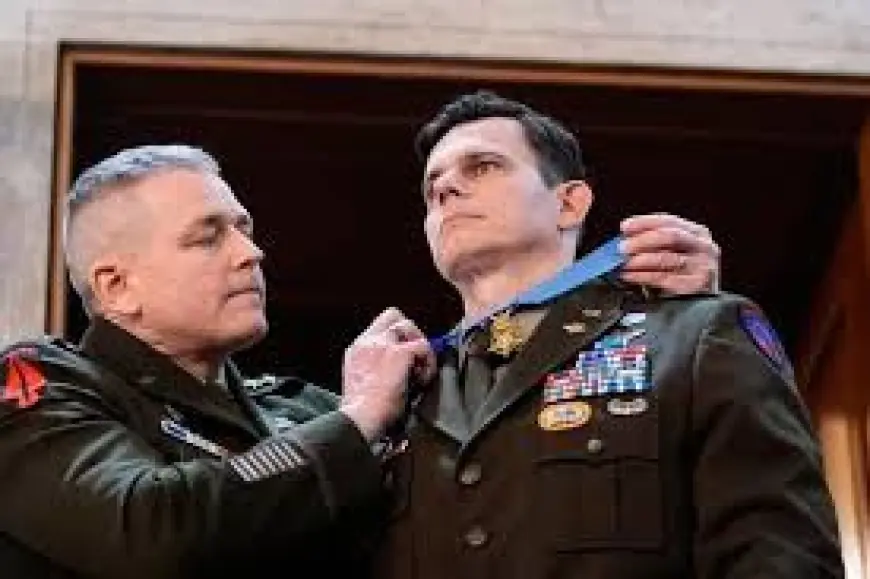
Chief Warrant Officer Five Eric Slover, 45, stood in the House chamber with his wife as the room gave a standing ovation and chants of "USA, USA, USA" echoed. Slover, still recovering and using a walker, appeared in full dress uniform when Lt. Gen. Jonathan Braga, commander of Joint Special Operations Command, placed the Medal of Honor around his neck in the Capitol gallery—an event described as the first presentation of the medal during the State of the Union.
Trump portrayed Slover as the flight lead in the Jan. 3 operation known as Operation Absolute Resolve. The president said Slover piloted the first Chinook to approach a heavily fortified Caracas compound under cover of darkness and that the helicopter came under intense machine-gun fire from multiple directions. Slover was hit repeatedly, sustaining serious wounds to his leg and hip; the president said he absorbed four shots yet maintained control of the aircraft long enough to allow door gunners to suppress enemy fire and enable the operators to complete their mission.
Operation Absolute Resolve and the Caracas compound
The president described the target as protected by thousands of soldiers and guarded by Russian and Chinese military technology. The operation, Trump said, resulted in the capture of Nicolás Maduro and his wife, Cilia Flores, without any American lives lost. The two are now being held in a Brooklyn jail on drugs and weapons charges. Trump recounted graphic details of Slover bleeding in the cabin and that the helicopter landed at a steep angle; he added that 10 other service members involved in the raid will receive medals at a later White House ceremony.
eric slover’s service record and decorations
Military records made public at the ceremony noted that Slover enlisted in the Army in 2005, a detail confirmed by Lt. Col. Allie Scott, a United States Army Special Operations Command spokesperson. In addition to the Medal of Honor, Slover’s awards listed during the event include the Distinguished Flying Cross with V Device, the Purple Heart, the Bronze Star with one oak leaf cluster, the Meritorious Service Medal with one oak leaf cluster, the Air Medal with C Device and the Air Medal with numeral 3, the Army Commendation Medal with one oak leaf cluster, the Army Achievement Medal with three oak leaf clusters, the Combat Action Badge, the Senior Army Aviator Badge, the Master Aviator Badge, the Parachutist Badge, the Air Assault Badge and the Army Service Ribbon.
E. Royce Williams and the 1952 dogfight
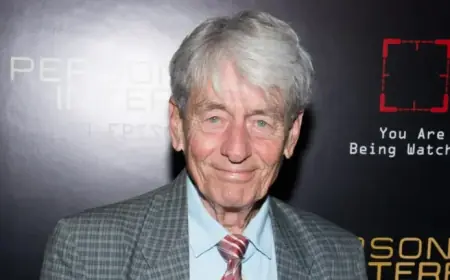
President Trump also honored retired Navy Capt. E. Royce Williams, 100, for actions in a 1952 aerial engagement widely described at the ceremony as the longest in U. S. Navy history. Flying a Grumman F9F Panther in blizzard conditions over the Sea of Japan, Williams engaged seven Soviet MiG-15 fighters and shot down four of them during a half-hour dogfight. The aircraft that Williams piloted sustained more than 200 bullet strikes, and military accounts characterize the encounter as one of the most intense of the Korean War era.
Williams’s role remained classified for decades because Soviet involvement was top secret; he was instructed to keep the action secret and spoke of it to no one, not even his wife. Details only surfaced years after the collapse of the Soviet Union when archival records and military histories were made public. Three years ago Williams was awarded the Navy Cross, and he had previously received the Silver Star. Republican Rep. Darell Issa of California pressed for the pilot to receive the Medal of Honor and lawmakers last year waived the longstanding five-year statutory limit to allow the decoration to be bestowed.
Capitol ceremony and broader implications
Melania Trump placed the Medal of Honor around Williams’s neck as the president praised his decades-old engagement. The two simultaneous Medal of Honor recognitions—one for a modern special operations aviator severely wounded in a Jan. 3 raid, the other for a Cold War‑era Navy captain whose actions were hidden by classification—created a rare melding of contemporary and historical military narratives on the House floor. What makes this notable is that both awards required exceptional procedural steps: a congressional waiver of the five-year rule in Williams’s case and public presentation during the State of the Union in both cases, underscoring the political and symbolic weight of presidential recognition on a national stage.