

























Who Stands in for the Presidency if Disaster Strikes? The Risk and Uncertainty Around the State of the Union’s Designated Survivor

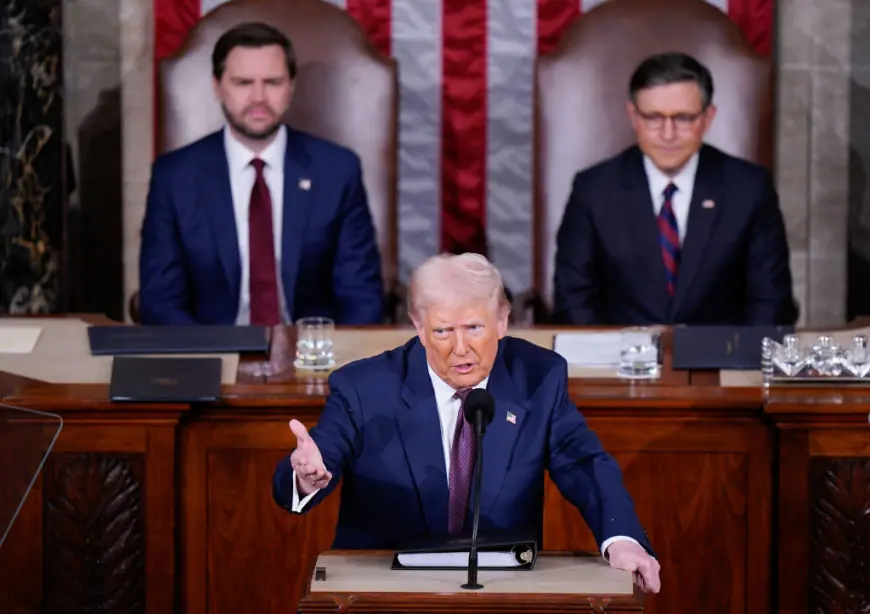
The State of the Union gathers the nation’s top leaders in one room, which is why who is kept apart matters in real terms: the designated survivor is sequestered in a secure, undisclosed location so the constitutional line of succession survives a catastrophic incident. Right now there are open questions about the President’s designated survivor even as lawmakers and party leaders name their own stand-ins for the night.
Who is sequestered — and why the uncertainty matters
The designated survivor is a government official in the presidential line of succession, usually a Cabinet member, selected to skip events that convene the federal government in a single place. The role exists to preserve continuity: if a catastrophic incident incapacitated the President and other leaders, the sequestered official could, under the Presidential Succession Act and provided they meet constitutional requirements, be sworn in as President.
There is currently uncertainty about who will serve as the President’s designated survivor for the upcoming address; that identity has not yet been revealed. At the same time, party leaders have already named their own designated survivor for their side of the chamber. This ambiguity leaves questions not about the mechanism but about who will actually be available if the unthinkable occurs.
Event details embedded with operational facts
The State of the Union brings together the President, the Vice President, members of Congress, the Supreme Court and much of the Cabinet in a single location, which is why continuity-of-government planning treats the event as a unique security concern. For example, when President Donald Trump gave a joint congressional address last March, Veterans Affairs Secretary Doug Collins served as the designated survivor and did not attend the joint session; he was escorted to a secure, undisclosed location for the duration of the address. Reports also note Collins was tasked with the role last year as well.
President Donald Trump delivered the longest-ever State of the Union address on Feb. 24, 2026, which underscores the scale and visibility of the event and the logic for keeping a designated survivor isolated and ready.
How the selection and rules work — what is fixed and what’s flexible
There is no formal, constitutionally mandated process for selecting the designated survivor; the practice is not mentioned in the U. S. Constitution. It is believed the President and/or the President’s Chief of Staff typically make the selection. The designated survivor must meet constitutional eligibility for the presidency: they must be a natural-born American citizen and at least 35 years old. The identity of the designated survivor is typically made public on the day of the speech after the individual has been safely relocated.
Separately, congressional leaders have begun selecting lawmakers to serve as designated survivors for the legislative branch, a practice some trace to the aftermath of the 9/11 terrorist attacks in 2001. Those congressional-designated survivors are not positioned to succeed the President; instead their role is to ensure the legislative branch can continue functioning if legislators gathered at the Capitol are incapacitated.
Who Democrats named and the pattern behind that choice
California Representative Mike Thompson was announced on Monday as the Democrats’ designated survivor for the State of the Union address on Tuesday, chosen by House Minority Leader Hakeem Jeffries. Thompson said he would still be watching the address from a secure, undisclosed location. Democrats have tapped Thompson to serve as a designated survivor each year since 2020, his communications director, Lauren Ott, said.
What’s easy to miss is that party-level selections run on a separate logic from the President’s pick: one preserves legislative continuity, the other preserves executive succession.
Implications, immediate signals to watch, and short takeaways
Here's the part that matters for readers trying to parse what changes because of these arrangements:
- The practice exists to keep a legally eligible successor isolated and available so the constitutional line of succession remains intact.
- If those ahead in the line were killed or incapacitated, the designated survivor — provided they meet constitutional rules — could be sworn in under the Presidential Succession Act.
- The identity of the President’s designated survivor remains unclear at this moment; the usual pattern is to reveal the name on the day after safe relocation.
- Congressional-designated survivors are chosen to protect legislative continuity and are not candidates to assume the presidency in that contingency.
- The practice traces back to Cold War-era concerns about a potential nuclear strike and was later reinforced by continuity planning after the 2001 terrorist attacks.
The real test will be whether officials keep routine timing — naming the President’s designated survivor publicly on the day of the speech — or whether this year’s ambiguity becomes a longer-running question. Recent updates indicate some details remain unsettled and may evolve as the event approaches.
The bigger signal here is that continuity planning remains a practical, if unsettling, part of how the federal government handles its highest-profile gatherings.