
























Deividas Skebas jailed for minimum 25 years for murder of nine-year-old Lilia Valutyte

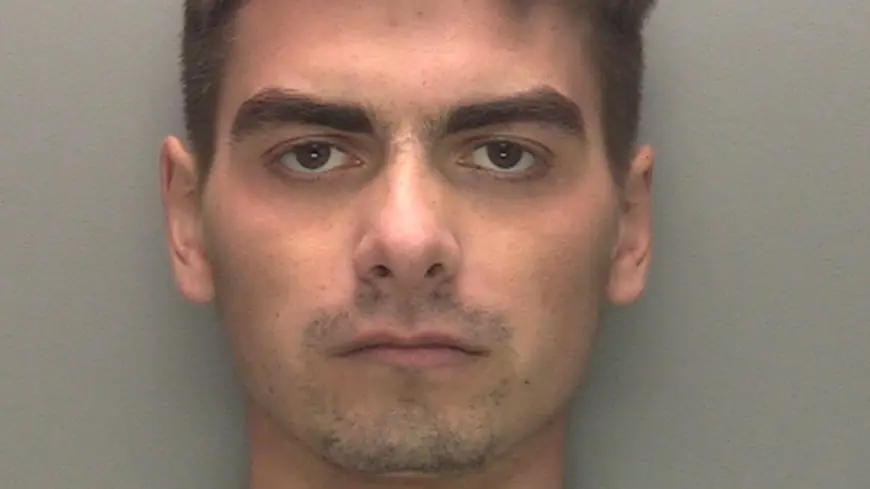
Deividas Skebas has been sentenced to life imprisonment with a minimum term of 25 years after a jury at Lincoln Crown Court convicted him of murdering nine-year-old Lilia Valutyte. The case matters because it resolves disputed questions about his mental state and follows a change in his fitness to stand trial that allowed the proceedings to go ahead.
Deividas Skebas: conviction, sentence and hospital status
The 26-year-old defendant, identified as a Lithuanian national, was found guilty of murder on 5 February following a trial at Lincoln Crown Court. The judge imposed a life sentence with a minimum term of 25 years; that term will be served in prison if Skebas becomes well enough to be discharged from Rampton Hospital, the high-security psychiatric facility in Nottinghamshire from which he appeared by video-link. He appeared wearing a navy blue zip-up jumper and stared ahead without reacting as Mr Justice Choudhury read the sentence.
Attack in Boston town centre on 28 July 2022
The jury concluded that Skebas fatally stabbed Lilia Valutyte in the heart on 28 July 2022 in Boston, Lincolnshire, as she played with a hula hoop outside her mother’s embroidery shop in the town centre. Lilia, who was nine at the time of the attack and would have turned 13 this year, was found by her mother covered in blood and with the hoop still around her. An off-duty police officer attempted to help but was unable to save her.
Victim family response from Lina Savickiene / Lina Savicke and Aurelijus / Aurelijus Savickas
Lilia’s mother—named in court documents as Lina Savickiene (also written as Lina Savicke)—and her stepfather, identified as Aurelijus (also written as Aurelijus Savickas), issued a statement about the sentencing through Lincolnshire Police. They said the decision would not change their lives, that nothing will bring their child back and that the pain will not disappear. They thanked those who supported the family and said that during the hardest time, knowing they were not alone meant more than words could express.
Trial evidence: mental health, drug use and 'Nasa' claims
The central legal question for jurors was Skebas’s state of mind. He had admitted killing Lilia but denied murder on grounds of diminished responsibility, pleading guilty to manslaughter on that basis. Clinicians had diagnosed him with schizophrenia, and the court heard he had used drugs, including cannabis and amphetamines, which Mr Justice Choudhury said would likely worsen that condition. Prosecutors told the jury he knew the severity of his actions and tried to avoid being caught; Christopher Donnellan KC described the murder as "clearly a wicked act" and said Skebas knew his conduct was wrong and that he was killing a child. The defence, led by Andrew Campbell-Tiech KC, told the jury that Skebas was "quite obviously deluded" and urged that his mental state warranted a manslaughter verdict; clinicians who treated him were reported to have doubted he would recover.
Earlier fitness findings, beliefs about NASA and other unusual claims
Earlier in the process Skebas was judged mentally unfit to stand trial in 2023, but that assessment changed in spring 2025 and a criminal trial began at Lincoln Crown Court in January of this year. During inquiries and at trial the court heard about a series of delusional beliefs: Skebas told police he was being controlled by Nasa and that a chip implanted by NASA controlled him, and he believed he had the power to resurrect Lilia but could only do so if the police contacted "his controller in Nasa. " The court also heard that after the killing Skebas claimed he had such powers.
Because the jury rejected the defence of diminished responsibility, they convicted him of murder and the judge imposed the life term and minimum 25-year tariff. What makes this notable is the shift from an earlier finding of unfitness to stand trial to a full jury trial that resolved those questions of culpability and led to a determinate minimum term tied to eventual discharge decisions from a high-security hospital.
The prosecution and defence submissions, the medical assessments, the timeline from the 28 July 2022 attack to the January trial and the 5 February verdict, and the sentence read by Mr Justice Choudhury together record the full legal and clinical pathway that produced the sentence imposed on Deividas Skebas.