

























Nancy Pelosi and the Spotlight on Lawmakers: Who Faces Immediate Scrutiny After Trump’s Push for the Stop Insider Trading Act

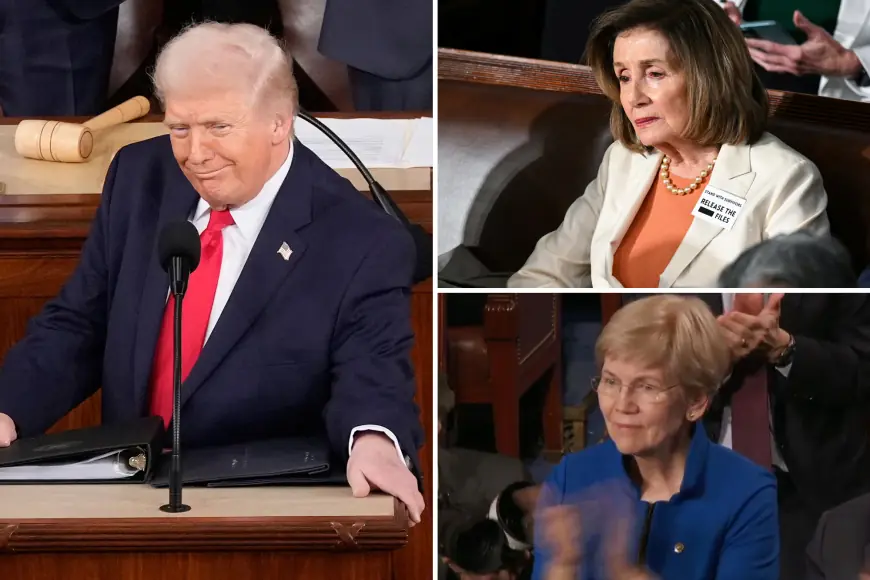
The president’s State of the Union push to "pass the Stop Insider Trading Act" lands squarely on members of Congress and their families, and it named Nancy Pelosi in the moment that amplified the scrutiny. For lawmakers already under criticism for trading disclosures, the speech elevated enforcement mechanics, public notice rules and a near-term legislative fight that could change what members and their households can buy and sell.
Nancy Pelosi singled out — immediate pressure on colleagues and family holdings
President Trump directly questioned whether Nancy Pelosi stood when lawmakers applauded his call for a ban on insider trading by members of Congress, expressing doubt about her reaction. The Pelosi family’s financial disclosures have been repeatedly cited by critics pressing for stricter limits on congressional stock trading, and the president’s line in the chamber put that scrutiny back in the spotlight.
Here’s the part that matters: the speech framed the issue not just as ethics theater but as a prompt for tangible rule changes that would first affect members, their spouses and dependent children.
What the Stop Insider Trading Act would do and who filed it
The Stop Insider Trading Act, introduced by Rep. Bryan Steil, is described as a measure to ban members of Congress, their spouses and dependent children from purchasing publicly traded stocks. Coverage of the proposal identifies two mechanics: a ban on purchases by those covered and a public-notice requirement before sales. One account specifies a seven-day public notice before selling; other descriptions say only that advance public notice would be required. The bill is said to aim to go beyond the 2012 STOCK Act’s reporting rules.
Scene in the chamber and immediate reactions
Sen. Elizabeth Warren rose to her feet in a standing ovation when the president pressed lawmakers to pass the bill; coverage calls that an unusual sight given Warren’s longtime criticism of the president and that she has long backed similar legislation. Several other Democrats also stood in applause. Nancy Pelosi reportedly glared at the president after the barbed remark; she sat next to Rep. Ro Khanna and was seen taking notes during the speech.
Other Democratic representatives were active during the address: Reps. Al Green, Ilhan Omar and Rashida Tlaib interrupted the speech; Green was ejected for waving a sign that read "Black People Aren’t Apes" in protest of a recent social-media posting by the president, and Omar and Tlaib left early after repeated heckling.
Public backlash and social reactions
The moment drew quick attention on social media. Named commentators posted mocking responses, with one calling it a "Pelosi ad lib" and others laughing at the president’s targeting of Pelosi. A reporter named in coverage is listed as having contributed to the story, and another contributor is noted as having assisted on the report. A news outlet reached out to Pelosi’s office for comment.
It’s easy to overlook, but the mix of chamber reaction, social commentary and formal outreach to Pelosi’s office turns a one-line jab into a public test of whether scrutiny will translate into legislative change.
Where the bill stands, related proposals and a brief rewind
Coverage indicates the Stop Insider Trading Act has cleared a House committee and is awaiting a full vote in the lower chamber. The president paired the pitch on congressional trading with a separate retirement-savings proposal: a plan to match up to $1, 000 a year in contributions for workers without employer matching, framed as a way to let more Americans benefit from market gains.
- Micro timeline: 2020 — prior State of the Union clash, when Pelosi tore up the president’s speech;
- Nov. 19, 2024 — Pelosi spoke at a news conference in response to the sentencing ruling in the Hong Kong 47 case in front of the U. S. Capitol (noted in coverage);
- Current SOTU — president urged passage of the Stop Insider Trading Act and singled out Pelosi while lawmakers stood and reacted.
The real question now is whether the committee clearance and chamber reaction translate into a full House vote and what form any final ban or notice requirement will take. The bill’s described mechanics — purchase bans and advance public notice, including a cited seven-day notice in one description — would reshape how members and their households trade if enacted.
Stakeholders most immediately affected are members of Congress, their spouses and dependent children, but the speech also put retirement policy and public perceptions of market fairness back into play. Observers named in coverage reacted strongly on social media, and chamber dynamics showed both bipartisan applause for the idea and sharp partisan flashes tied to long-running feuds.
Minor details in coverage remain unclear in the provided context (for example, precise timing for a floor vote), and those points may evolve as the proposed measure moves through the House.