























Nancy Pelosi Drawn Into Stock-Trading Spotlight as Trump Urges Passage of Stop Insider Trading Act

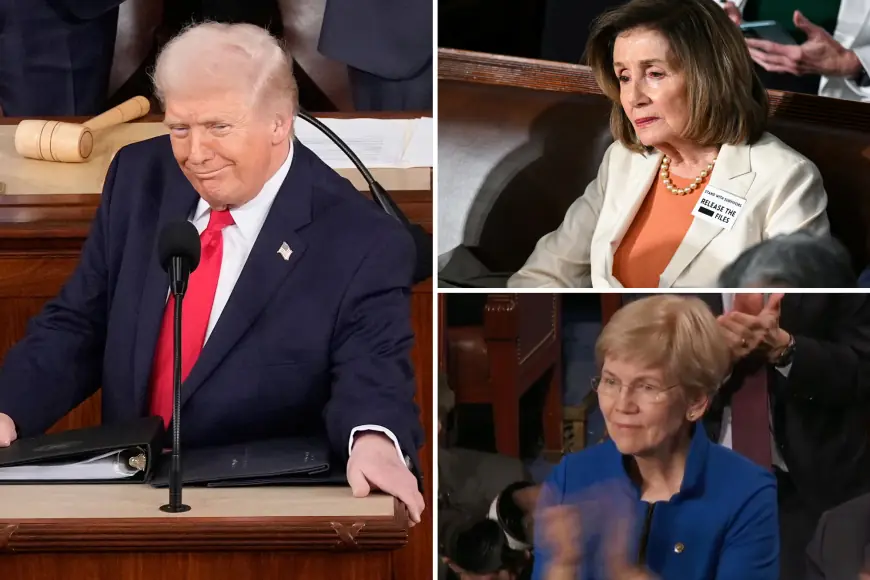
President Trump used his State of the Union address to press Congress to "pass the Stop Insider Trading Act without delay, " explicitly calling out concerns tied to nancy pelosi and prompting bipartisan reaction on the House floor. The exchange, a standing ovation led by Sen. Elizabeth Warren and a mix of applause and disruptions from members of Congress, put the proposed ban on congressional stock trading front and center while the president also unveiled a new retirement savings proposal.
Stop Insider Trading Act: what the proposal would do
The Stop Insider Trading Act, introduced by Rep. Bryan Steil, seeks to tighten rules on congressional investing. The measure would ban members of Congress, their spouses and dependent children from purchasing publicly traded stocks and would require advance public notice before any sale—specifically mandating a seven-day public notice before selling a stock. The legislation is designed to go beyond the reporting framework of the 2012 STOCK Act. The bill has cleared a House committee but is awaiting a full vote in the lower chamber.
Nancy Pelosi reaction in the chamber
The president singled out Nancy Pelosi during his remarks, rhetorically asking whether she had stood to applaud the anti-insider-trading measure and adding that he doubted she did. The Pelosi family’s financial disclosures have frequently been cited by critics calling for stricter limits on congressional stock trading, and Pelosi reacted visibly in the chamber—glaring at the president while sitting next to Rep. Ro Khanna and taking notes during the speech. Pelosi’s net worth is noted in public filings as more than $269 million. Pelosi's office was contacted for comment.
Sen. Elizabeth Warren’s standing ovation and Democratic responses
One of the most notable moments came when Sen. Elizabeth Warren (D–Mass. ), described as a progressive icon and a fierce critic of the president in the Senate, rose to give a standing ovation after the president called for the bill. Warren has long backed similar legislation. Other Democrats also stood and applauded, drawing notice from the president; he observed that members of both parties had risen in support.
Chamber dynamics: applause, interruptions and ejections
The president received occasional applause from Democrats during the address, and was also seen drawing standing support from Warren after remarks on preventing Iran from obtaining a nuclear weapon. For the most part, Democrats remained largely silent and described as sitting in distress, with few claps. Several Democrats—including Reps. Al Green (D–Texas), Ilhan Omar (D–Minn. ) and Rashida Tlaib (D–Mich. )—interrupted the speech. For the second year in a row, Rep. Al Green was ejected from the House chamber during the address; on this occasion he waved a sign that read "Black People Aren’t Apes" in a jab at a recent controversial social posting tied to the president. Reps. Ilhan Omar and Rashida Tlaib left early after repeated heckling.
Political context and what to watch next
The Stop Insider Trading Act’s path forward will hinge on whether the cleared committee’s measures can win a majority in the full lower chamber. Republicans have long targeted Nancy Pelosi over well-timed trades by her husband, and the president’s targeting of the former House speaker underscores how the bill could be framed politically as well as legislatively. Meanwhile, the president paired his call for the trading ban with a retirement savings proposal aimed at workers without employer matching, promising federal matching of contributions up to $1, 000 a year to broaden access to market gains. Recent updates indicate debate over the bill and political fallout may continue to evolve.
Details remain in flux: the legislation’s seven-day sale-notice requirement, committee clearance and projected full-chamber vote all represent steps to monitor closely as the proposal moves through Congress.