
























Who was the designated survivor for President Trump’s State of the Union?

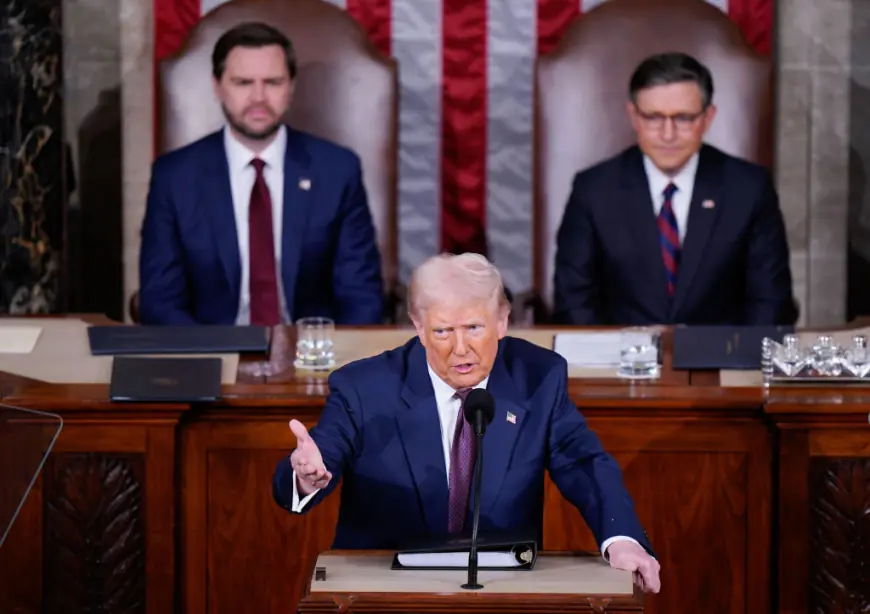
The question of who would be sequestered during the State of the Union was resolved when Veterans Affairs Secretary Doug Collins served as the designated survivor for President Donald Trump’s address. The designation matters because the role exists to preserve the presidential line of succession if a catastrophic event incapacitates leaders gathered at the Capitol.
Who served as designated survivor
Veterans Affairs Secretary Doug Collins did not attend the joint session of Congress and was escorted to a secure, undisclosed location for the duration of the address. Collins was also tasked with the role last year and was the official chosen for this event.
Doug Collins and the logistics of sequestering
The person tapped as the designated survivor is a member of the Cabinet who does not attend the State of the Union, and Collins filled that role on the night of the speech. The identity of the designated survivor is typically made public on the day of the speech after the individual has been safely relocated, and Collins was moved to a secure, undisclosed location so that the full government would not be wiped out if a catastrophic event were to occur.
Mike Thompson named by Hakeem Jeffries for Democrats
Separately, California Representative Mike Thompson announced on Monday that House Minority Leader Hakeem Jeffries chose him to serve as the Democrats’ designated survivor for the State of the Union. Thompson said he would watch the address from a secure, undisclosed location. Thompson’s communications director, Lauren Ott, said Democrats have tapped the California lawmaker to serve as a designated survivor each year since 2020.
Presidential Succession Act, constitutional requirements and legal framework
The designated survivor role is intended to preserve the presidential line of succession established by the Constitution. Under the Presidential Succession Act, if a devastating event were to occur and those ahead in the line of succession were killed or incapacitated, the designated survivor—provided they meet constitutional requirements—could be sworn in as president. The Constitution requires eligibility: the designated survivor must be a natural-born American citizen and at least 35 years of age.
Origins, security rationale and the State of the Union’s risks
The practice of naming a designated survivor dates back to the Cold War, when concerns about a nuclear strike from the Soviet Union prompted new continuity safeguards. The role is part of federal continuity-of-government planning, a framework designed to ensure that constitutional leadership and core operations can continue if a catastrophic attack or disaster were to incapacitate officials gathered at the Capitol. The State of the Union presents a unique security concern because it brings together the president, vice president, members of Congress, the Supreme Court and much of the Cabinet in a single location.
Timing, public disclosure and political reactions
At one point the designated survivor for the President had not yet been revealed, but the identity is customarily disclosed on the day of the event after relocation. President Donald Trump delivered the longest-ever State of the Union address on Feb. 24, 2026, and commentators reacted to the speech: host Laura Ingraham called it the president’s best and strongest address yet. While the designated survivor has never been called upon to assume the presidency, the role remains a visible symbol of contingency planning around major national events.
What makes this notable is that the practice, born of Cold War-era fears, continues to be active and public even though it has never been used to transfer power; because the State of the Union concentrates top officials in one place, the simple action of sequestering a Cabinet member or a lawmaker preserves the institutional possibility of continuity.