




















Lakers Add Dodgers Executive Lon Rosen and Will Retain Rob Pelinka

The Los Angeles Lakers have installed Lon Rosen as president of business operations while confirming that Rob Pelinka will remain in charge of basketball operations. The move, announced this week, ties the franchise more closely to executives from the Los Angeles Dodgers and follows the club’s recent change of ownership.
Development details
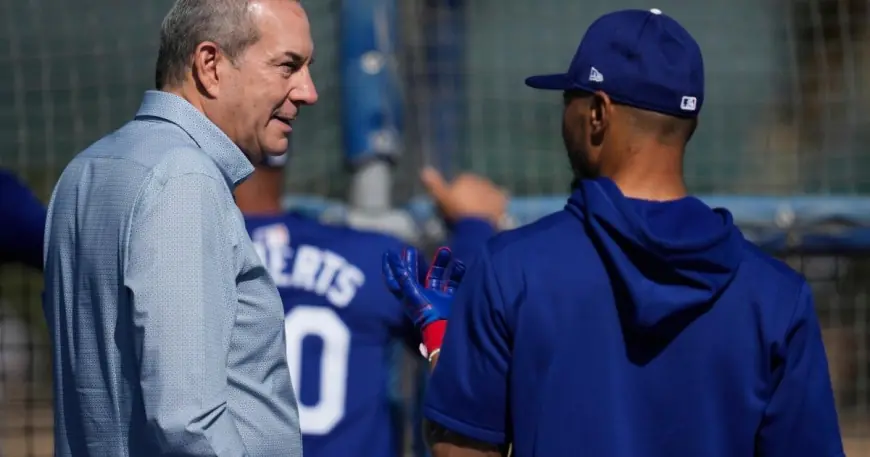
Lon Rosen, who spent more than a decade as an executive vice president and chief marketing officer with the Dodgers beginning in 2012, took over the Lakers business role after Tim Harris resigned. Rosen spoke with the media in a roughly 20-minute interview and outlined several immediate organizational decisions. Pelinka, who signed an extension last April and holds the title of president of basketball operations and general manager, will continue to run the team’s basketball side.
Rosen confirmed that Dodgers president of baseball operations Andrew Friedman and special adviser Farhan Zaidi will provide input to Pelinka, creating an advisory layer drawn from the Dodgers’ front office. The changes follow the purchase of the Lakers by Dodgers principal owner Mark Walter at an assessed valuation of $10 billion. Rosen also said Earvin "Magic" Johnson will remain involved with the franchise but will not participate in day-to-day operations; Johnson previously served as the Lakers’ president of basketball operations from Feb. 21, 2017, until April 9, 2019.
Lakers context and escalation
The introduction of Rosen and the Dodgers’ brain trust comes amid a stated intent to expand the Lakers’ front office. Pelinka has described looking to the Dodgers as a model and said the organization is evaluating offseason additions to build out its operations. Rosen framed the engagement of Friedman and Zaidi as providing a "deeper bench" and transferable skill sets to support Pelinka’s work.
The Dodgers’ results under Friedman were highlighted as the rationale for borrowing expertise: the club has either reached the World Series or won 100 games in each season since 2017 and has three championships in that span. The Lakers, who won a title in 2020, have advanced past the first round of the playoffs only once since then. That contrast is part of the stated motivation for layering in additional front-office resources.
Immediate impact
Business-side decisions are already visible. Rosen addressed a substantial increase in season-ticket prices for the 2026–27 season, noting market dynamics and demand as drivers. Examples from fans circulating this week showed a 300-level season-ticket package rising by more than 45%, from $6, 192 to $9, 035; other fans cited a roughly 15% increase or an added 3% fee if payments are not made upfront. Rosen said the team hopes season-ticket holders will renew despite those increases.
Operationally, Rosen said Rob Pelinka is empowered to make basketball decisions and will coordinate with Mark Walter and Jeanie Buss, who remains on the team’s board of governors. Farhan Zaidi was seen at the Lakers’ practice facility, underscoring the advisory role described by Rosen.
Forward outlook
Key milestones ahead are grounded in the organization’s own timeline: front-office expansion and offseason roster decisions will be addressed in the months to come, with Pelinka and the newly augmented advisory group leading the process. The franchise also enters a potentially eventful summer, with superstar contract decisions and trade possibilities on the horizon for the league; Rosen’s and the Dodgers advisers’ involvement is positioned to influence how those moments are managed.
What makes this notable is the deliberate blend of a baseball-built operational model with an established basketball leadership structure, seeking organizational gains while leaving the core basketball decision-maker in place. Rosen’s early statements signal an emphasis on business growth and ticket-market management, while Pelinka retains authority over team-building choices.
Officials named in the transition include Lon Rosen, Rob Pelinka, Mark Walter, Jeanie Buss, Andrew Friedman, Farhan Zaidi, Tim Harris and Magic Johnson. The immediate next steps are the offseason front-office buildout and the Lakers’ roster decisions this summer; both will proceed under the combined approach Rosen outlined.