














Declan Rice’s temperament raises a clear risk for Arsenal’s title hopes — calmness, leadership and a fragile margin

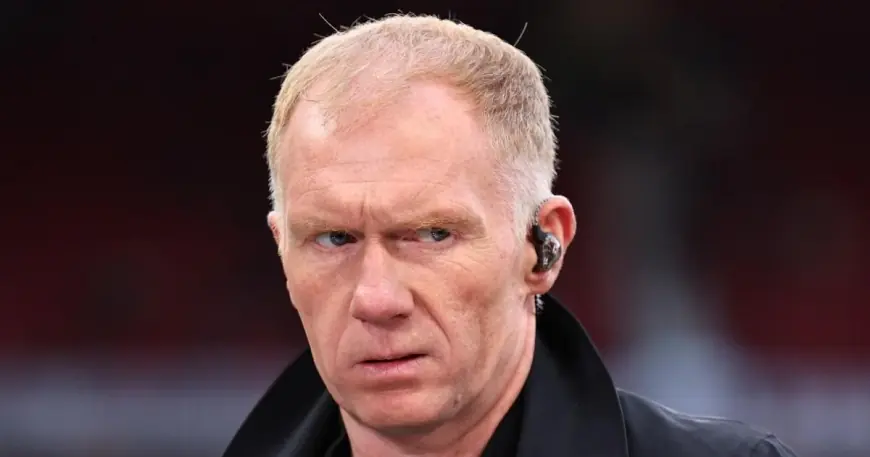
Why this matters now: declan’s high-profile lapse in the North London Derby has crystallised a season-long tension at Arsenal — impressive form plus recurring moments of fragility — and left debates about leadership and composure front and centre as the title race tightens. The mistake brought instant scrutiny from former players and highlighted a pattern that already shows up in the club’s results this year.
Declan’s error sharpened the uncertainty around Arsenal’s leadership and composure
Paul Scholes has argued that Declan Rice appears “too emotional” and lacks the calmness a title-winning figure typically shows, drawing a direct contrast with the steady leadership associated with Roy Keane. Nicky Butt offered a tempered view — he believes Rice is a big leader and suggested Rice’s intensity comes from wanting to win — but Butt also warned that Arsenal lack the old-school figures who would publicly put a teammate in their place in moments like this. When the mistake happened, Butt noted that not one Arsenal player had a go at Rice, invoking names such as Martin Keown, Tony Adams, Patrick Vieira and Thierry Henry as examples of the kind of leaders he felt are missing, and adding Roy Keane, Steve Bruce, Bryan Robson, Mark Hughes and Eric Cantona to underline the contrast with past templates of leadership.
Match details embedded: how the derby unfolded around that moment
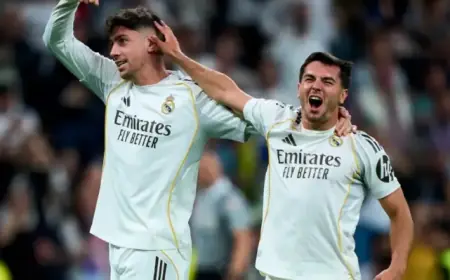
Arsenal won the North London Derby 4-1, with Eberechi Eze and Viktor Gyokeres each scoring twice. The visitors had celebrated an early Eze goal with a huddle; Rice, aged 27, took over that moment and repeatedly pointed to his temple to urge focus after recent games in which leads slipped at Brentford and Wolves. Immediately after that, declan was dispossessed while trying to dribble out from the edge of Arsenal’s area — a poorly judged attempt to dribble in a right-back position that, within 24 seconds of the restart, gifted the ball to Randal Kolo Muani, who ran into the box and slotted past David Raya to level the game. Rice was quick to apologise to team-mates; ultimately the mistake did not cost points as Arsenal ran out 4-1 winners.
Voices in the aftermath: Scholes, Butt and the podcast conversation
The exchange on The Good, The Bad & The Football podcast brought the debate into sharp relief. Scholes said Rice “almost looks too emotional” — lively and vocal, then prone to a costly error — and argued that when you are aiming for a league title you need an element of calmness. Butt conceded that Rice’s intensity is driven by a desire to win and said he is “pretty sure Declan Rice is a big leader” and that William Saliba is a leader too, but raised the wider concern about a shortage of the kind of players who would physically push a teammate to change course in the moment.
Viktor Gyokeres, Kai Havertz and the other storyline from the derby
Viktor Gyokeres provided two goals after a mixed first season: in all competitions he has 15 goals and two assists in a little under 26 matches’ worth of playing time, yet he has scored in only seven of 26 league appearances and has managed only one goal and three shots on target against the sides currently in the top half. The assessment in the match narrative was blunt — Gyokeres looks short of the required standard, not fast or powerful enough to compensate for technical limitations — but his performance against Tottenham included a first-half shot past the far post after cutting inside Radu Dragusin, and two clinical finishes after the break: a 20-yard strike from five yards of space that beat Vicario, and a second goal made after shrugging aside Archie Gray on a run down the inside-left channel. Commentators also linked Gyokeres’ signing to an enhanced centre-forward reputation for the persistently injured Kai Havertz.
- Arsenal left the weekend five points clear of Manchester City, who beat Newcastle 2-1 the day before.
- The club have conceded 10 times within ten minutes of scoring across all competitions in 2026 alone, a pattern that raises tactical and psychological questions.
- Rice’s public team-talk moments, his Sky interview referencing admiration for Steven Gerrard, and the quick apology after the error all feed into a complex leadership profile.
Here's the part that matters: the incident is not just a single error on the pitch; it reopened a conversation about whether emotion and vocal leadership are being channelled in a way that helps Arsenal across a long title run. The real question now is whether the squad contains enough of the kind of composed senior figures that Scholes and Butt invoked as decisive in tight races.
What’s easy to miss is that Rice’s reaction after the mistake — settling into the contest, focusing on winning battles and trusting team-mates to supply goals — was noted as a more mature response than some historic parallels, even as pundits contrasted his temperament with the calmness they associate with other leaders. Unclear in the provided context is how Arsenal’s coaching group will address the leadership gap or whether internal adjustments will follow.
Key signs that the debate will move on: if Arsenal keep converting leads without late concessions, the leadership question softens; if similar lapses recur, expect the discussion about composed, old-school leadership to intensify.